Why Oblivion’s Horse Armor Became a Test Case
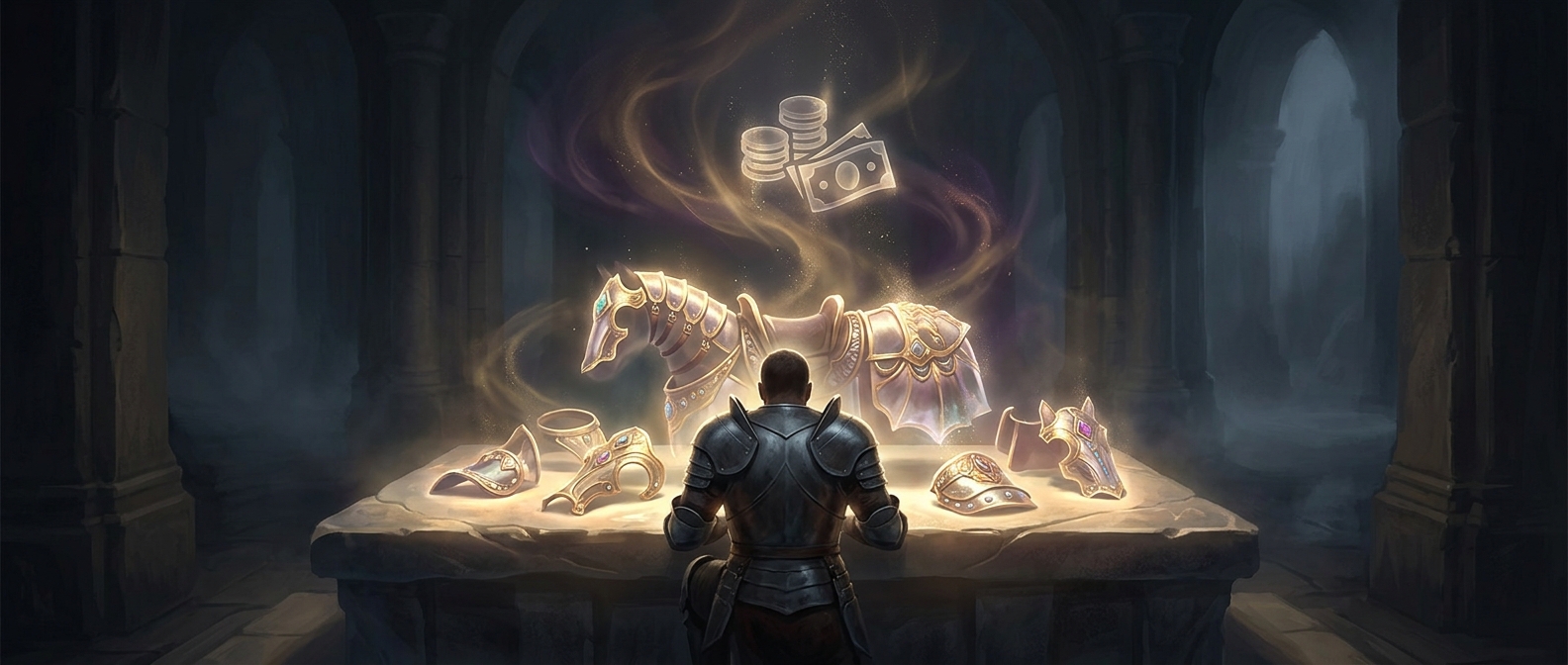
The controversy was about more than whether players wanted a decorated horse. The Elder Scrolls IV: Oblivion was a full-priced game, and its horse armor arrived as a separate purchase through the Xbox 360’s online Marketplace. For players accustomed to buying a game and receiving its contents together, paying extra for a visual flourish made the boundary between a finished product and a stream of add-ons suddenly visible.
The armor did not give players a new quest or a major system to master. Its value was personal display: a way to make a mount look different in a world where players spent many hours building a character and choosing equipment. That made it easy to dismiss as frivolous—but also made it a clear experiment in whether a small, optional digital item could be sold on its own.
From Mockery to a Business Model
Digital storefronts changed the economics of add-ons. A publisher could offer a small item without manufacturing, packaging, and shipping a separate product, while players could buy it from inside the console ecosystem. The low-stakes format also gave companies a way to test demand: would enough customers pay for personalization, even when the item was not necessary to finish the game?
Horse armor did not invent paid downloadable content, and one release did not single-handedly create microtransactions. But its very ordinary appeal made the debate unusually memorable. It exposed the tradeoff that would recur across games: optional purchases can fund additional content and let players choose what they value, yet they can also make a game feel as if it has been divided into pieces after the initial sale.
The lasting lesson was not that every cosmetic item would sell. It was that a digital item could be economically meaningful even when it changed almost nothing about how a game played.