Why film a car that isn’t there?
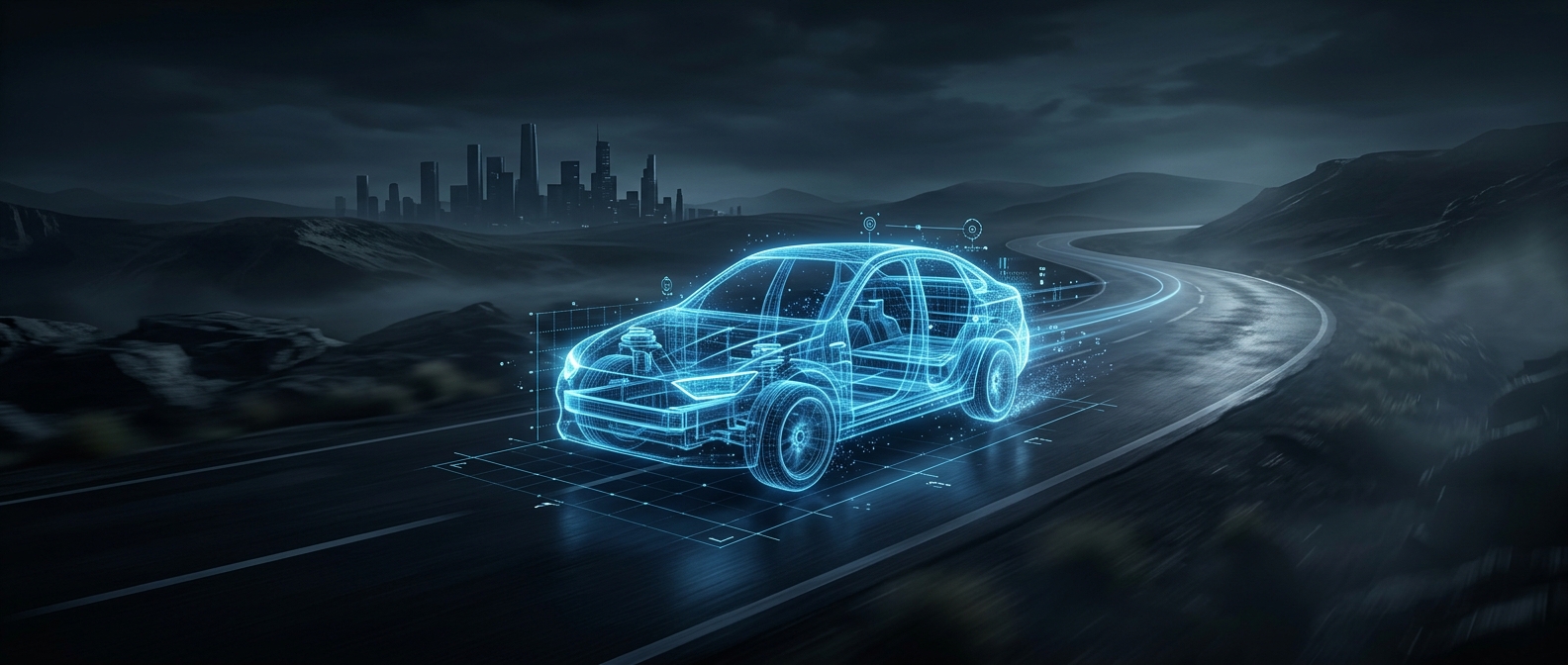
A moving-car commercial has to show more than a vehicle passing through a landscape. The camera needs to hold a flattering angle, the road and background must move convincingly, and the car’s motion has to stay smooth enough for a polished shot. A tracked, adjustable buggy gives the crew a real vehicle to move through the scene while leaving the visible car open to digital replacement.
That flexibility matters when the same footage needs to support different models, colors, or versions of a vehicle. Instead of repeating a difficult drive for each design, filmmakers can build the scene around one controlled performance and add the chosen body later.
The digital car has to obey the real drive
The buggy supplies the physical motion: turns, bumps, acceleration, and the changing viewpoint of the camera. Digital artists then match a car body to that movement, frame by frame. The vehicle cannot simply be pasted onto the image; its size and position must shift correctly as the camera moves, or it will seem to slide above the road.
Light is another constraint. A car’s paint and windows reflect the world around it, so the digital body must fit the scene’s brightness, colors, and shadows. The wheels also need to meet the road at the right angle and speed. Small mismatches can make a sleek vehicle look weightless or poorly attached to the pavement.
One performance, many possible cars
The method separates the driving shot from the final design. That can make a production more adaptable, but it also shifts work into post-production: the team must create and carefully integrate the vehicle that viewers see. The convincing result depends on preserving the physical clues—motion, perspective, light, and contact with the road—that make a digital car feel present.
The odd-looking skeleton buggy is therefore not just a stand-in. It is the moving foundation that lets a finished commercial show a car body that was never physically in the shot.