The camera had to feel like part of the scene
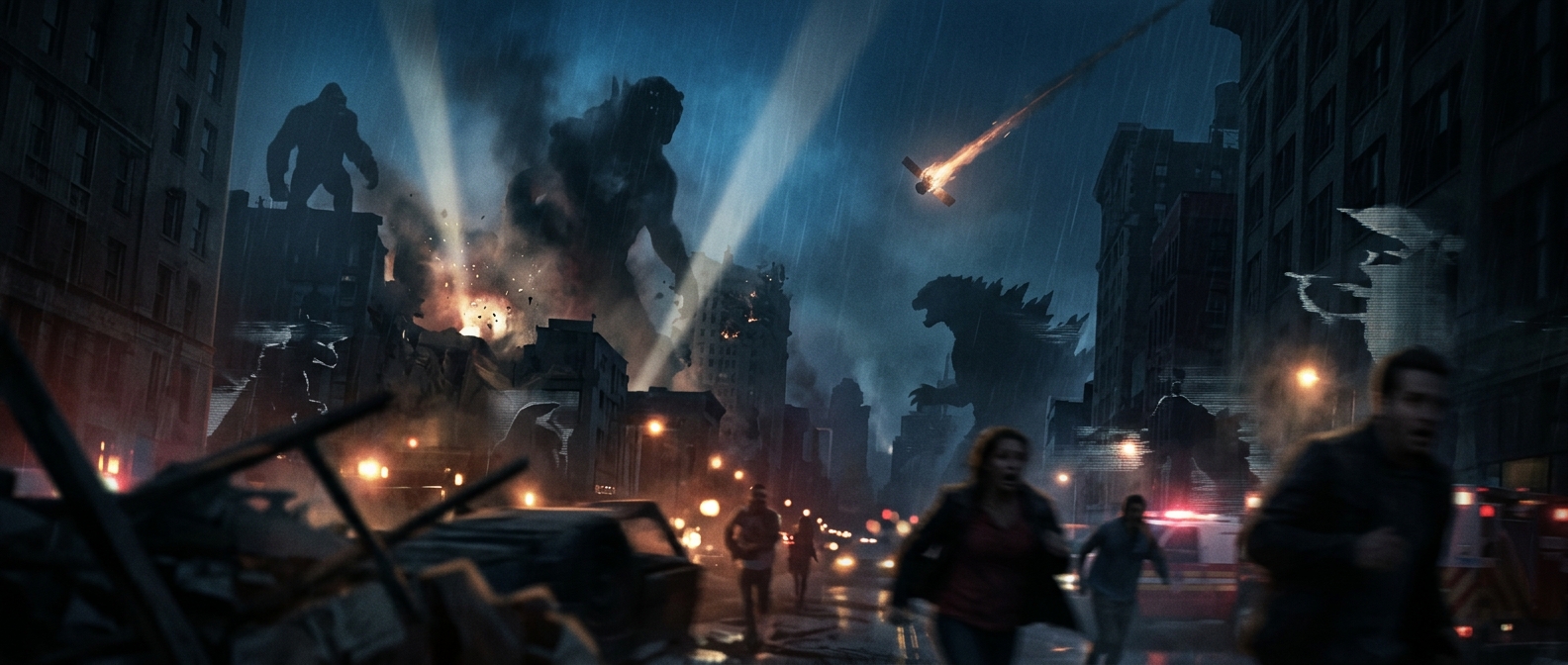
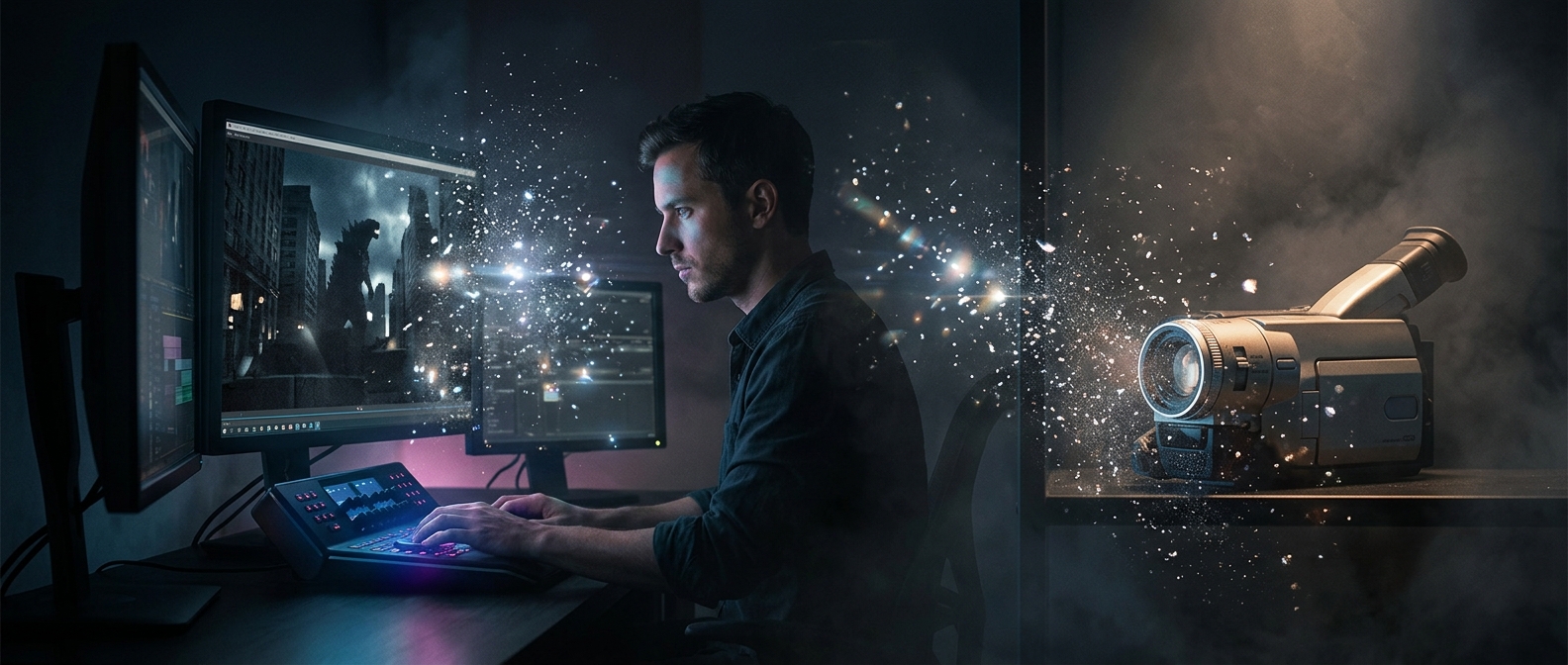
In Cloverfield, the monster’s digital presence had to fit footage that looks as if someone is recording events in a panic. That is a different problem from making a creature look polished in a controlled shot: the image itself is supposed to be unstable, imperfect, and limited by a consumer camcorder.
The trick is to make visual flaws behave as though they belong to the camera, not to the monster. Dust, focus slips, and bright flares affect the view of the whole scene. When those effects are coordinated with the action, the creature seems to occupy the same messy space as everything else rather than appear as a clean digital layer pasted onto the picture.
Imperfection has to be timed
A shaky image alone would not sell the illusion. If the focus hunted at random or a flare appeared without a nearby burst of light, the camera would seem faulty in the wrong way—and the effect could call attention to itself. The imperfections need to respond to what the person filming would plausibly be reacting to.
That timing also gives the viewer less time to scrutinize the digital creature. A sudden movement, a partial glimpse, or an overexposed flash can make the scene feel like an accidental recording: the camera operator is trying to keep up, not framing a perfect shot. The limitation becomes part of the storytelling.
The result is a useful visual paradox: the more the image seems to misbehave, the more convincingly the impossible event can feel captured rather than staged.