A closer look
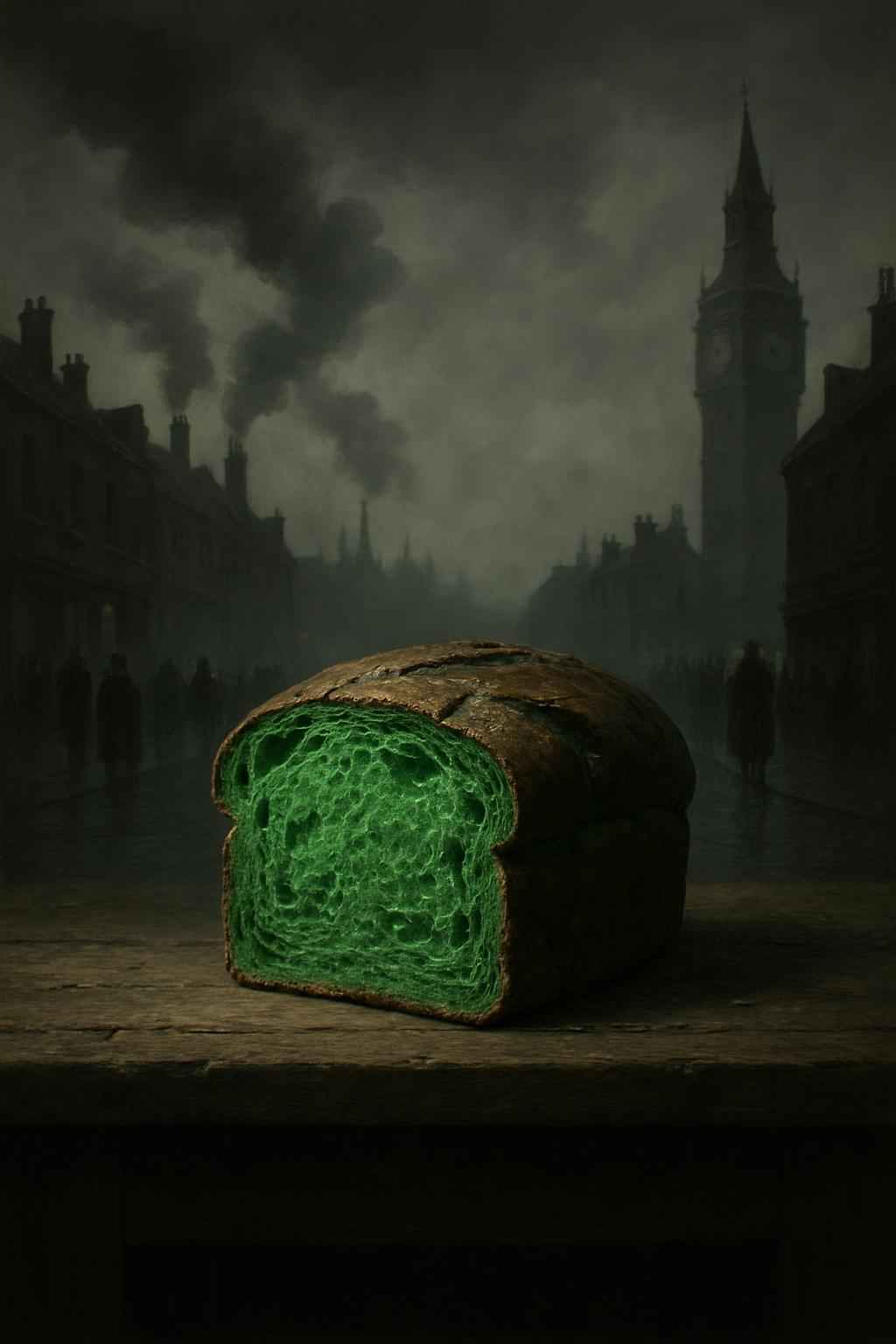
In Victorian London, bread turned green. The bright hue wasn’t mold — it was copper sulfate, a toxic filler bakers used to make stale flour look fresh. During the Industrial Revolution, cheap chemistry met hunger, and the working poor became test subjects for early food science. Public outrage over metallic bread and lead-tinted candies led to the first consumer protection laws. The haunting irony: those same poisons birthed modern standards of purity. Every barcode in the supermarket today echoes that scandal. Our obsession with 'clean labels' began in a soot-choked city where grocery shelves first became deadly experiments.