A Forest Turns Into Part of the Artwork
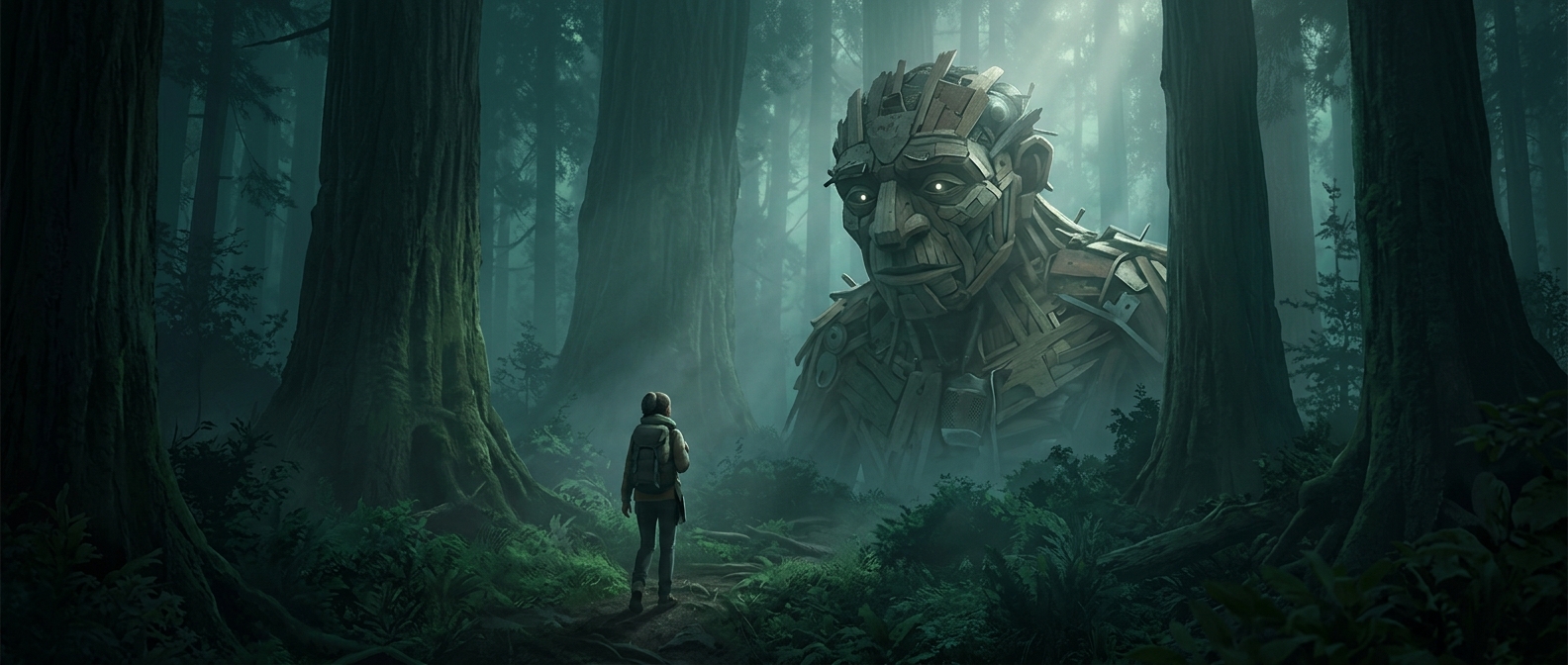
Thomas Dambo’s trolls are assembled from materials that already had another use—or were headed for disposal. Scrap wood becomes a body, a face, or an oversized hand; other recycled pieces can add texture and character. The materials’ irregular shapes help each troll look less like a polished statue and more like a creature that has taken form from the forest’s own leftovers.
That construction choice changes the experience of seeing the work. Visitors are not approaching a sculpture in a gallery, where the setting is controlled and the object is immediately in view. Trees, paths, and terrain frame the troll, while its scale makes it feel as though it belongs to a hidden world just beyond the trail.
Finding One Is Part of the Visit
Instead of giving visitors an exact GPS pin, the project offers clues. That turns the approach into a small search: people have to read the landscape, choose a route, and keep looking. The walk is not just a way to reach the artwork; it becomes part of encountering it.
The arrangement also makes the forest matter in a practical way. A troll’s location shapes what visitors notice on the way and how they gather around the sculpture once they find it. And because the figures are built from reclaimed materials, the discovery carries a second idea: discarded wood can become something large, playful, and worth seeking out.