How breakfast became Dexter’s opening crime scene
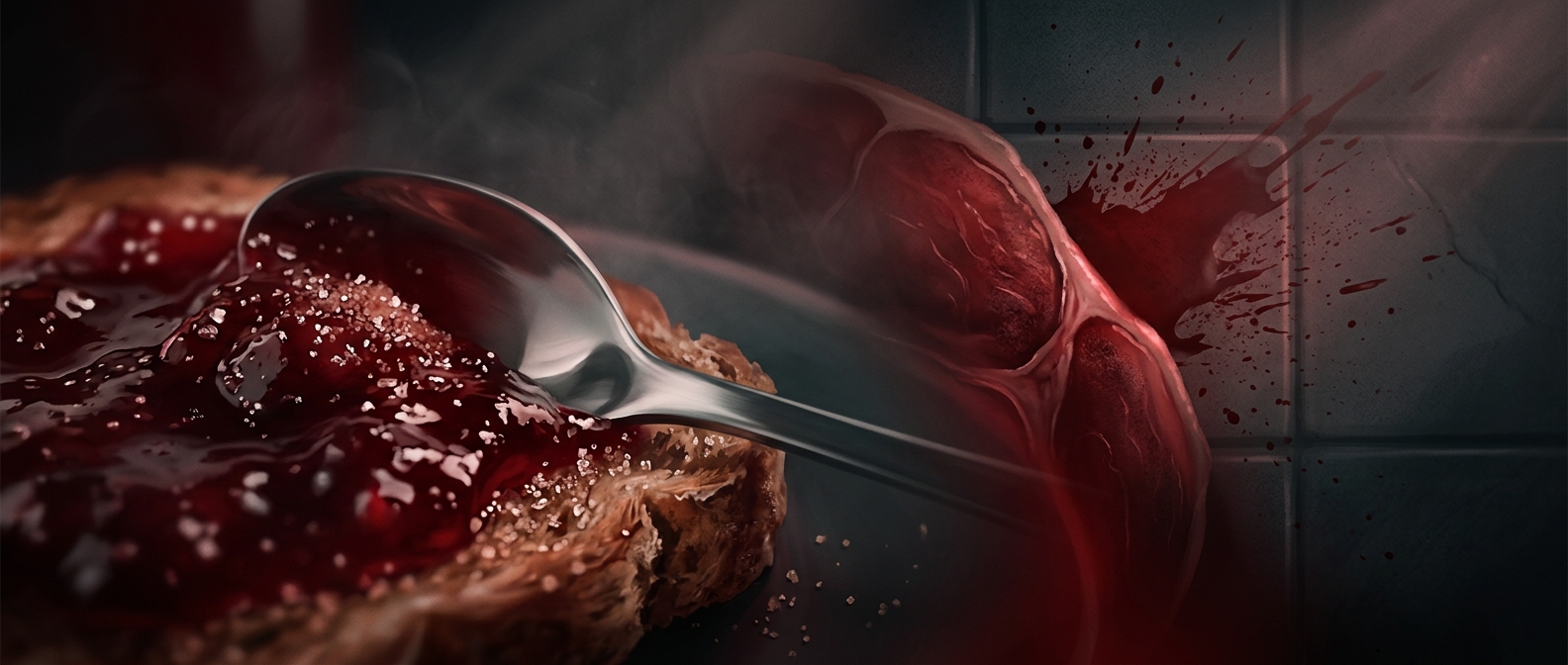
The title sequence of Dexter builds its unease by keeping the actions familiar while changing how closely we see and hear them. A man gets ready for the day, but the camera isolates each gesture: floss pulls taut, juice bursts from an orange, and a knife presses through ham. Extreme close-ups remove the reassuring context of a kitchen. Instead of reading as routine, each movement starts to resemble evidence of violence.
The trick is in the scale and sound
Close-up shots make small physical details dominate the frame. A strand of floss can look like a wire; red juice can suggest blood; a blade cutting food can echo a weapon. The images do not need to show an actual crime. They invite the viewer to connect ordinary preparation with the violent work Dexter carries out at night.
Sound strengthens that connection. The sequence brings forward wet, sticky, or tearing noises that everyday scenes usually leave in the background. Heard so clearly, squeezing fruit or slicing food feels bodily and uncomfortable. The mismatch—an ordinary breakfast paired with sounds associated with injury—creates the joke and the menace at once.
A portrait built from an ordinary routine
The credits work as a compact introduction to the show’s central tension: Dexter can perform the calm rituals of normal life while concealing a violent identity. Breakfast is not merely a pause before the story begins. The camera turns it into a miniature version of the series, where familiar surfaces invite a darker interpretation. By the time the meal is ready, the viewer has already been taught to look at routine gestures as if they might hide something sinister.