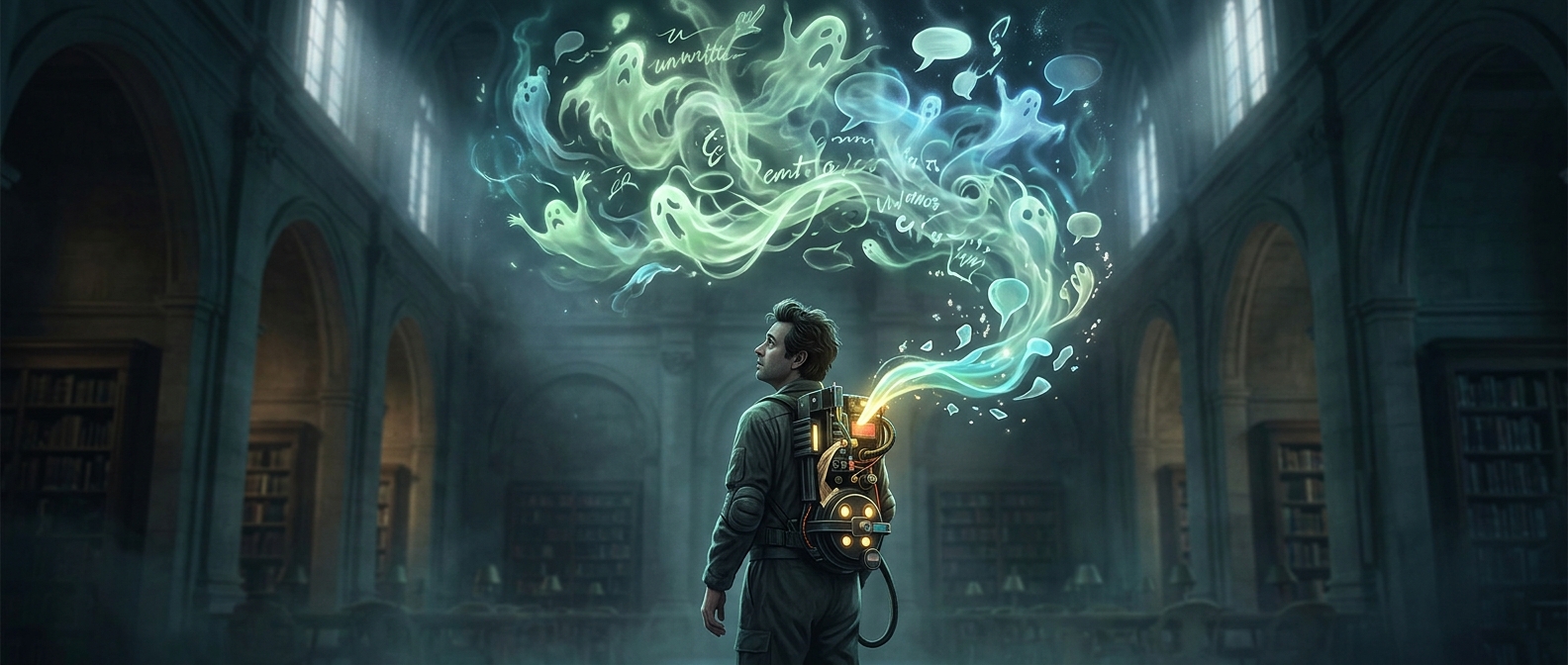
How improvisation shaped Venkman
Dr. Peter Venkman’s loose, wisecracking manner in Ghostbusters was not simply a matter of delivering a fixed script with comic timing. Bill Murray ad-libbed much of Venkman’s dialogue, giving scenes room for unexpected remarks and reactions. The other actors had to respond in the moment, so their surprise or amusement could become part of the performance rather than a rehearsed exchange.
Loose dialogue, fixed story
Improvisation did not mean the film had no plan. The scenes still had to move the story forward, introduce the ghosts and equipment, and keep the team’s relationships legible. A spontaneous line could make Venkman sound more irreverent, but it also had to fit the scene well enough that the audience could follow what was happening.
That balance is one reason ad-libbing works especially well for a character like Venkman. His humor often comes from treating extraordinary events with casual skepticism. An unexpected quip can sharpen that contrast, while another performer’s unscripted response makes the group feel less like people taking turns reciting jokes and more like colleagues coping with an absurd situation.
The take becomes part of the joke
On a set, an improvised line is only a possibility: the actors still perform multiple takes, and the finished film uses selected footage. But spontaneity can leave a scene with a texture that carefully planned dialogue alone may not produce. In Ghostbusters, Murray’s ad-libs also gave his co-stars a moving target—helping make the team’s comic chemistry feel like something happening between them, not just something written on the page.