Turning a night’s plan into a live decision
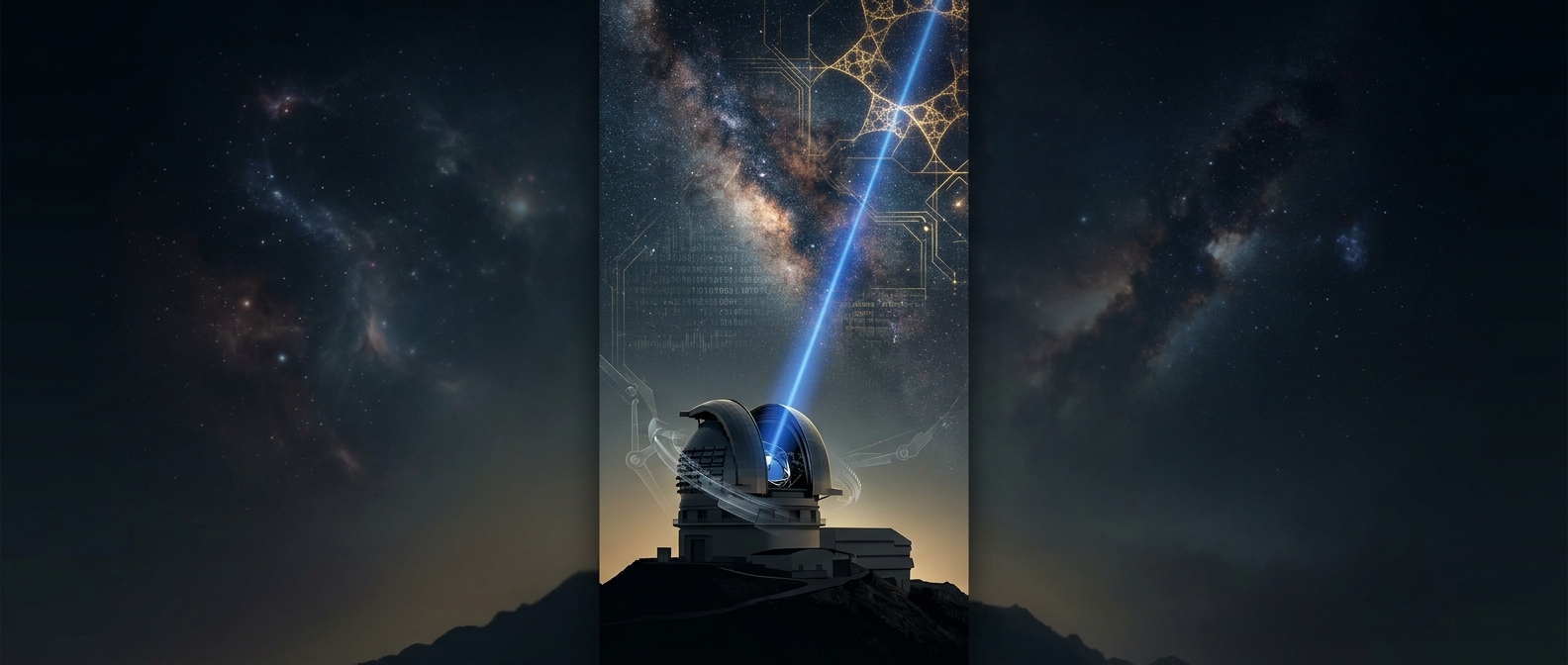
A large survey telescope cannot simply follow a fixed list of targets. The sky changes as Earth rotates, clouds move, and the Moon shifts its light across the night. A schedule that looked sensible hours earlier may no longer be the best use of the next few minutes.
Instead, the system treats possible observations as competing choices. Each target has conditions under which it is useful to observe, while the telescope and sky impose limits on what can be viewed safely and clearly. The scheduler weighs those choices against the conditions at that moment, then selects an observation and reassesses as the night unfolds. This is a form of continuous replanning: the goal is not to obey an old timetable, but to keep making productive choices as circumstances change.
Why the conditions change the choice
Clouds can make an exposure less useful by blocking or dimming the target. Moonlight brightens the sky, making faint objects harder to detect, so a darker part of the sky may become more valuable. A passing satellite can also cross a telescope’s view and leave a bright trail in an image; avoiding that interference can protect the quality of the data.
These factors do not act in isolation. A target that is a poor choice under bright moonlight might still be worth observing if the sky is clear and the observation is timely. The scheduler must balance immediate image quality against the broader value of covering different parts of the sky.
Automation with a scientific purpose
The benefit is more than convenience. By making decisions quickly and consistently, the system can adapt to conditions that no advance plan can perfectly predict, while keeping the observing program moving without waiting for a person to select every next target. Human researchers still define what the survey is meant to accomplish; automation translates those priorities into moment-by-moment choices.
The result is a telescope whose most important next observation can change with the weather—or with a satellite crossing its path—rather than being locked in before the night begins.