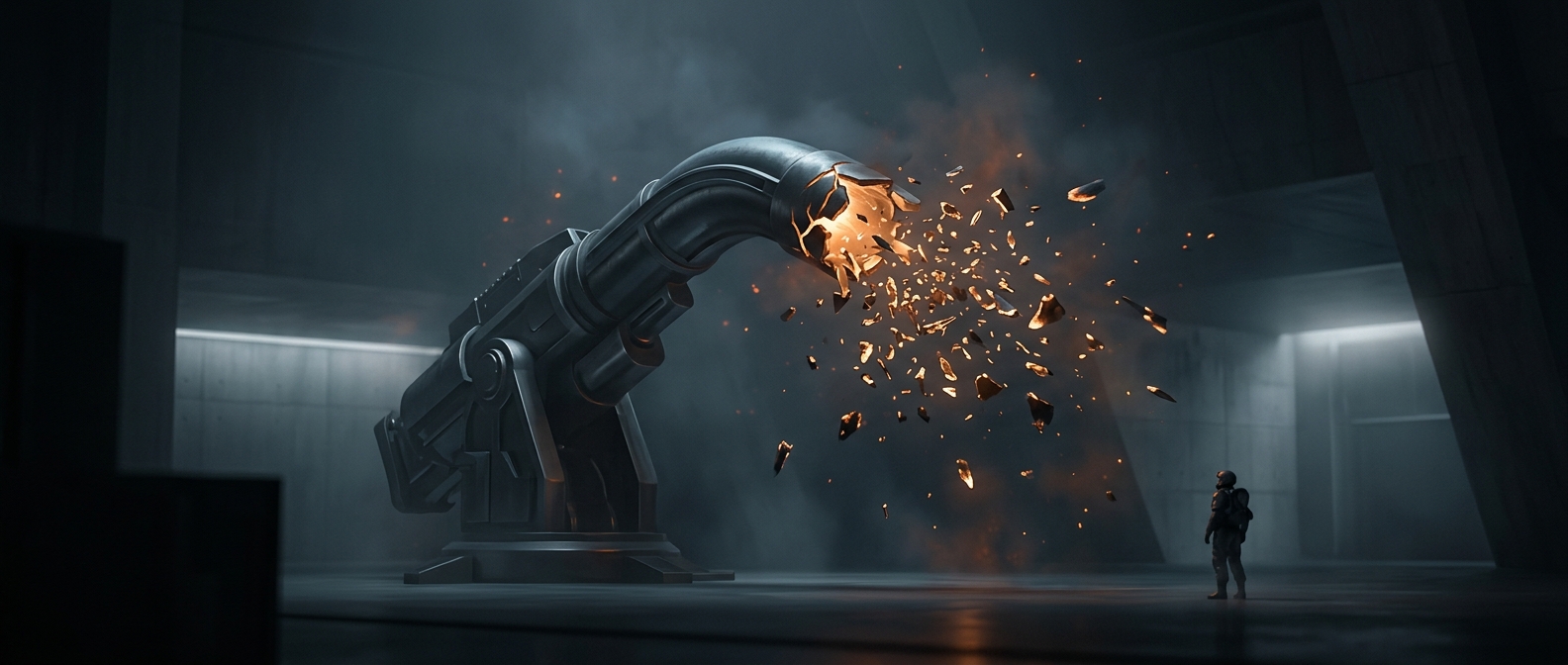
A barrel that made bullets take a turn
The Krummlauf was not simply a bent sight or a mirror: it was a curved extension fitted to the muzzle of the German StG 44 assault rifle. Its purpose was to let a soldier aim and fire without exposing the rifle—or the person holding it—directly to enemy fire. A version was also intended for use from inside armored vehicles.
But a bullet is built to travel straight through a barrel. In the Krummlauf, the curved passage forced it to change direction while it was moving at high speed. The barrel’s rifling, which normally spins a bullet to help it fly steadily, could not make that sharp turn harmless. The projectile was strained against the inside of the curve and could deform or break apart before leaving the attachment.
The attachment paid a price, too
Every shot also drove heat and pressure through the curved metal. The strain concentrated along the bend, where the bullet was pressed against the barrel, so the extension could wear, warp, or fail after relatively little use—sometimes around 300 rounds, according to the reported service life.
That created an awkward tradeoff: the device could move the firing point around a corner, but it sacrificed both ammunition reliability and durability. The Krummlauf’s strange reputation comes from the same engineering problem twice over: the curve was severe enough to damage the bullet passing through it and the attachment guiding it.