How a page became a phone call
A fax machine did not send a picture as one complete image. It examined the page in narrow lines, turning changes between light and dark into an electrical signal. At the receiving end, a second machine used that signal to rebuild the image, typically by marking heat-sensitive paper.
To carry the signal over an ordinary telephone connection, an acoustic coupler translated it into sound. The handset’s microphone and earpiece sat against the coupler’s speakers, so information crossed the gap as audible tones rather than traveling through a direct electrical connection. The phone network was built for speech, not detailed pictures; the fax had to fit its image data into that limited channel.
Why transmission crawled
The machine had to scan and transmit each strip of the page in sequence. Sending more detail meant sending more information, while the telephone line could carry only so much at once. Early equipment therefore traded speed and sharpness against one another: a slow scan could preserve enough detail to recognize text, but the resulting image could still look coarse or blurred.
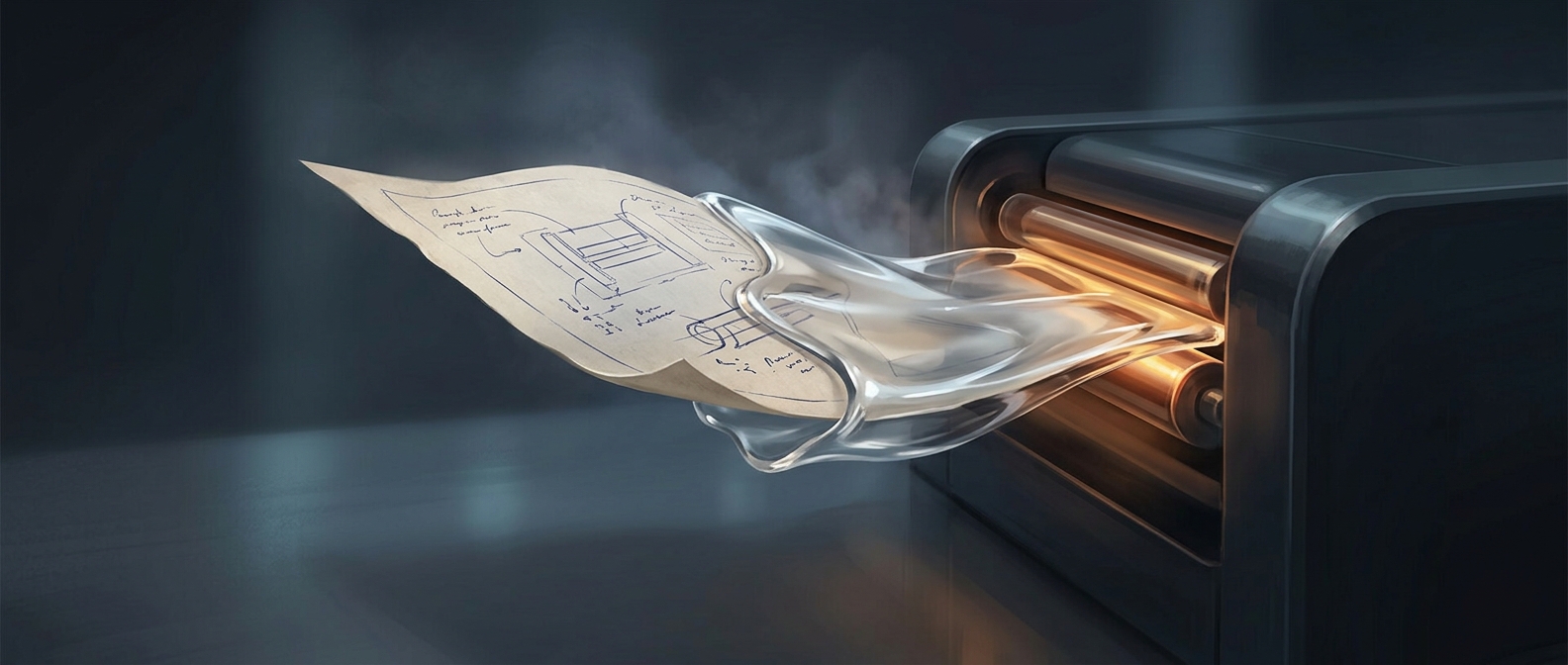
The paper added another constraint. Thermal paper darkens when heated, letting the receiver draw an image without ordinary ink, but the marks were not as crisp as the characters on the original sheet. A fax was a compromise built around the phone line: scan slowly, send a simplified image, and print it with heat. That is why a machine could reproduce a page remotely at all—and why getting even one page across demanded patience.