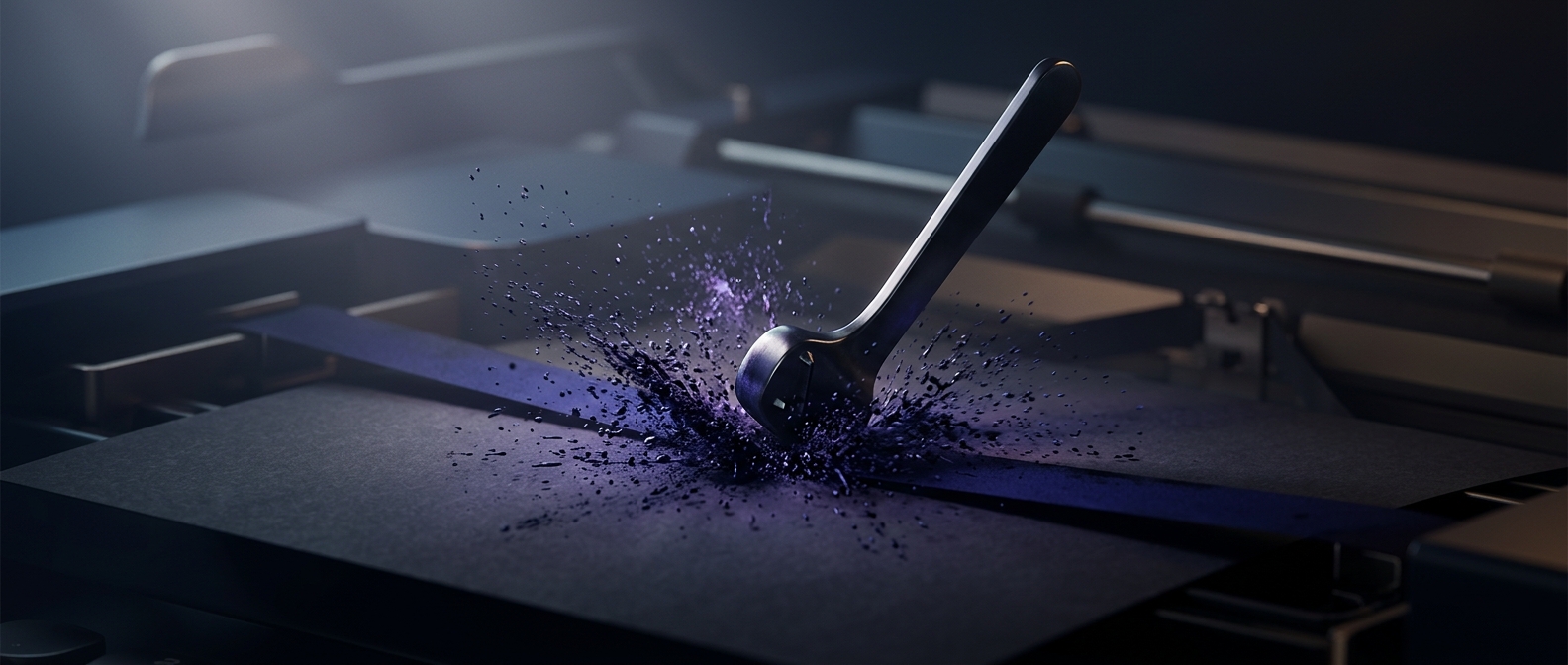
Why a passing particle can scramble a memory bit
Cosmic rays and particles trapped around Earth can strike a chip and leave a brief trail of electrical charge. In conventional memory such as SRAM, a bit is represented by a tiny electrical state. If a particle deposits enough charge in the wrong place, it can push that state across the circuit’s switching threshold. The result is a bit flip: a stored 0 is read as a 1, or vice versa.
That matters especially in spacecraft, where electronics operate for long periods in radiation environments and may be far from repair.
MRAM stores the answer magnetically
Magnetoresistive RAM, or MRAM, uses a small magnetic structure called a magnetic tunnel junction. Its two magnetic layers can point in the same or opposite directions. Those arrangements produce different electrical resistance, which a circuit reads as the two possible bit values.
The information is therefore held in the layers’ magnetic orientation, not as a packet of charge that must remain in place. A particle can still disturb surrounding circuitry, but an ordinary transient charge deposit is less likely to erase the stored magnetic state. That gives MRAM an important advantage against one common route to radiation-induced memory errors.
More resilient, not invulnerable
MRAM’s design does not make an entire spacecraft computer immune to radiation. A particle can affect the circuitry used to read or write a bit, and severe radiation can damage components in other ways. The protection depends on the memory’s design and how it is integrated into a system.
The practical distinction is that MRAM separates the stored information from the fragile electrical state that radiation can readily disturb. For a spacecraft, that can mean fewer corrupted bits—and less need for error correction or recovery—while the magnetic memory continues to hold its data.