How a Key Becomes a Printed Letter
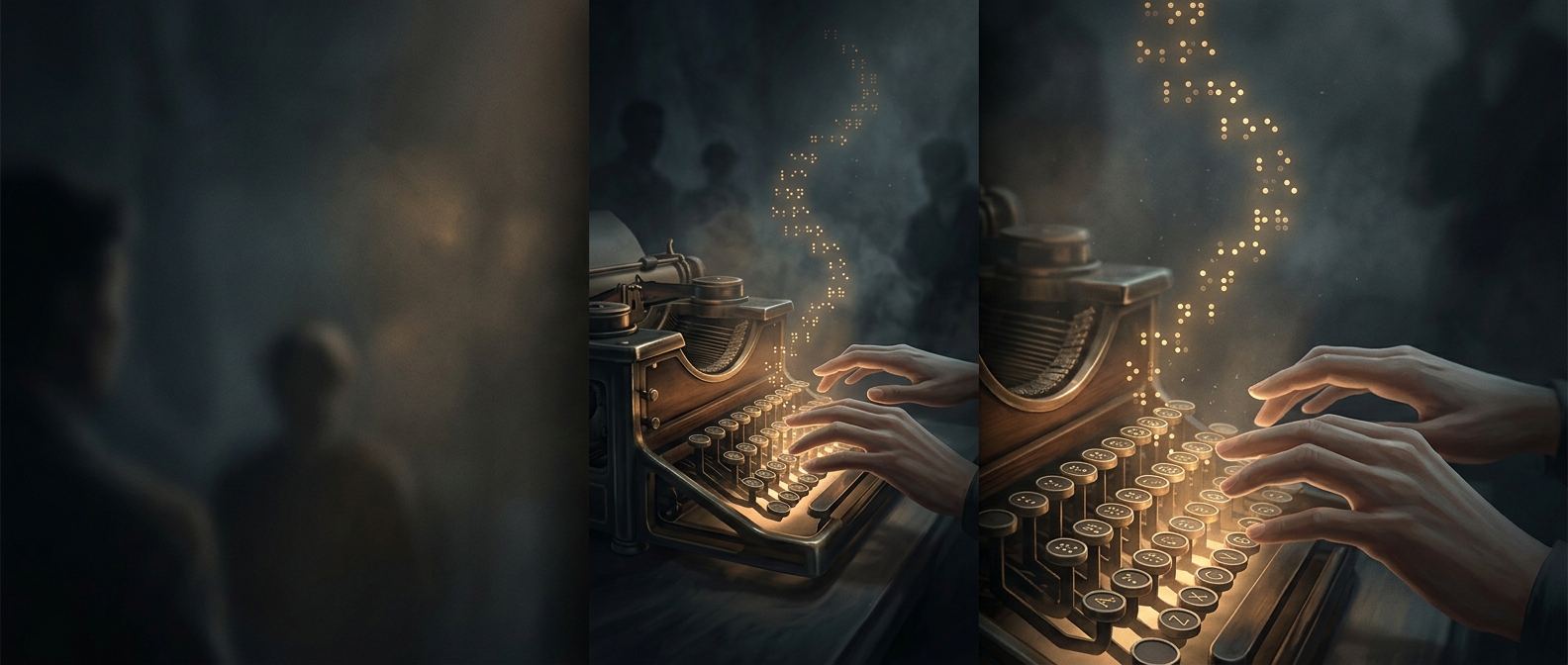
A typewriter key is not itself connected to a letter-shaped stamp. Pressing it moves a key lever, which transfers motion through a linkage to a typebar—a narrow metal arm with a raised letter at its tip. The bars pivot from different positions but are guided toward one shared printing point, so whichever key is struck brings its letter to the same spot on the page.
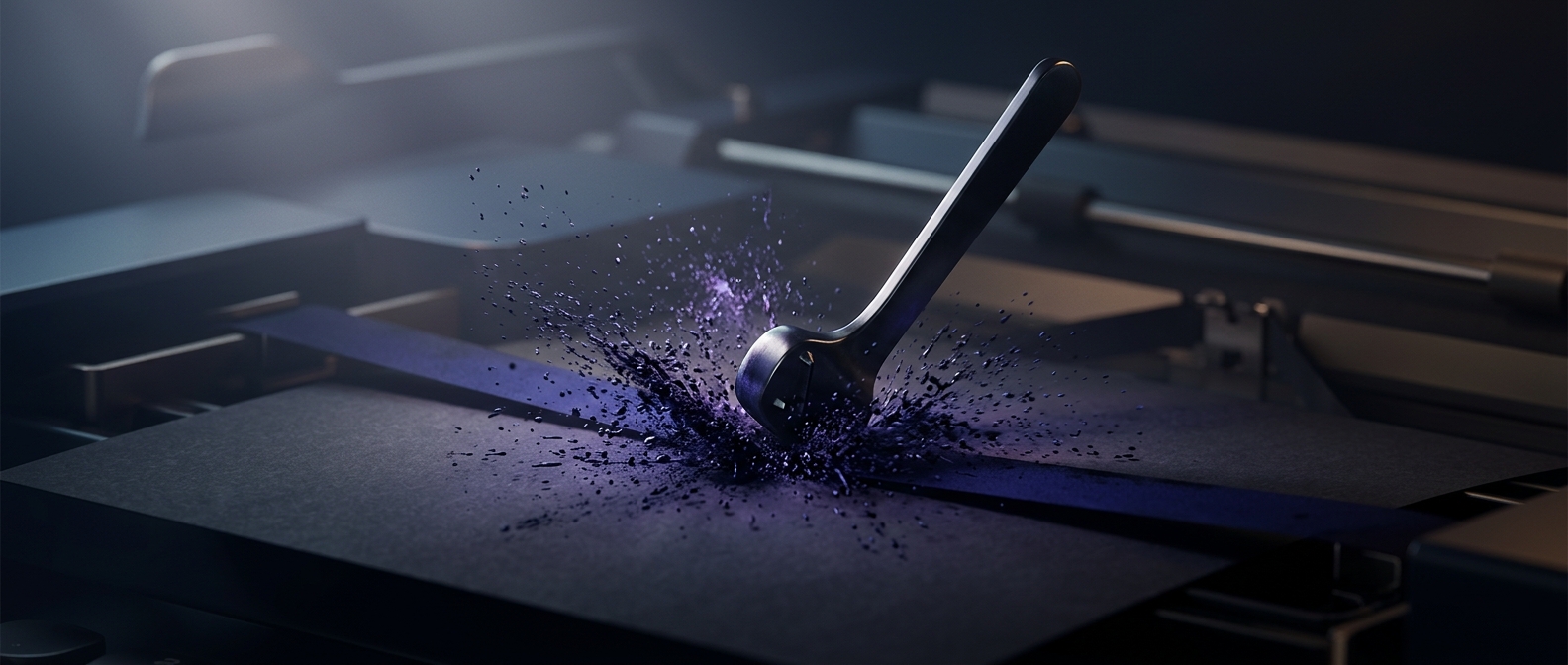
The raised letter is made backward, like a small mirror image. When the typebar hits, the inked ribbon is squeezed between the metal letter and the paper. Ink transfers only where the raised shape presses through, leaving a readable mark. The blow has to be firm enough to print clearly, but controlled enough not to tear the paper or jam the moving parts.
The Paper Moves, Too
After a strike, the typebar springs back, clearing the printing point for the next key. At the same time, a ratchet-like mechanism called the escapement releases the carriage—the assembly holding the paper—by one character space. That small shift is what turns separate impacts into a line of text rather than a stack of letters on top of one another.
At the end of a line, the typist pushes the carriage back to its starting position. This also advances the paper for the next line. The result is a tightly coordinated sequence: a key sends one metal arm forward, the ribbon leaves its ink, and the carriage makes room for the next strike.