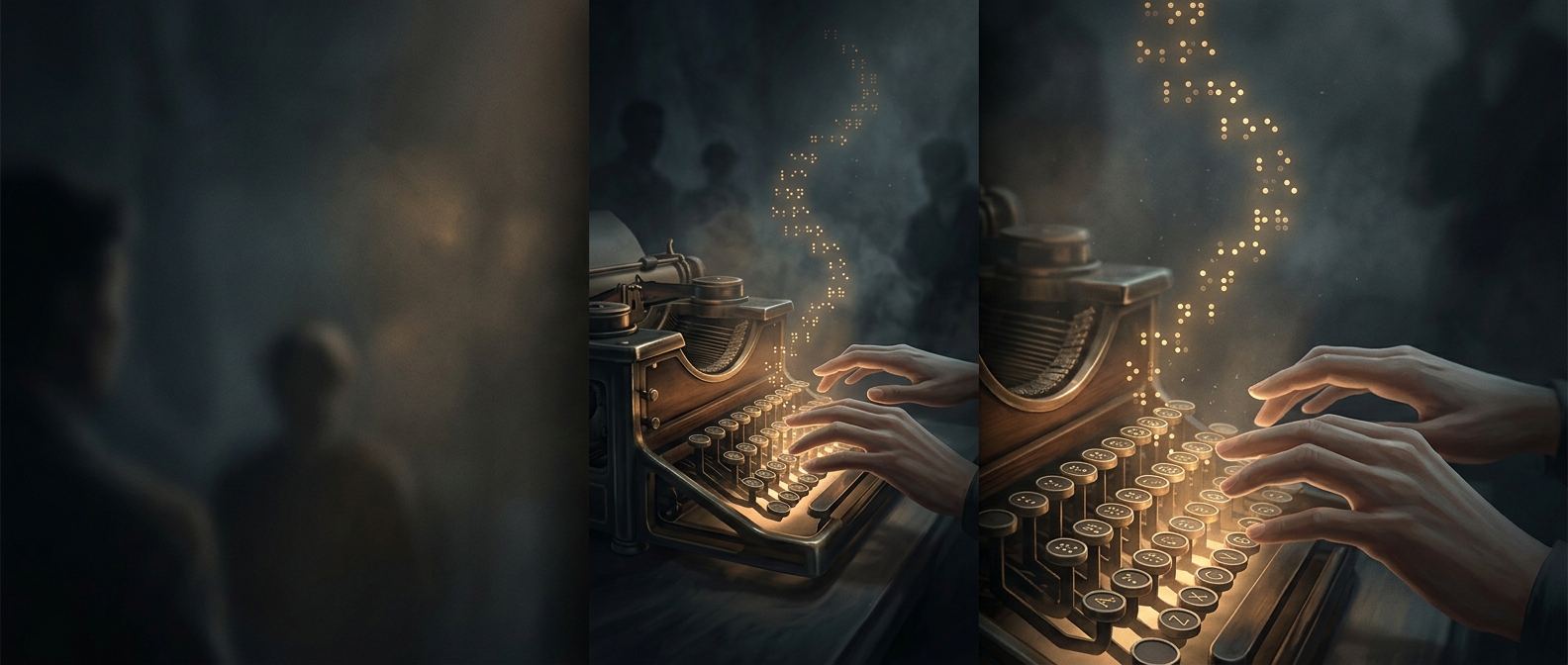
A machine for writing without seeing the page
In 1808, Italian inventor Pellegrino Turri built an early working typewriter to help a blind friend, commonly identified as Countess Carolina Fantoni da Fivizzano, write letters. The practical problem was more than forming words: handwriting is difficult to keep legible when you cannot see where each letter lands, and correcting a line by hand can be awkward.
A typewriter changes the task. Instead of drawing letters across a page, the writer presses keys that make characters appear in set positions. That can produce writing others can read without requiring the typist to guide a pen by sight. The machine did not restore vision; it offered another way to put words on paper.
From personal aid to office tool
Turri’s machine belonged to a long, experimental era of typewriter design. It was not the familiar office machine later generations would know, and the surviving record does not establish every detail of how it worked. Its significance is the purpose it served: a device built around a specific person’s need to communicate independently.
Decades later, businesses adapted typewriters for secretaries and routine correspondence. In an office, the same basic advantage mattered for a different reason: consistent, legible pages could be produced more efficiently than handwritten ones. A tool conceived to make one blind writer’s letters readable thus anticipated a broader shift in how written communication was made—by pressing keys rather than shaping every letter by hand.