
stackyFACTS
Technology

How your finger activates a flat touch button

HERE’S THE INTERESTING PART

Those sleek, flat buttons aren't reacting to physical pressure; they are actively stealing your body's electricity. Capacitive touch panels emit a tiny electrostatic field. Because the human body is mostly conductive water, bringing a finger dangerously close disrupts the field, creating a measurable change in capacitance that triggers the button.
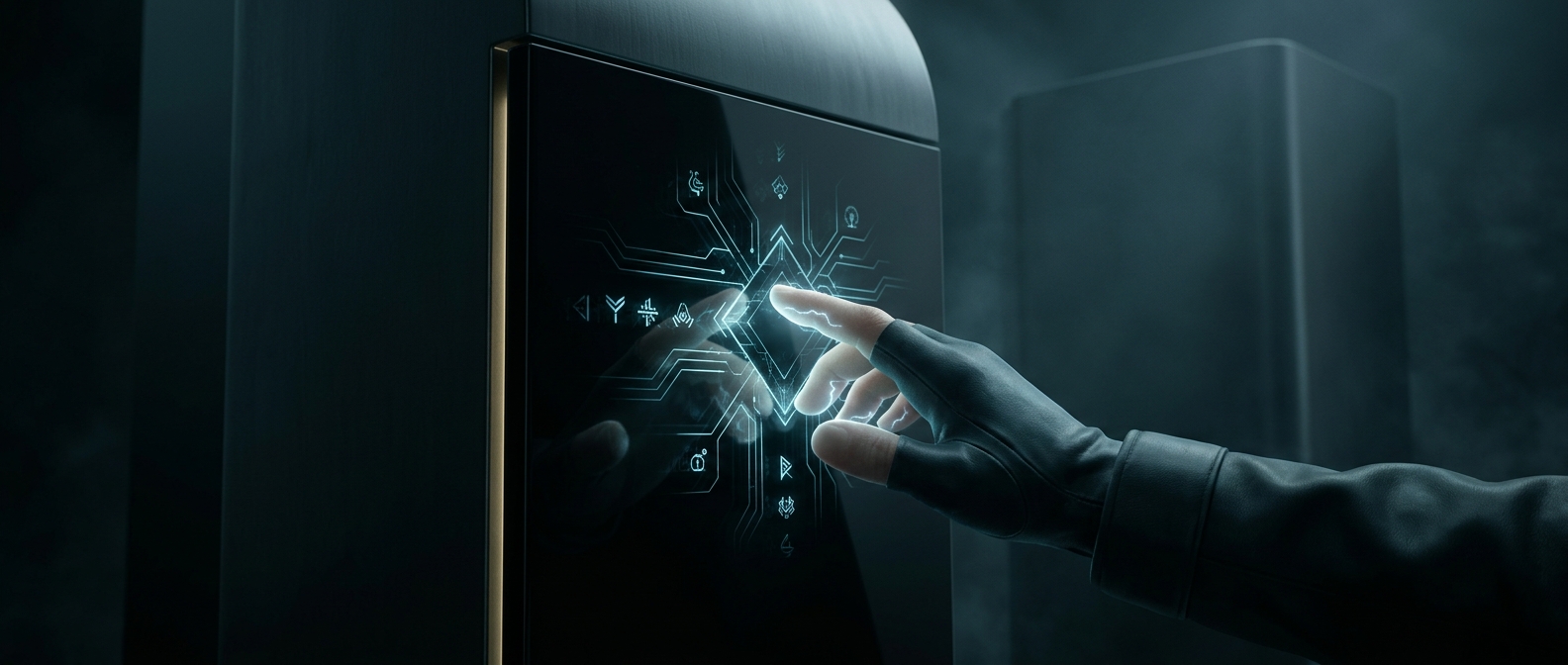
How your finger activates a flat touch button
STACKY / Technology
One discovery leads to another.

Keep exploring facts in this topic.

Technology →

STACKY FOR IPHONE

A bigger world.
One discovery
at a time.

Keep discovering with Stacky. Interesting facts in an app that is always within reach.

Download on the App Store
ONE MORE DISCOVERY?

Keep exploring

All in this topic →
Touchscreens rely on the electrical capacitance of skin
Technology

Touchscreens rely on the electrical capacitance of skin

Your expensive screen relies entirely on the fact that human beings are essentially giant bags of salty, conductive water. Capacitive touch displays do not…

Discover more
The Walkman was built for listening together
Technology

The Walkman was built for listening together

Sony initially believed that listening to music alone was profoundly rude. The first Walkman came equipped with dual jacks and an orange 'hotline' button that…

Discover more
Why computer chips are hitting the size of atoms
Technology

Why computer chips are hitting the size of atoms

Decades of shrinking transistors have finally run into an awkward brick wall: the literal size of an atom. Modern chip features are getting so unfathomably…

Discover more
Why does a brand new 500GB hard drive only show about 465GB of available storage the moment you plug it into a PC?
Technology

Why does a brand new 500GB hard drive only show about 465GB of available storage the moment you plug it into a PC?

Why does a brand new 500GB hard drive only show about 465GB of available storage the moment you plug it into a PC?

Discover more
Christopher Latham Sholes designed the ubiquitous QWERTY keyboard layout in the early 1870s specifically to separate commonly paired letters and prevent mechanical typewriters from jamming.
Technology

Christopher Latham Sholes designed the ubiquitous QWERTY keyboard layout in the early 1870s specifically to separate commonly paired letters and prevent mechanical typewriters from jamming.

Christopher Latham Sholes designed the ubiquitous QWERTY keyboard layout in the early 1870s specifically to separate commonly paired letters and prevent…

Discover more
Your camera can see infrared—so it has to be blinded
Technology

Your camera can see infrared—so it has to be blinded

The sensors inside digital cameras are fully capable of perceiving light spectrums that are entirely invisible to human eyes. Manufacturers actually have to…

Discover more
StackyMore discoveries in the app
Download on the App Store