A remedy made from human remains
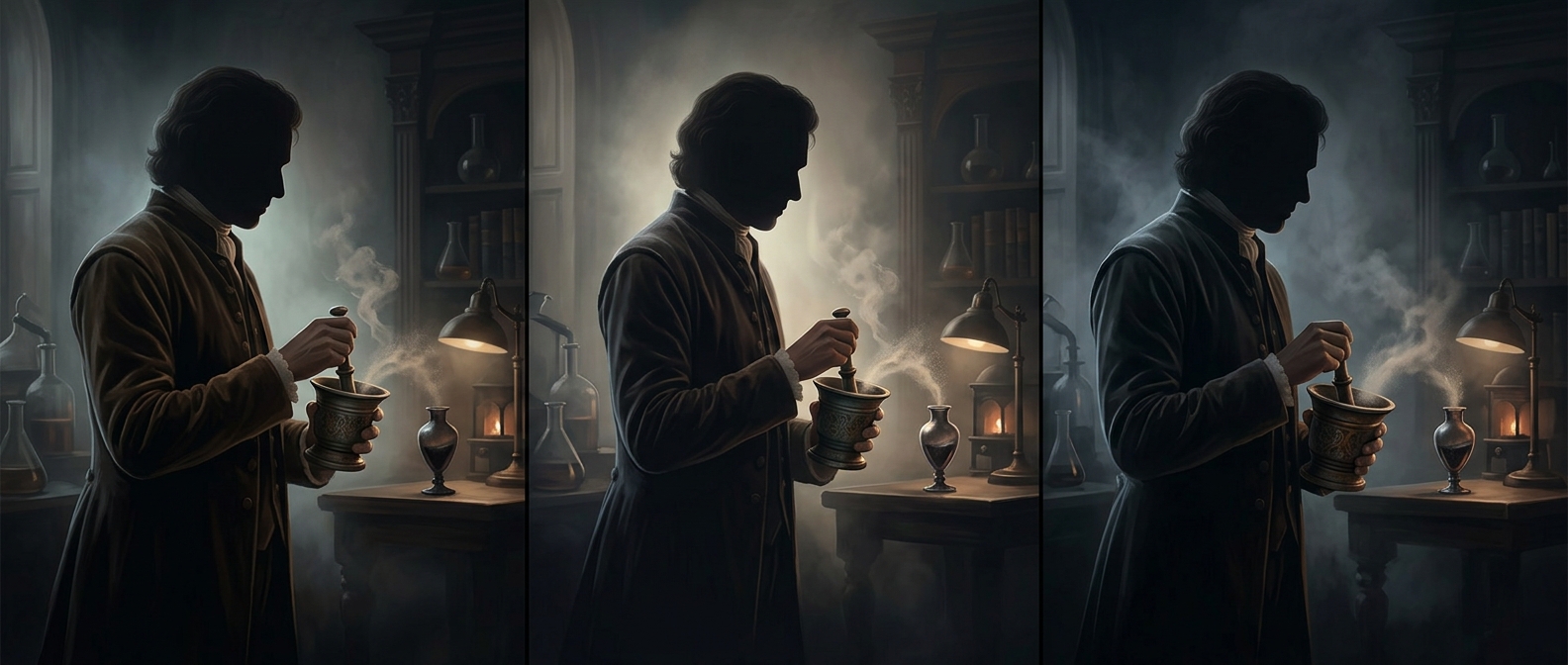
In seventeenth-century medicine, a substance’s origin could be treated as part of its healing power. Human skull was among the materials used in European remedies, and Robert Boyle recorded a proposed treatment for nosebleeds involving finely powdered skull. The prescription belongs to a world in which medicines were assembled from minerals, plants, and animal or human matter—not only from ingredients whose effects could be explained by modern chemistry.
Why a powder might seem plausible
A nosebleed is a small blood vessel breaking inside the nose. Today, pressure on the soft part of the nose is used to help the vessel seal. Early practitioners lacked that shared account of what was happening, so remedies were judged through reported experience and theories about how substances acted on the body. A powder might be imagined to dry or check bleeding, though the skull itself offered no reliable way to close the damaged vessel. Inhaling it would also irritate the nose rather than provide the kind of direct pressure used now.
Boyle’s interest in remedies reflects an important feature of early experimental medicine: collecting and testing practical recipes was part of investigating nature. Recording a treatment, however, does not establish that it worked. The proposed cure also depended on an unsettling ingredient—human bone had to be obtained, prepared, and ground into powder. A minor nosebleed thus led, in the logic of the recipe, to a supply chain involving the dead.