Marx’s London night out ended in a street escape
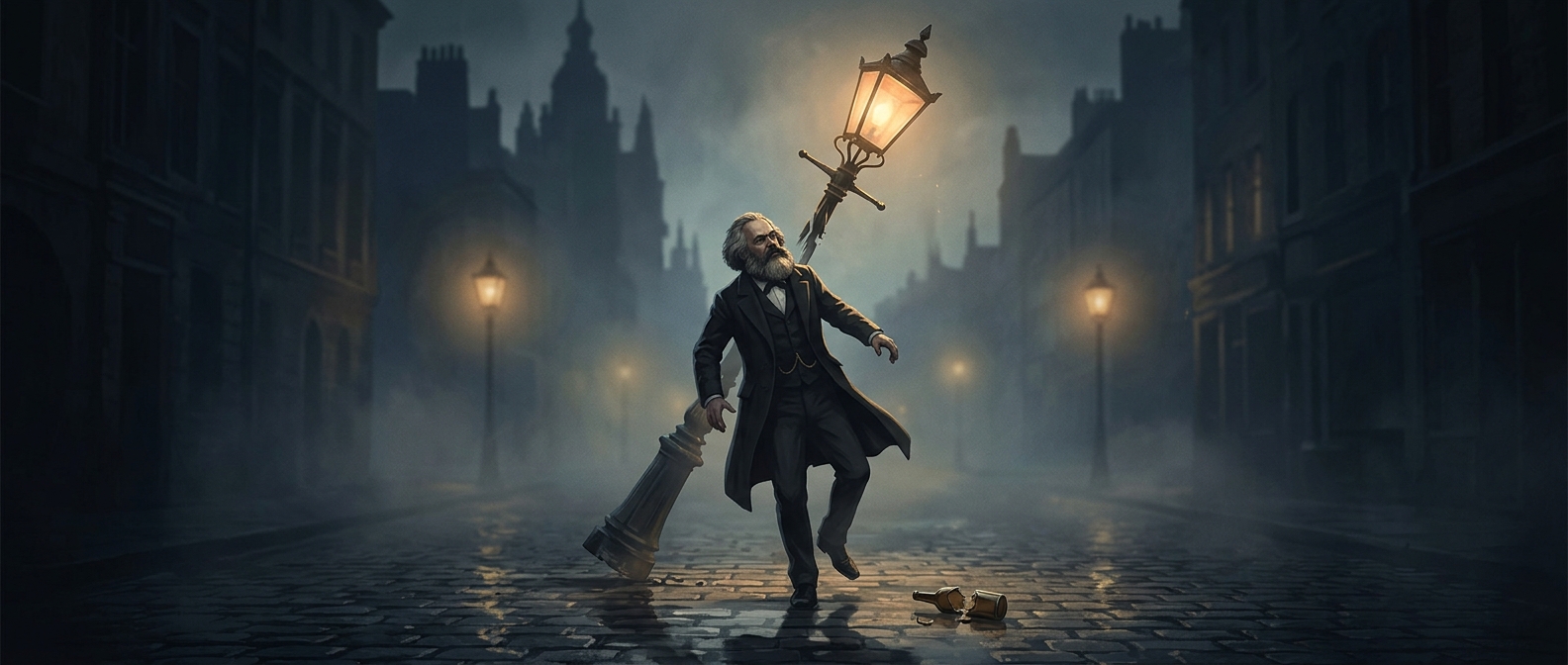
Wilhelm Liebknecht’s recollection gives a glimpse of Karl Marx far removed from the desk-bound image of a political theorist. The two men had spent an evening moving between pubs; by Liebknecht’s account, the outing ended with them breaking street lamps and fleeing from the police. The story’s force lies in that abrupt turn: serious political company could also mean a reckless night and a hurried getaway.
An émigré’s life beyond the study
Marx was living in London as a political exile, not passing through as a student. That distinction matters. The episode belongs to the adult life he built in a city where he spent decades, among fellow political exiles and working people, while writing and organizing. Liebknecht was part of Marx’s political circle, so his memory preserves a moment of personal familiarity rather than a formal account of Marx’s ideas.
A reminiscence cannot tell us every detail of the night or establish exactly how events unfolded. It does show how an associate remembered Marx: not as a monument, but as a companion whose evening could veer from conversation into mischief. The image of the two men running from police makes the grand political thinker briefly, unmistakably human.