A Victory Toast That Outran the Supply
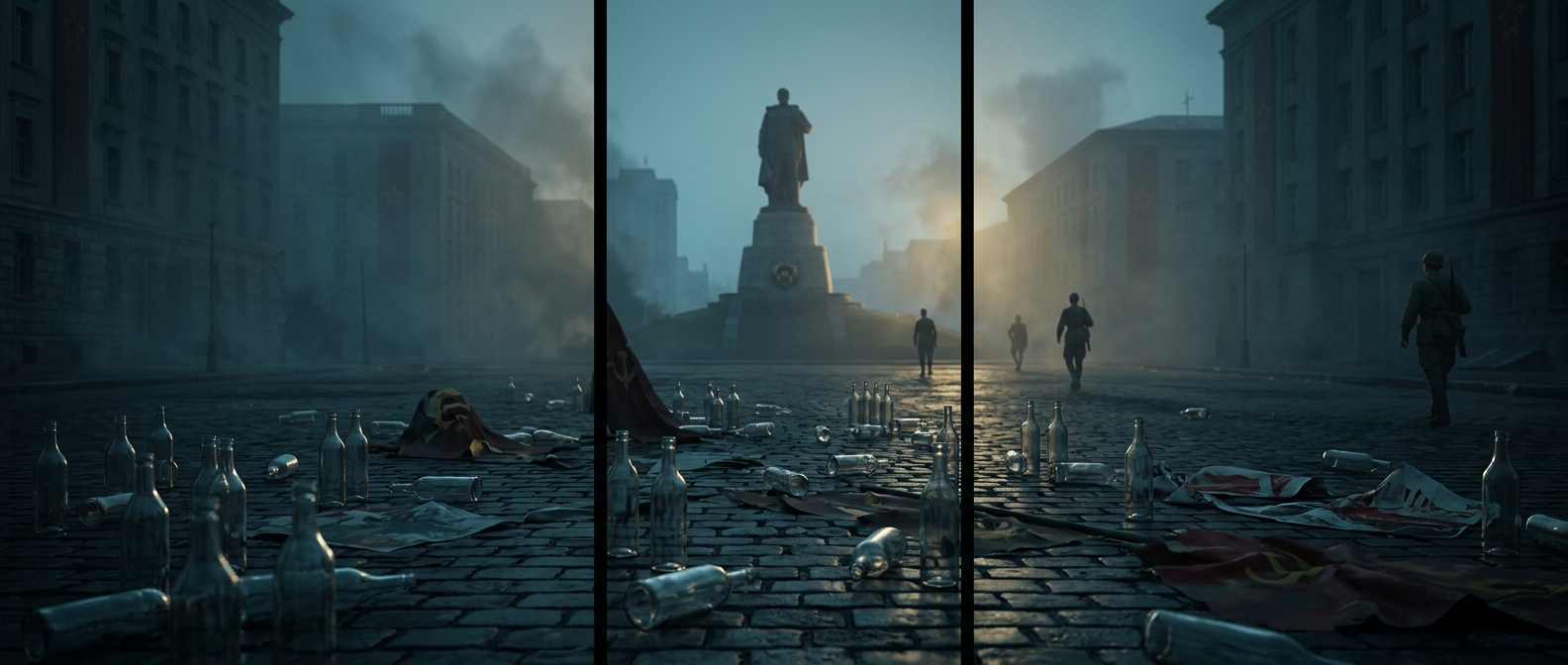
When news of Germany’s surrender reached Moscow, celebration became a citywide event—and vodka was part of how many people marked it. The reported 22-hour depletion of the national reserve points to an extraordinary burst of demand: a supply intended to last far longer was consumed in less than a day.
Why the Shortage Came So Quickly
Vodka was not something revelers had to make or find through a long chain of private sellers. In the Soviet system, alcohol was sold through state-controlled channels. That meant a sudden rush of buyers could press on the available stock at once. Shops could sell only what had already been delivered; they could not replenish shelves as fast as a city celebrating together could empty them.
The 22-hour detail makes the celebration tangible. Victory was not only announced and commemorated in public; it also created an immediate, practical consequence for the supply of an everyday drink. The reserve’s rapid depletion is a measure of how intensely Moscow greeted the end of the war.