A Presence Marked by Smoke
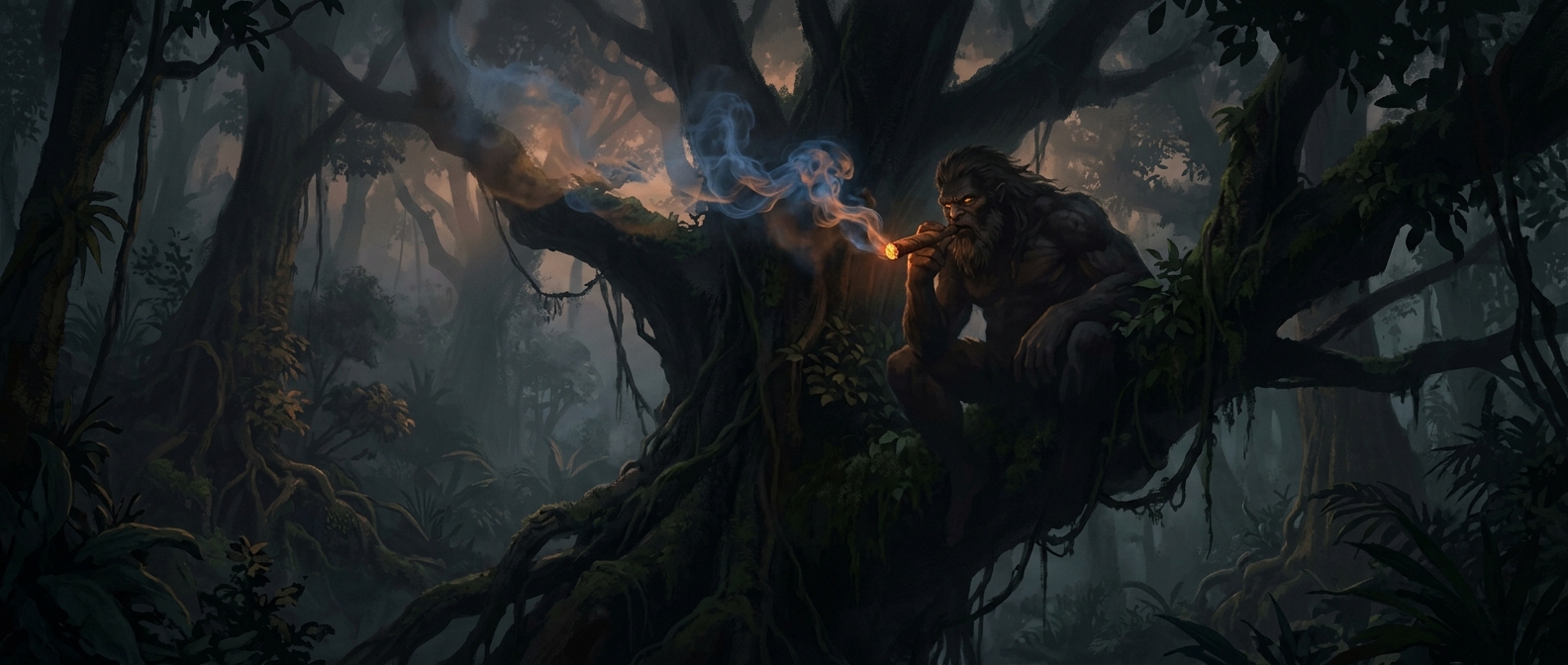
In Philippine folklore, the kapre is not merely a monster hidden in a tree. Its cigar smoke gives an unseen presence a sensory trace: someone may notice the smell before seeing anything, or experience it as evidence that a familiar tree is occupied. The detail makes the being feel close to ordinary life, even when it remains out of sight.
Stories commonly place kapres in large trees, especially ones that stand out in a neighborhood or along a path. Such trees are easy to recognize but can look imposing after dark. Folklore turns that striking landmark into a possible meeting place between the everyday world and the uncanny.
How the Story Shapes a Place
The kapre belongs to a varied body of local stories, so accounts differ. In some tellings, the being is frightening; in others, it may be encountered without attacking anyone. The cigar is a recurring clue, not a fixed rule that every story must follow. Its oversized scale also helps make the kapre’s presence feel larger than human.
That combination of a familiar habit and an impossible body gives the figure its memorable character. A smell of tobacco near a dark tree can become, within the story, more than a smell: it can prompt people to treat the tree with caution and to imagine who might be there. The folklore makes an ordinary landmark feel inhabited—even when no one can be seen.