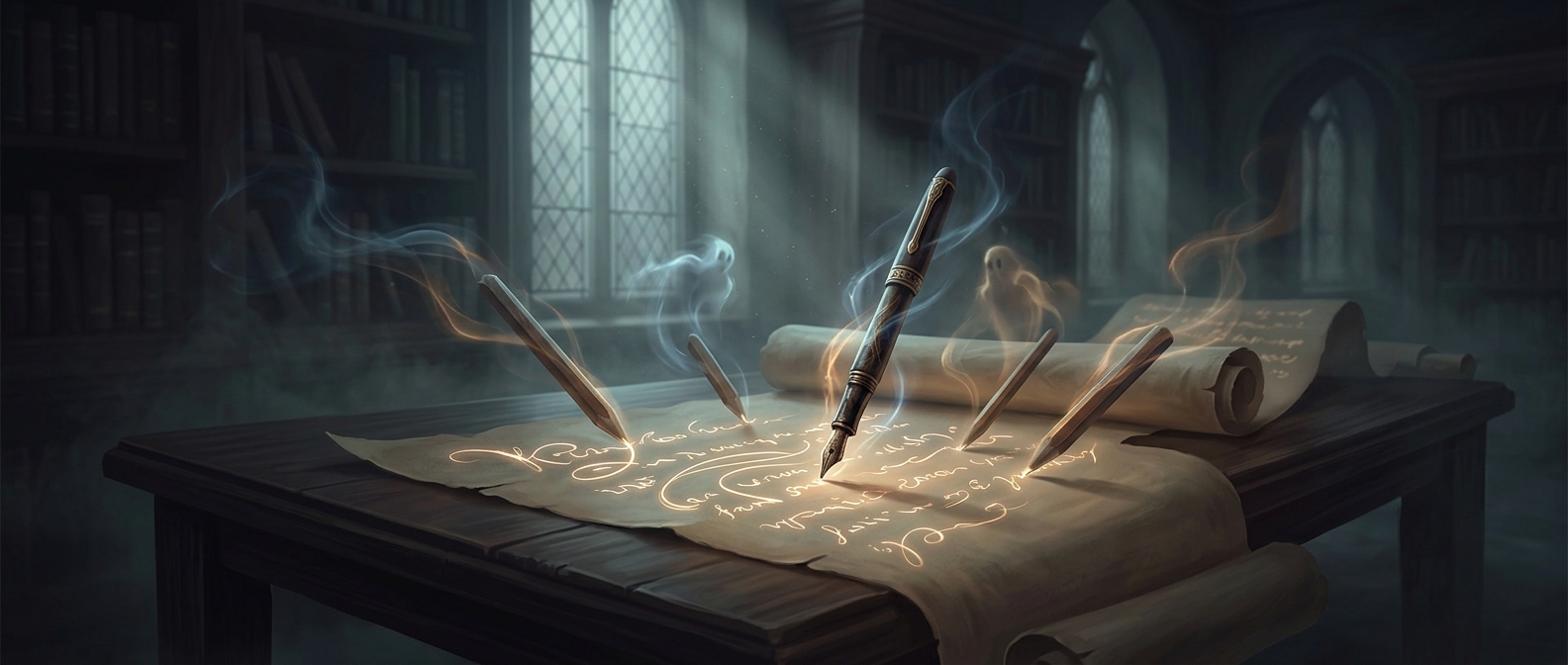
What “psychography” claims
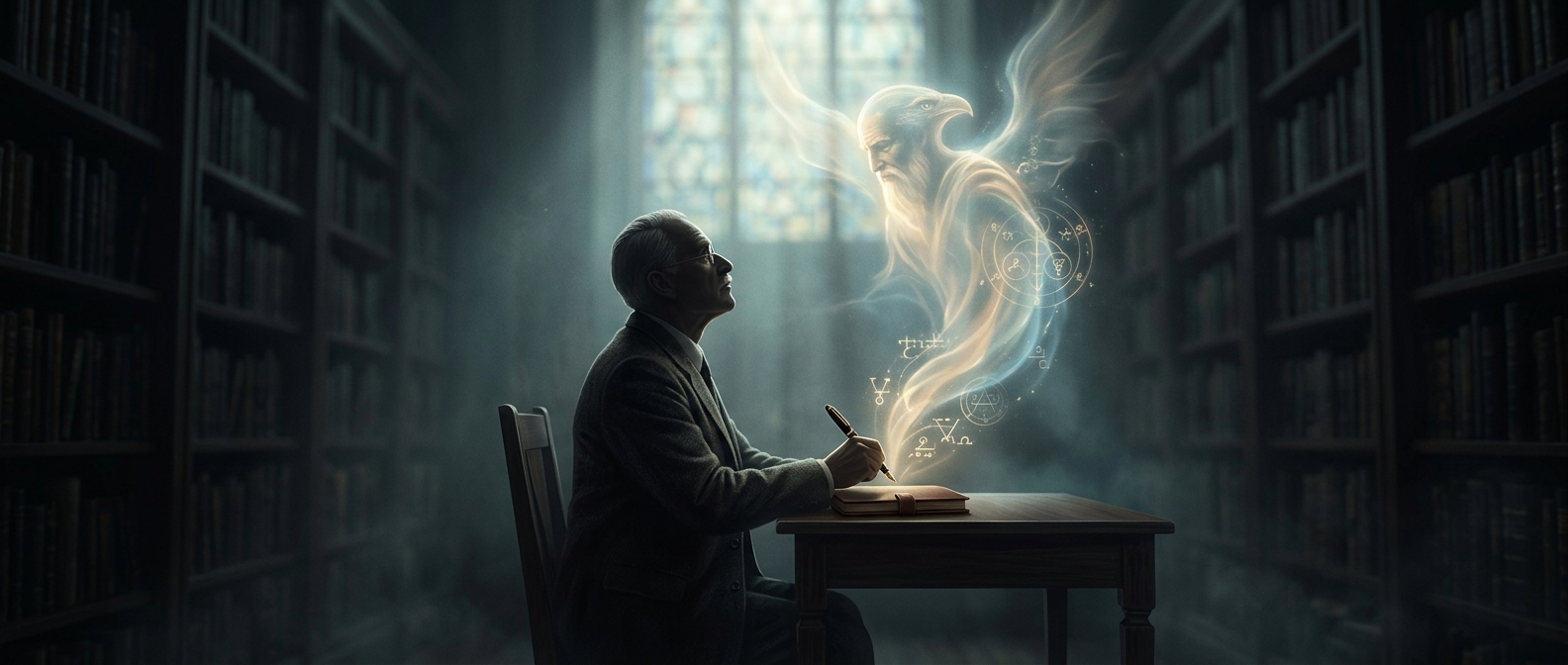
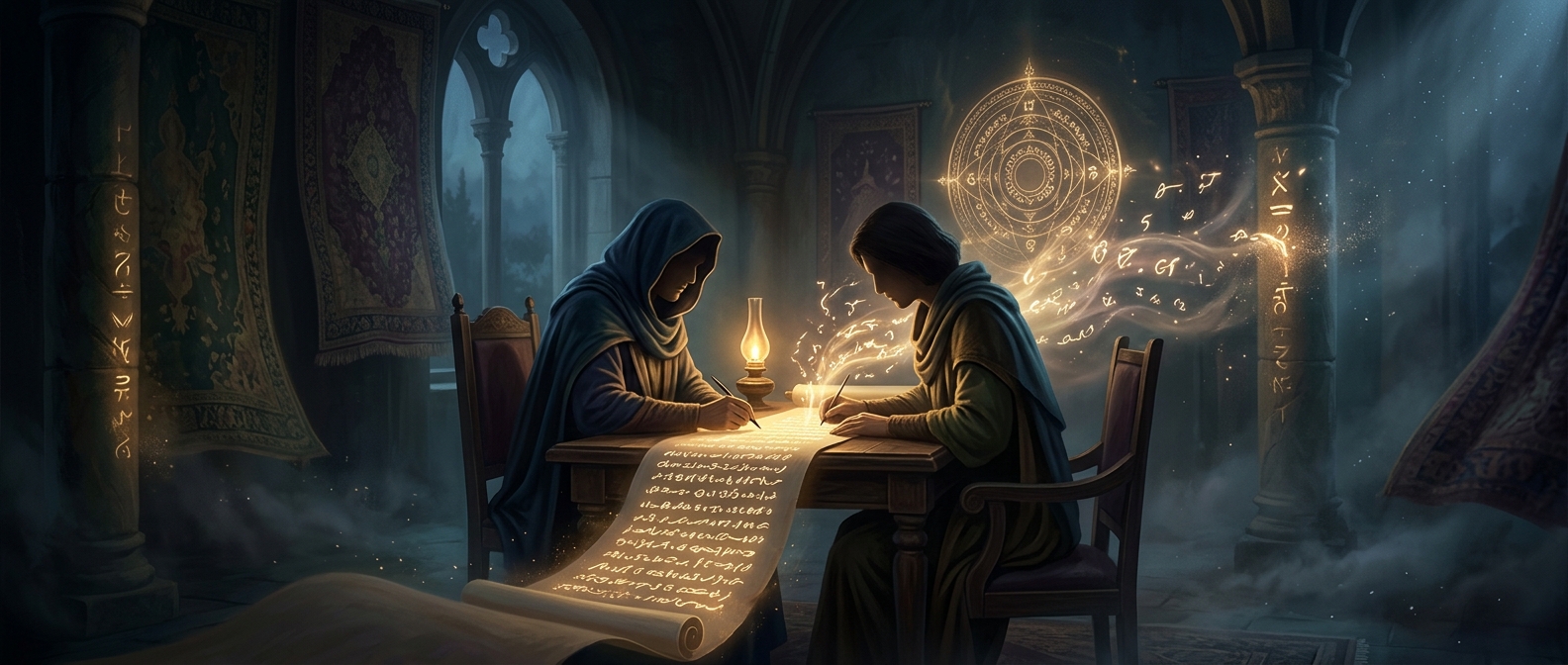
Psychography is the name given to writing believed to come through a person from a spirit or other unseen source. In accounts of the practice, a pencil may seem to move without the person deliberately guiding it. The movement can look like evidence of an independent writer—but the key question is how the pencil is being moved.
How a thread can create the illusion
A fine thread attached to or looped around a pencil can transmit a small pull from someone just outside the observer’s view. In dim light, the thread is difficult to see, while the pencil’s motion remains visible. A slight tug can make the pencil slide, turn, or leave marks, especially on a smooth surface. From across a dark room, the movement may appear to begin on its own.
This is a simple form of conjuring: producing a surprising effect by concealing its cause. The thread does not explain every reported case of psychography; it shows how one striking demonstration can be staged without the pencil acting independently.
Why the setting matters
Darkness limits what an audience can inspect: the pencil’s attachment, the space around it, and the person who might be controlling it. That makes the effect more convincing in the moment, but also makes it harder to tell what caused the movement. A brighter room and a clear view of the pencil and nearby hands would make the thread easier to detect—and the apparent mystery harder to maintain.