A small museum behind a church by the Tiber
The Museum of the Souls of Purgatory is housed in the Church of the Sacred Heart of Suffrage, a narrow, Gothic-style church on Rome’s Lungotevere Prati. Its modest collection is easy to overlook: the church’s elaborate façade draws the eye, but the exhibits are tucked inside rather than presented as a major, stand-alone attraction.
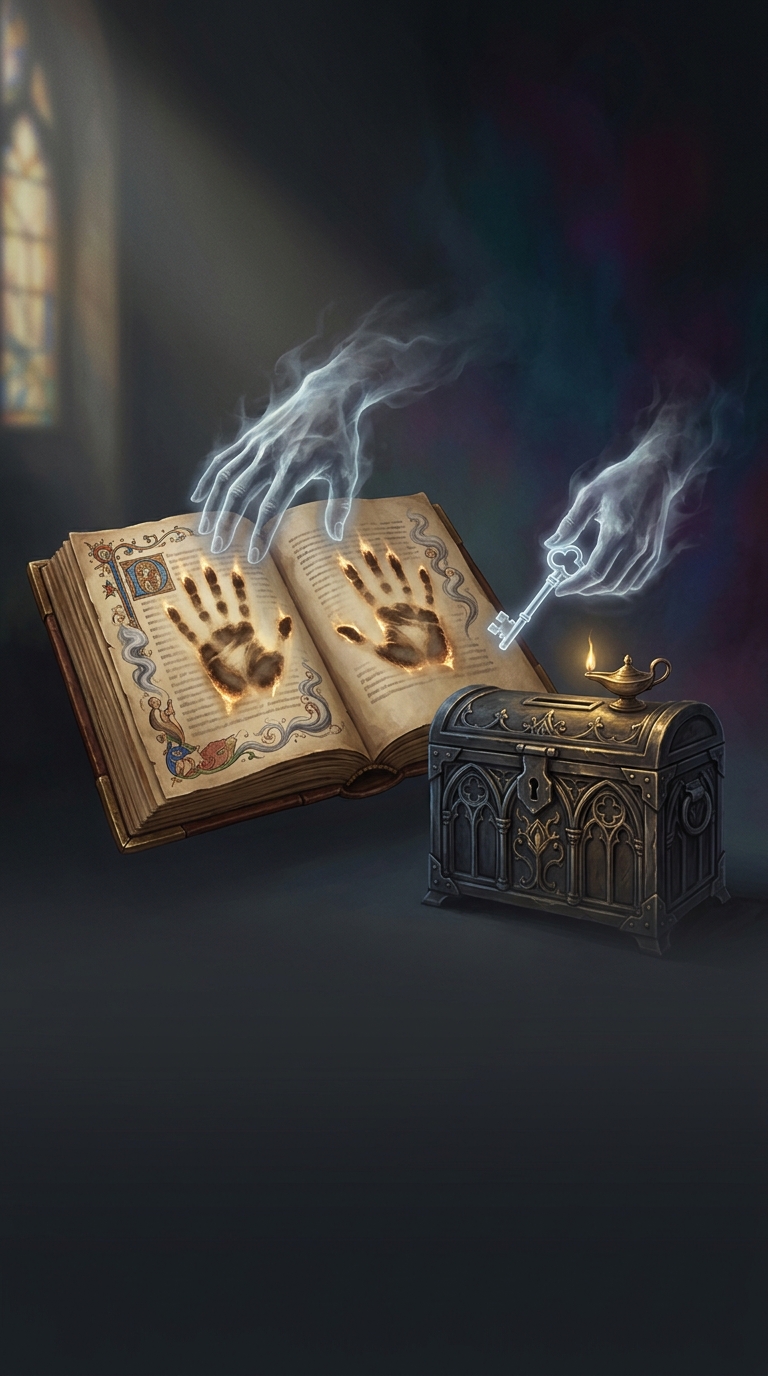
The objects on display—including papers, books, and pieces of fabric—are said to bear marks left by souls seeking prayers. The museum preserves these as devotional testimony, not as forensic evidence. Their significance depends on a Catholic belief about what happens after death.
Why these marks mattered
In Catholic teaching, purgatory is a state of purification for people who die in God’s friendship but are not yet ready for heaven. Prayers offered by the living are traditionally understood to help the dead in this process. The museum’s objects give that belief a physical, intimate form: an apparent handprint or scorch mark becomes a reminder that the dead may still need the attention of the living.
The collection is associated with Father Victor Jouët, a priest devoted to prayer for the souls in purgatory. After a fire in the church in the late nineteenth century, he is said to have seen a face-like mark on a scorched wall and began gathering other purported traces. The displays grew from that religious project, rather than from an attempt to create a conventional museum of Roman history.
A different kind of stop on a Rome walk
That purpose changes how to read the exhibits. The question is not simply whether a mark looks like a handprint; it is why believers preserved it and what it was meant to prompt: remembrance, prayer, and a sense of connection between the living and the dead. A few steps from the busy riverfront, the little museum offers a striking glimpse of how a religious idea can become a collection of ordinary, marked objects.