A Paris walk turned into a public image
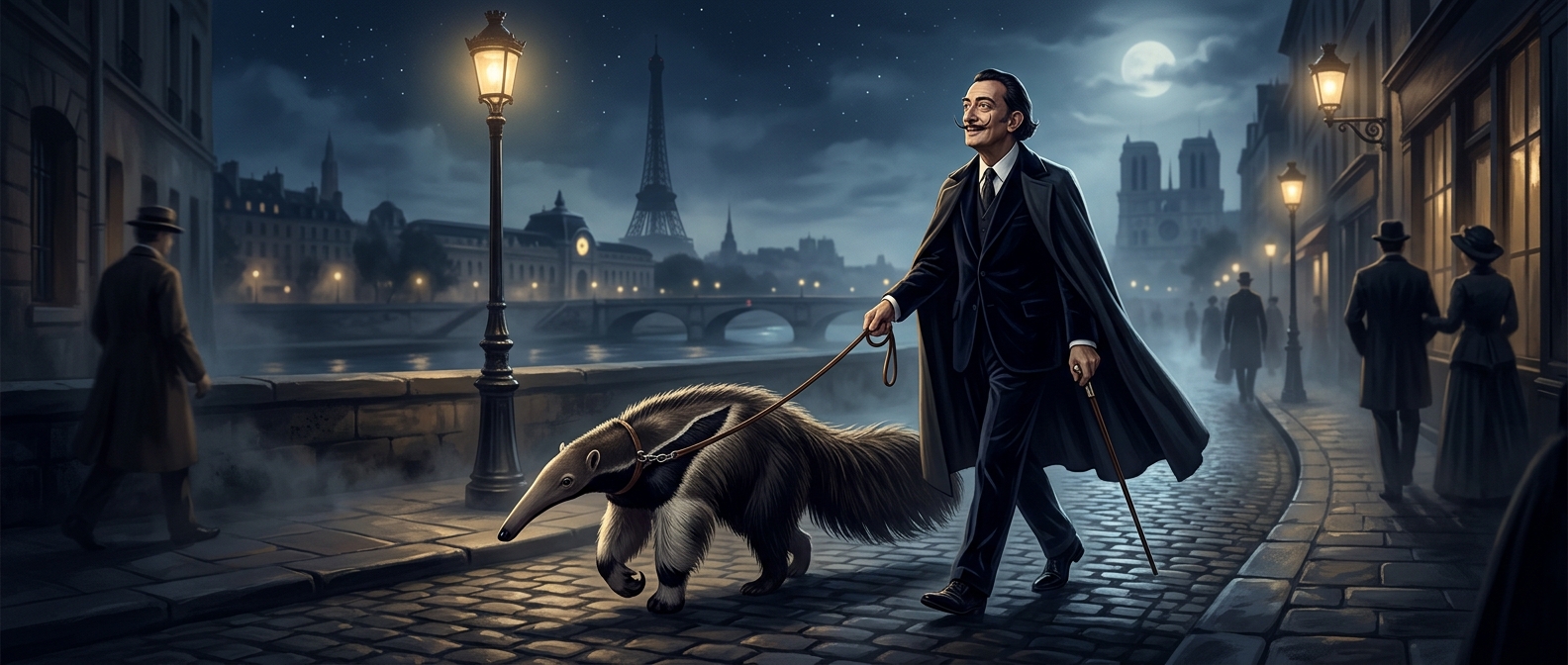
The episode is memorable because it brought an unlikely sight into an ordinary urban setting: a large, unfamiliar animal moving through Paris beside one of the era’s most conspicuously eccentric artists. The gold leash sharpened the contrast. It made the scene feel at once like a formal display and an absurd interruption of daily life.
Dalí had cultivated a public persona that blurred the boundary between art and spectacle. His striking clothes, theatrical gestures, and outlandish appearances made the artist himself part of what audiences watched. The anteater episode fits that pattern, though there is no need to assume it was a planned artwork to see why it attracted attention.
When the artist became the spectacle
Surrealism, the movement associated with Dalí, sought to unsettle ordinary expectations by bringing dreamlike or irrational images into view. A real animal on a city street could produce a similar jolt: not a painting of an impossible scene, but an unexpected scene unfolding in public. The animal’s presence gave Dalí’s eccentric image a physical, hard-to-ignore form.
That is also why the walk has lasted as an anecdote. It compresses Dalí’s public identity into one picture: a famous artist, an unusual companion, and a city forced for a moment to accommodate the surreal in the everyday.