Cats Inside a Cardinal’s Household
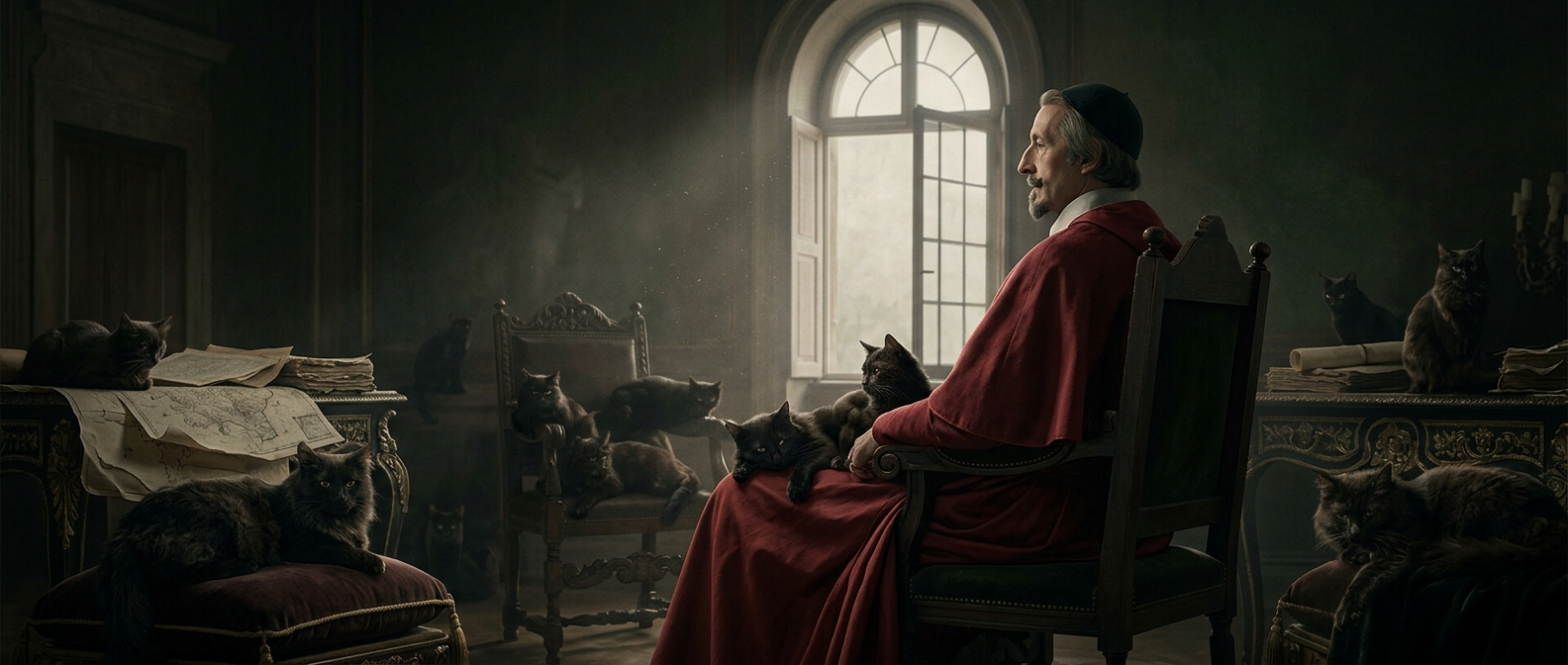
Richelieu’s fourteen cats belonged to a world organized around rank and access. As a cardinal and chief minister, he lived amid ceremony and strict social hierarchy; even ordinary household arrangements reflected the importance of the person they served. The cats’ pampered status made them an unusual part of that elite domestic world—not simply animals kept out of sight, but favored companions whose comfort mattered to their powerful owner.
A Private Soft Spot in a Public Life
The contrast is what makes the story memorable. Richelieu is remembered for political authority, while the cats suggest a more intimate side of life behind the formal public role. Caring for them also meant making room for their daily needs within a grand household, where people and animals alike depended on the routines and resources of the estate.
The claim that he demanded more respect for his cats than for any human noble captures the scale of his affection, but it is best understood as a vivid description of their privileged treatment—not as a documented household rule. The striking point remains: amid the business of government, Richelieu made space for fourteen exceptionally favored companions.