The Door That Went Nowhere
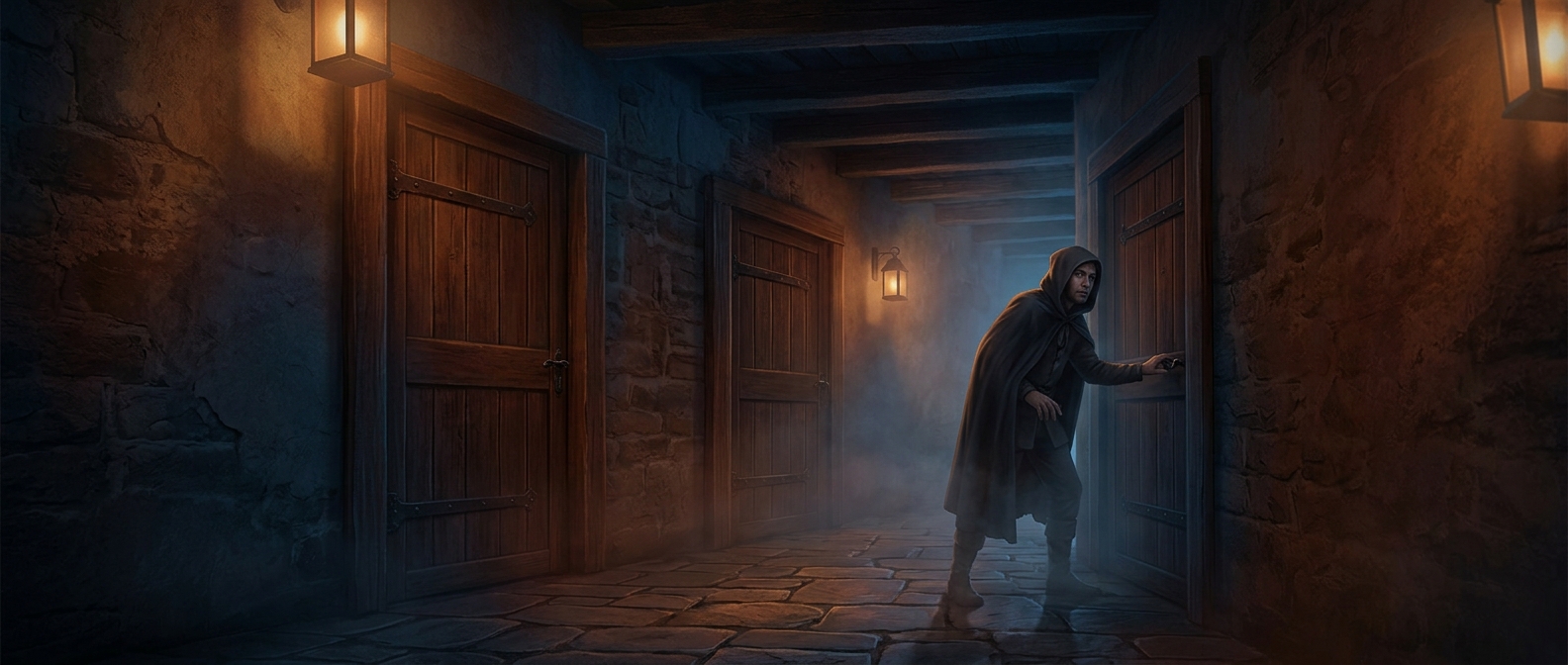
A door is a promise of passage. In some wealthy homes, that promise was false: a visitor who tried one of these doors found brick where a room or hallway should have been. The deception worked by making an ordinary architectural feature into a misleading clue. Someone unfamiliar with the house could not tell from the door alone whether it opened onto a useful route.
Confusion as a Small Defense
The trick did not need a hidden mechanism. A person expecting to enter a grand parlor could lose time checking a door that led nowhere, while someone who knew the house would know which entrances were real. That mismatch between appearance and access could frustrate an intruder or make the layout harder to read.
A blocked doorway was also a blunt kind of defense: it stopped passage rather than hiding a valuable room behind a complicated device. The useful detail is how little it took to unsettle a stranger. In a large house, even a convincing door that opened onto brick could turn confidence into hesitation.