How limestone becomes marble
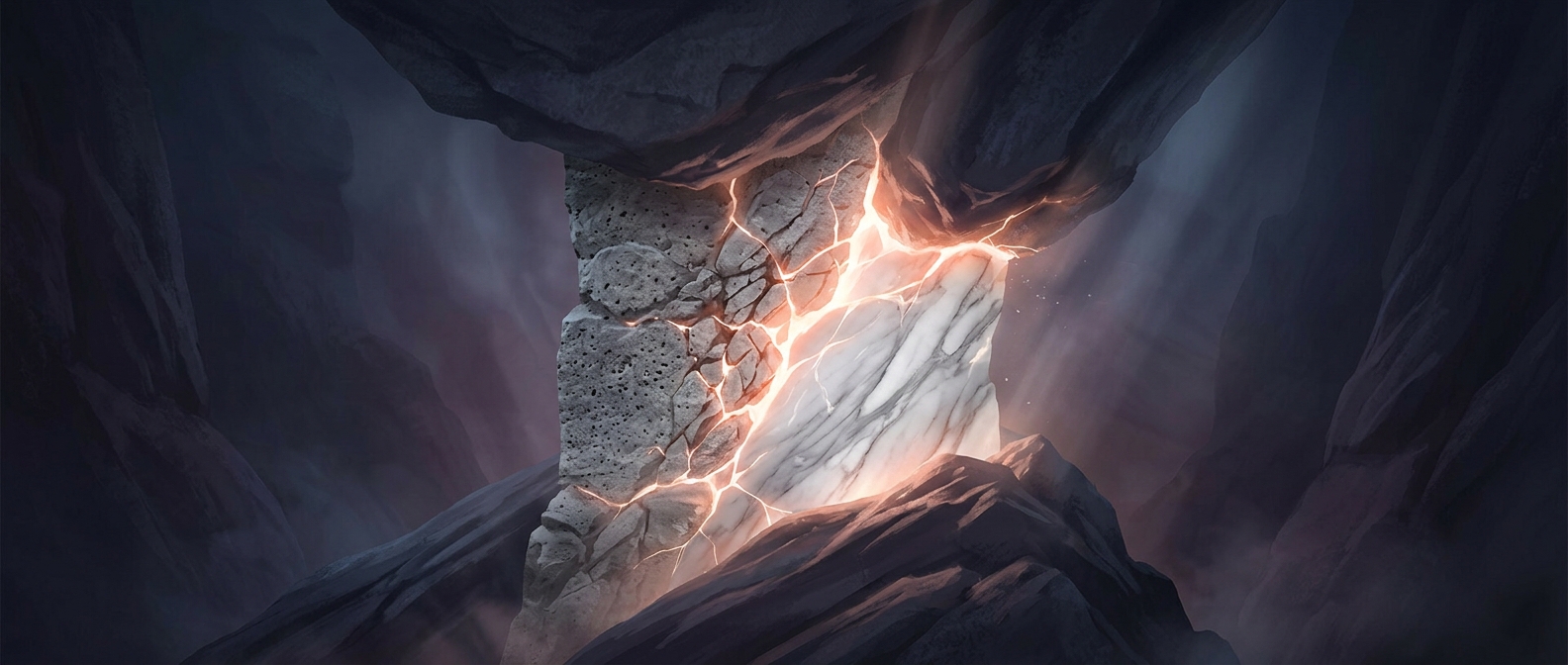
Deep underground, limestone is exposed to heat and pressure while fluids move through its pores and cracks. The calcite—the mineral that makes up most limestone—can dissolve in tiny amounts and crystallize again. Existing crystals grow, merge, and lock together in a process called recrystallization.
This is metamorphism: a rock changes in the solid state, without melting into magma. Pressure helps drive the change, while heat and mineral-rich fluids make it easier for calcite to dissolve and regrow. The result is a mosaic of interlocking crystals rather than the finer-grained material and sedimentary features that characterized the original limestone.
What the new crystal texture changes
As crystals enlarge, they can obscure clues to limestone’s earlier history, such as fossils or layers of sediment. The rock’s appearance also changes: relatively uniform calcite crystals scatter light differently from the original rock, helping give marble its familiar crystalline look. Minerals and impurities carried over from the limestone can add color and veining, so marble is not always pure white.
The transformation does not require every trace of the old rock to vanish. Some marble retains fossils or other features, depending on how completely recrystallization altered it. But the essential shift happens within the rock: calcite crystals are reorganized into a new, interlocking texture. That is why a polished marble slab is more than limestone made shiny—the polishing reveals a surface of a rock that has been remade underground.