Why Slate Splits Into Flat Sheets
Slate is not a stack of separate stone layers. Its flat splitting surfaces form inside the rock as pressure reshapes and aligns tiny, platy minerals—often mica and chlorite—so their broad faces lie roughly parallel. This arrangement gives the rock a built-in direction of weakness, much like grain in wood, though the minerals are far smaller than anything visible on a roof tile.
Pressure Gives the Rock a Preferred Direction
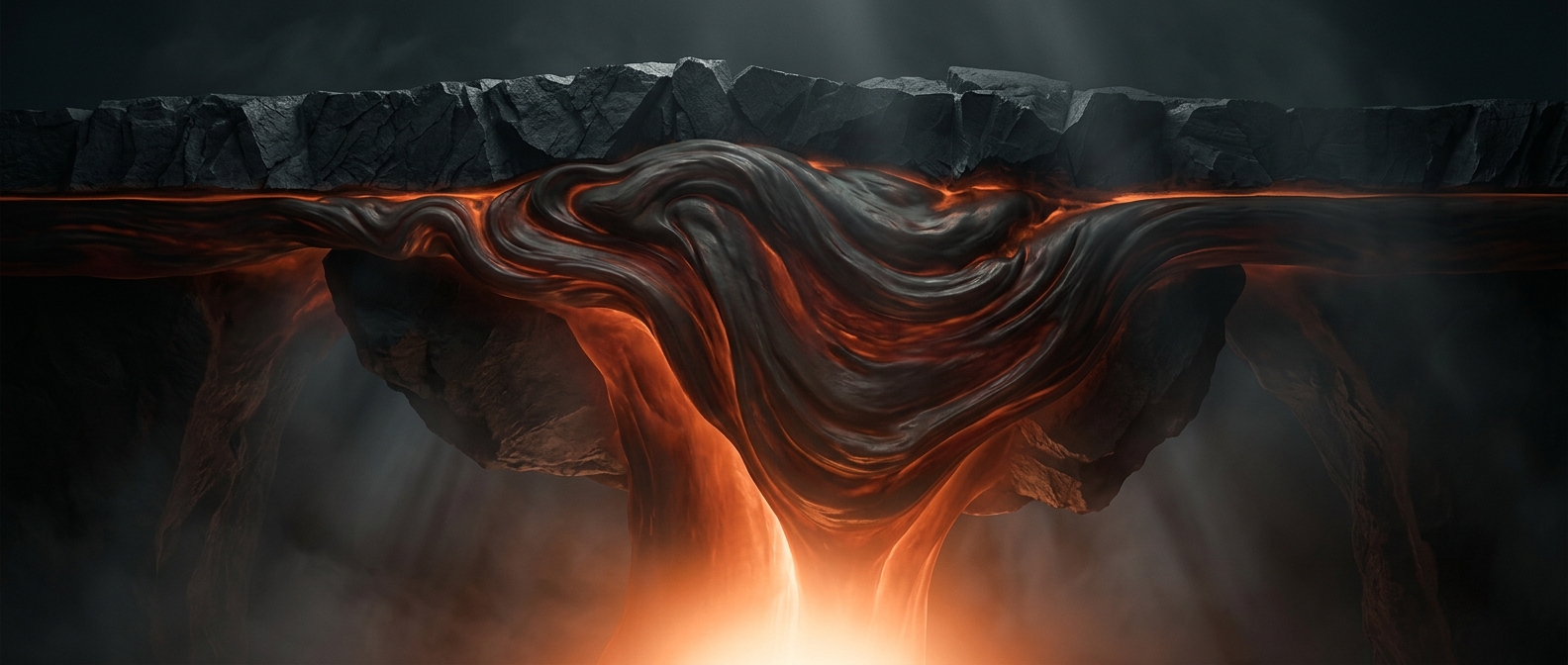
Slate begins as fine-grained mud that hardens into shale. During mountain-building, buried rock can be squeezed and heated without melting. The pressure encourages minerals to rotate or recrystallize into aligned flakes. The resulting planes, called slaty cleavage, may cut across the original sedimentary layers: the rock’s splitting direction reflects its later deformation, not simply the way the mud settled.
When a tool drives a wedge into slate, the crack can travel along these closely spaced planes, where separating the aligned minerals takes less force than tearing through them. The crack’s broad, nearly planar path produces a sheet rather than a jagged fragment. Across the alignment, the rock is generally tougher to split, though it can still fracture under enough force.
From a Geological Feature to a Roof Tile
Quarry workers exploit this natural weakness by striking or wedging blocks along the cleavage. Skilled splitting turns a thick block into thinner slabs with relatively little cutting. Slate’s fine grain also helps the surfaces come out smooth and the edges remain durable, making the sheets useful for roofing and flooring.
The same property that makes slate economical to shape also sets a limit: a tile must be thick and strong enough not to split during handling or under its own load. Each finished sheet is therefore a practical piece of the rock’s history—mud transformed by pressure, then peeled apart along the mineral alignment that pressure created.