How Solid Rock Can Creep
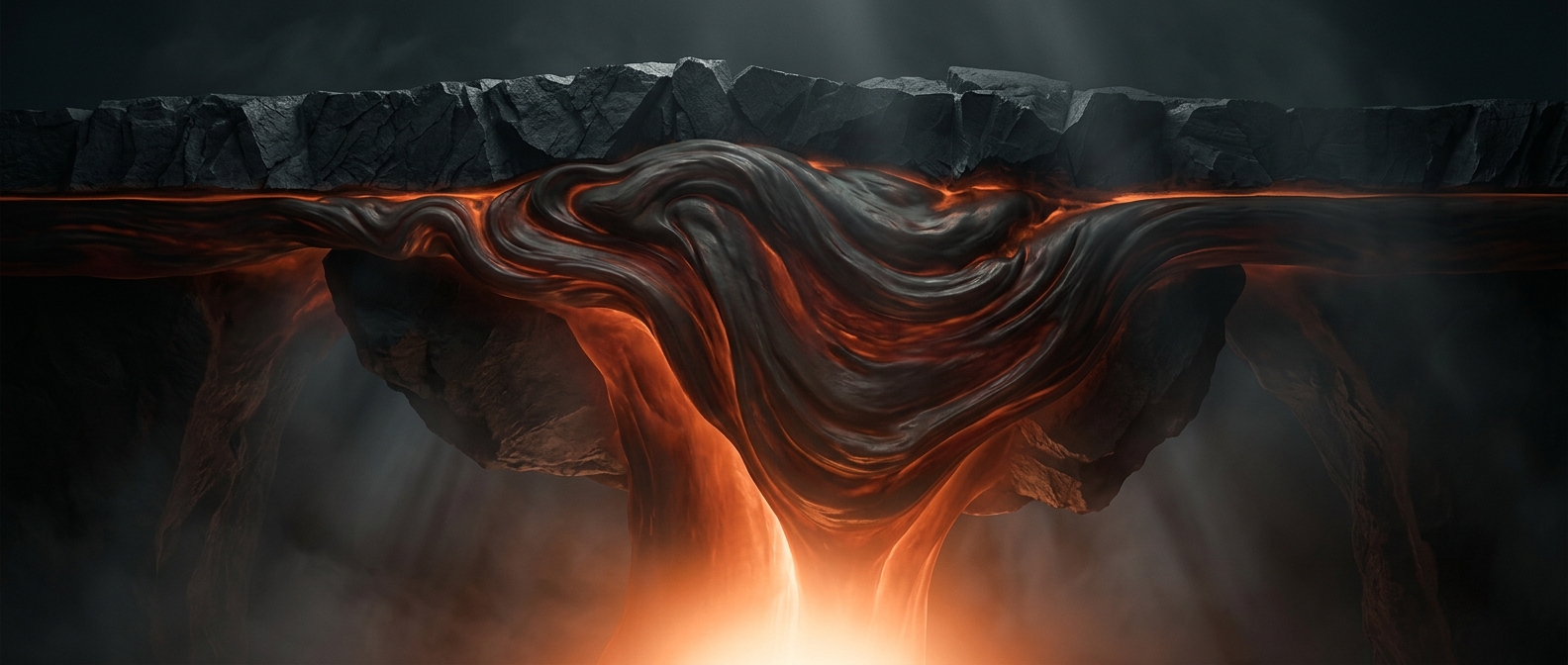
Earth’s mantle is mostly solid, but “solid” does not mean permanently rigid. Deep underground, intense heat gives rock atoms enough energy to shift gradually, while enormous pressure keeps the material from simply melting. Over long periods, crystals can change shape or slide past one another, allowing the rock to deform without becoming liquid.
The result is a process called viscous creep: slow, continuous deformation under stress. A useful comparison is putty that yields when pushed, though mantle rock moves vastly more slowly. What might look motionless over a human lifetime can change position over millions of years.
From Deep Creep to Shifting Plates
Heat inside Earth creates differences in temperature and density within the mantle. Warmer material tends to rise, while cooler, denser material tends to sink. This gradual circulation can exert forces on the tectonic plates—the large, rigid slabs that make up Earth’s outer shell.
The plates are not floating on a sea of magma. They move over a hot, deformable layer of mostly solid rock, and their motion also involves forces from sinking plates and other interactions at their boundaries. Mantle flow is therefore part of a larger system, not a simple conveyor belt pushing every plate at the same speed.
Why the Timescale Matters
Because the mantle creeps so slowly, its motion is difficult to notice directly. Its consequences become visible where plates meet: ocean basins open, continents shift, and one plate may sink beneath another. The same rock that would resist a shove as a rigid block over a short interval can, given immense time, help rearrange the surface of an entire planet.