How Opal Turns Silica into Color
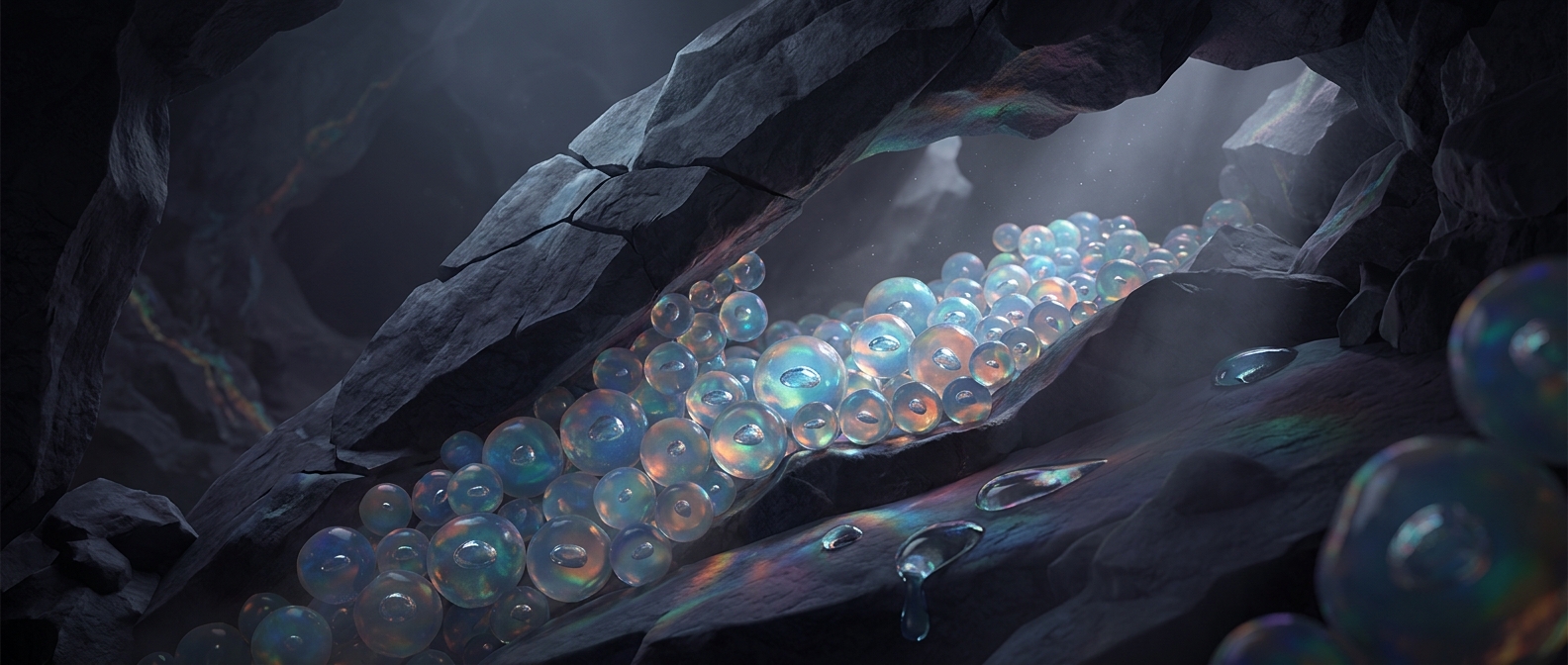
Opal is made largely of silica—the same basic material found in quartz—along with water held within its structure. In some opals, microscopic silica spheres are arranged in orderly layers. The gaps between them contain water and air, creating a repeating pattern that can interact with visible light.
The Spacing Selects the Color
When light enters this pattern, waves scattered by neighboring spheres overlap. Waves that arrive in step reinforce one another; those that arrive out of step partly cancel. This process, called interference, sends particular wavelengths toward the eye more strongly than others. Since each wavelength corresponds to a color, the structure itself produces the opal’s flashes—no pigment is needed.
The spacing between spheres determines which wavelengths reinforce. Tighter spacing tends to favor shorter wavelengths, such as blue; wider spacing can favor longer ones, such as orange or red. If the arrangement is too irregular, the waves do not reinforce in a consistent direction, and the stone may look milky rather than display sharp flashes.
Why a Small Shift Changes the View
The color pattern is three-dimensional, so the path light takes through the spheres matters. As the stone or the observer moves, a different set of waves can reinforce, making the visible color shift. The changing palette is therefore a readout of the opal’s microscopic architecture: move the silica spheres slightly farther apart or closer together, and a different color can reach the eye.