Why a short elevator ride changes the conversation
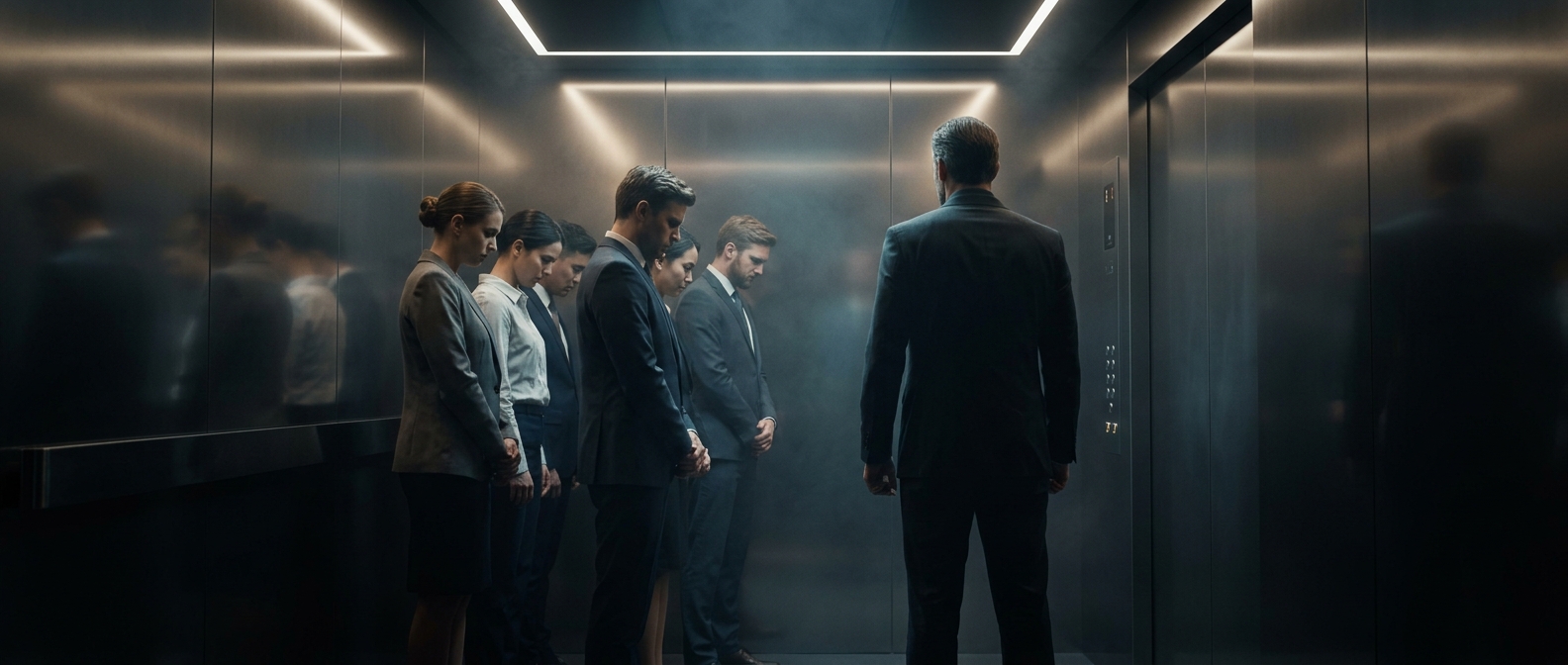
An elevator creates an unusual social situation: people are close together, facing roughly the same direction, with little reason to move or much space to withdraw. Unlike a meeting, it has no clear agenda. Unlike a hallway, it offers no easy way to keep walking. That leaves riders to manage the silence—and one another’s attention.
A boss raises the stakes
When a supervisor steps in, ordinary small talk can feel consequential. An employee may wonder whether a joke sounds unprofessional, whether shop talk is appropriate, or whether silence will seem unfriendly. The boss, meanwhile, may be unsure whether to start a conversation or give coworkers privacy. Because the ride is brief, neither person has much time to establish what kind of interaction is welcome.
So people often default to low-risk signals: a greeting, a glance at the floor display, or no conversation at all. The quiet is less about having nothing to say than about choosing not to risk the wrong thing in a cramped, temporary encounter.
The elevator’s design magnifies the moment
The car’s walls and doors make the encounter feel contained, while its short trip puts a limit on how far any conversation can go. Riders are sharing space without having chosen to spend time together. That combination makes the elevator a small test of workplace boundaries: friendly enough to acknowledge each other, but brief enough that nobody has to turn the ride into a meeting.
When the doors open, the social problem disappears with the setting. The silence can be awkward precisely because it is so temporary.