Winston Churchill received an early “OMG” in 1917
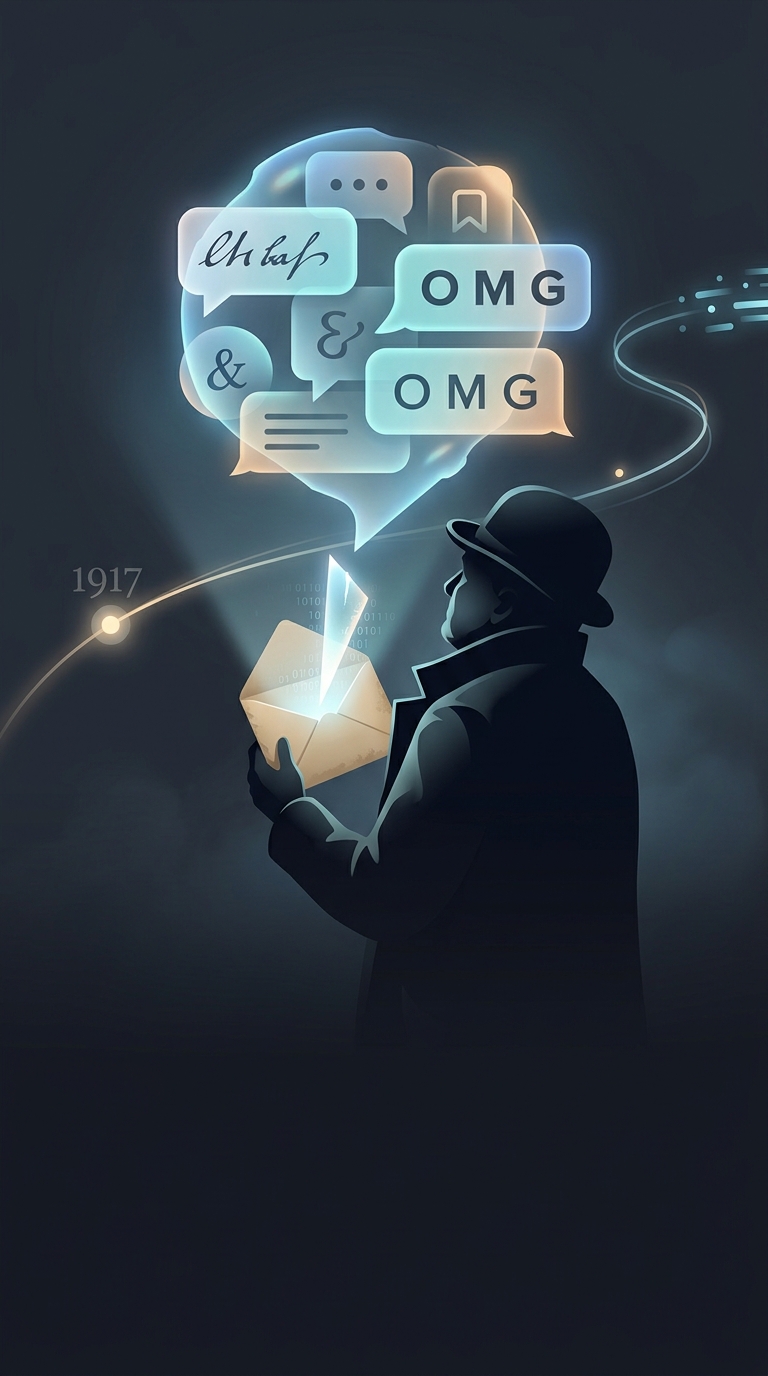
The recipient was Winston Churchill, then a senior British politician. The writer was Admiral John Fisher, a former head of the Royal Navy. In a letter to Churchill, Fisher used “O.M.G.” and spelled out the initials as “Oh! My God!”—making the abbreviation unusually easy to recognize in context.
Fisher was reacting to talk of a new order of knighthood, suggesting it be showered on the Admiralty, the government department responsible for the Navy. His punctuation and wordplay make the expression read less like a solemn invocation than a brisk, amused exclamation.
A shorthand, not a text message
The letter shows that people were compressing familiar phrases into initials long before phones and online chat. In 1917, those letters appeared in a personal letter between public figures; the surrounding sentence supplied the tone and meaning that a modern reader might infer from a message thread.
It is best described as the earliest known recorded use of “OMG,” not proof that Fisher invented it or was the first person ever to say it. The distinction matters: a surviving written example can establish that an abbreviation was in use by a certain date, but it cannot reveal when it first began circulating in speech or private writing.
So the familiar internet shorthand has an unexpectedly formal paper trail: an admiral’s initials in a letter addressed to Churchill, attached to a joke about honors for the Navy’s bureaucracy.