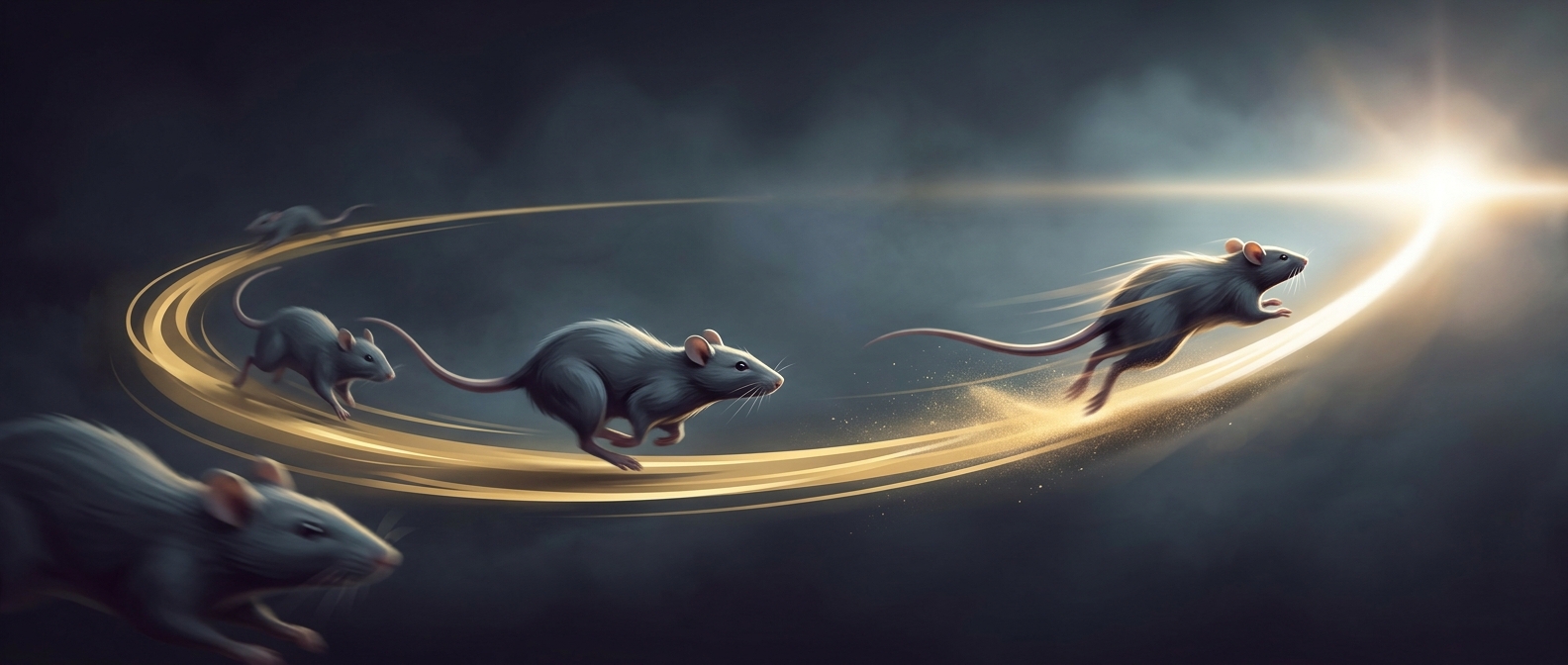
Why the last stretch can feel easier to push through
A goal changes how effort is experienced as it gets closer. Early in a task, the reward is still a vague future benefit, while the work is immediate. Near the finish, progress becomes easier to connect to the payoff: one more step means the reward is almost within reach. That shift can make extra effort feel worthwhile.
Progress turns into a stronger signal
The goal-gradient effect describes a familiar pattern: effort often increases as someone approaches a desired outcome. For a rat running toward food, the reward is not merely an idea at the end of a route. As the rat advances, the remaining distance shrinks, and the food becomes a more immediate prospect. The rising pace is a behavioral response to that changing relationship between effort and reward—not necessarily a conscious calculation.
The same pattern can show up in human tasks. A nearly completed form, a short final stretch of a run, or the last few steps toward a milestone can prompt a burst of activity. Visible progress helps: when people can tell how close they are, each action seems more consequential.
Why a nearly finished task gets attention
At the start, there is a long gap between action and payoff. Near the end, that gap narrows, so continuing can seem more valuable than stopping. This does not mean people always speed up, or that every goal produces the same response; difficulty, fatigue, and the size of the reward still matter. But it helps explain why the final stretch can draw disproportionate effort: the reward has shifted from a distant promise to an outcome that feels imminent.