A sequel that kept changing shape
Team Fortress 2 was announced in 1998 as a follow-up to Team Fortress Classic, but the game that eventually shipped in 2007 was not the version Valve first set out to make. Early plans leaned toward realistic modern warfare. Later, the concept moved into science fiction, including an alien-invasion direction. Valve repeatedly rebuilt the project rather than simply polishing one design for nine years.
That distinction helps explain the long wait: each major change meant rethinking what the game was, not just how it looked. A realistic military shooter and a science-fiction invasion game suggest different settings, weapons, enemies, and ways for players to read a fight. Work on one version could not automatically carry over to the next.
Cartoon style became part of the design
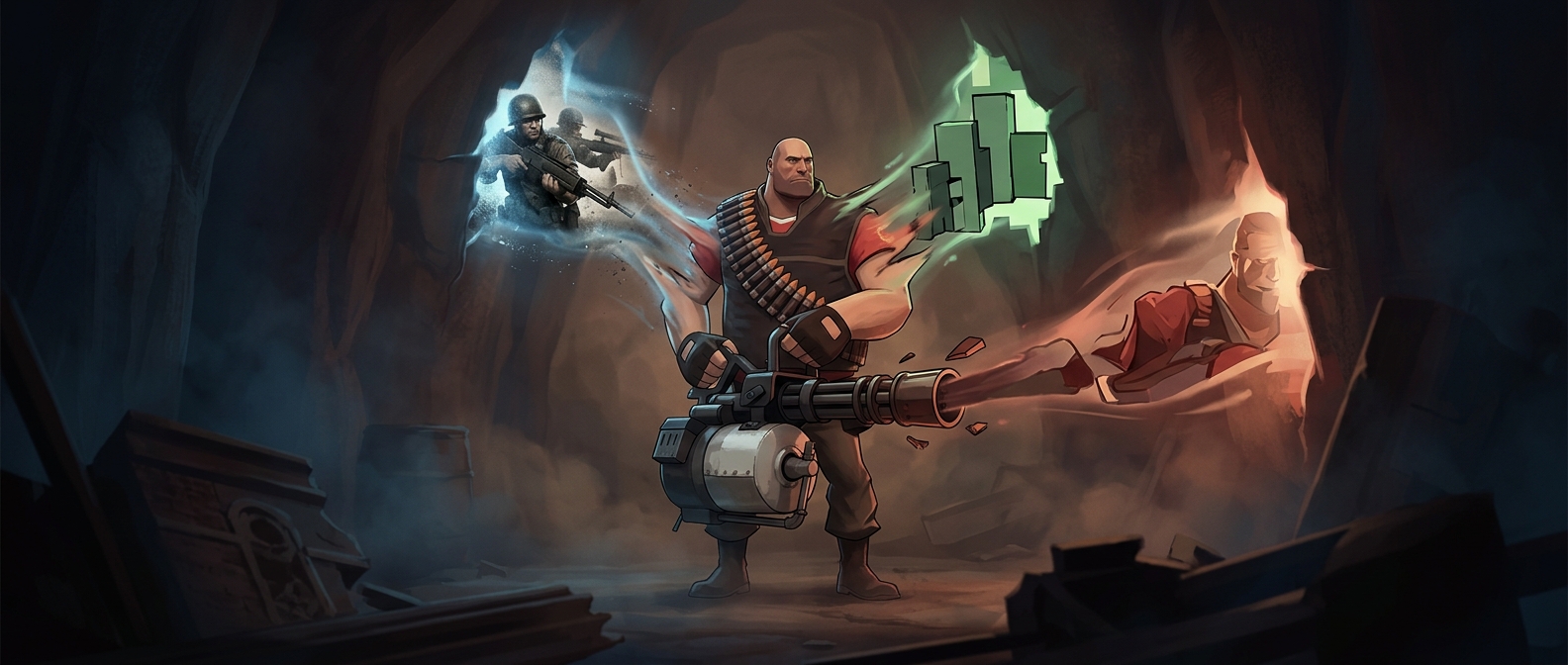
The released game’s bold, exaggerated look was more than a final coat of paint. In a fast team battle, players need to recognize an opponent quickly, even amid explosions and motion. Strong silhouettes—the recognizable outlines of characters—help make different classes easier to distinguish. Exaggerated shapes and contrasting colors also keep the action legible without requiring realistic uniforms or detailed visual effects.
That style gave Valve a way to make a team-based shooter feel coherent after years of changing direction. The nine-year development was not a straight march toward a fixed goal; it was a series of attempts to find a version whose setting, appearance, and gameplay worked together. The result was a game in which spotting the shape of a class can matter as much as noticing the weapon it carries.