A visual cue gave a puzzle prop a role
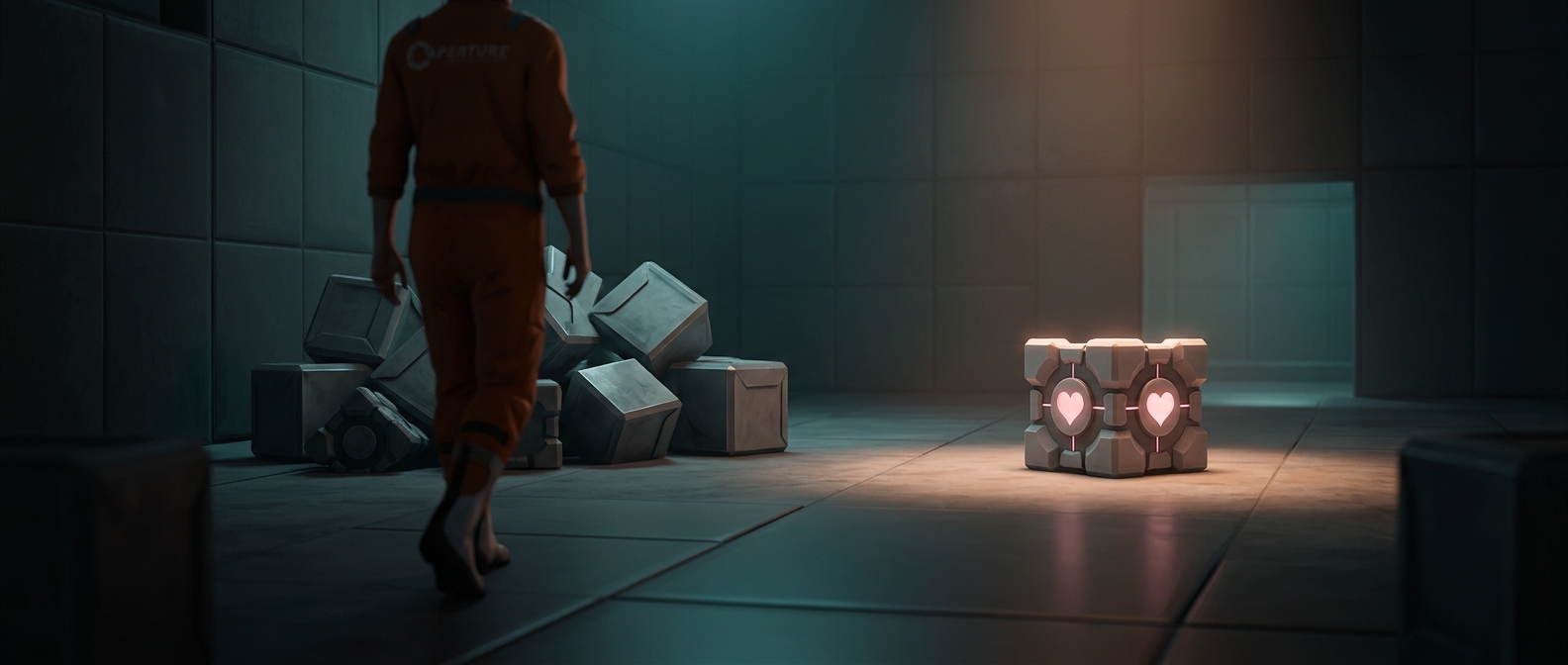
In Portal, many objects are tools: pick them up, move them into place, and move on. The Weighted Companion Cube performs that same practical job, helping the player hold down buttons. Its heart does not change what the cube can do. It changes how the player reads it.
That distinction matters in a game where the player is learning to treat rooms as systems of doors, switches, and movable objects. A heart is an instantly legible sign of affection, so the cube stands out from the other equipment without needing a voice or a complicated backstory. The game can then invite the player to supply the feelings the object itself cannot express.
The game makes the cue matter
The cube’s emotional weight comes from more than its appearance. Players handle it as part of solving a puzzle, so it becomes a familiar presence rather than a passing decoration. Then the game makes destroying it part of moving forward. A simple prop has been turned into a small conflict between the player’s practical goal and the attachment the game has encouraged.
That is an economical design trick: the cube does not need dialogue, animation, or new abilities to feel like a character. Its heart changes the meaning of an ordinary interaction, and the required destruction gives that meaning a consequence. The result is memorable precisely because the cube remains a box—the player supplies the emotional life.