A blockade at sea became a forced return
In 1947, Palestine was governed by Britain under a League of Nations mandate. The British government restricted Jewish immigration, fearing that a sudden increase in arrivals would intensify conflict between Jewish and Arab communities. The Exodus was part of an organized effort to bring Holocaust survivors past those restrictions and ashore in Palestine.
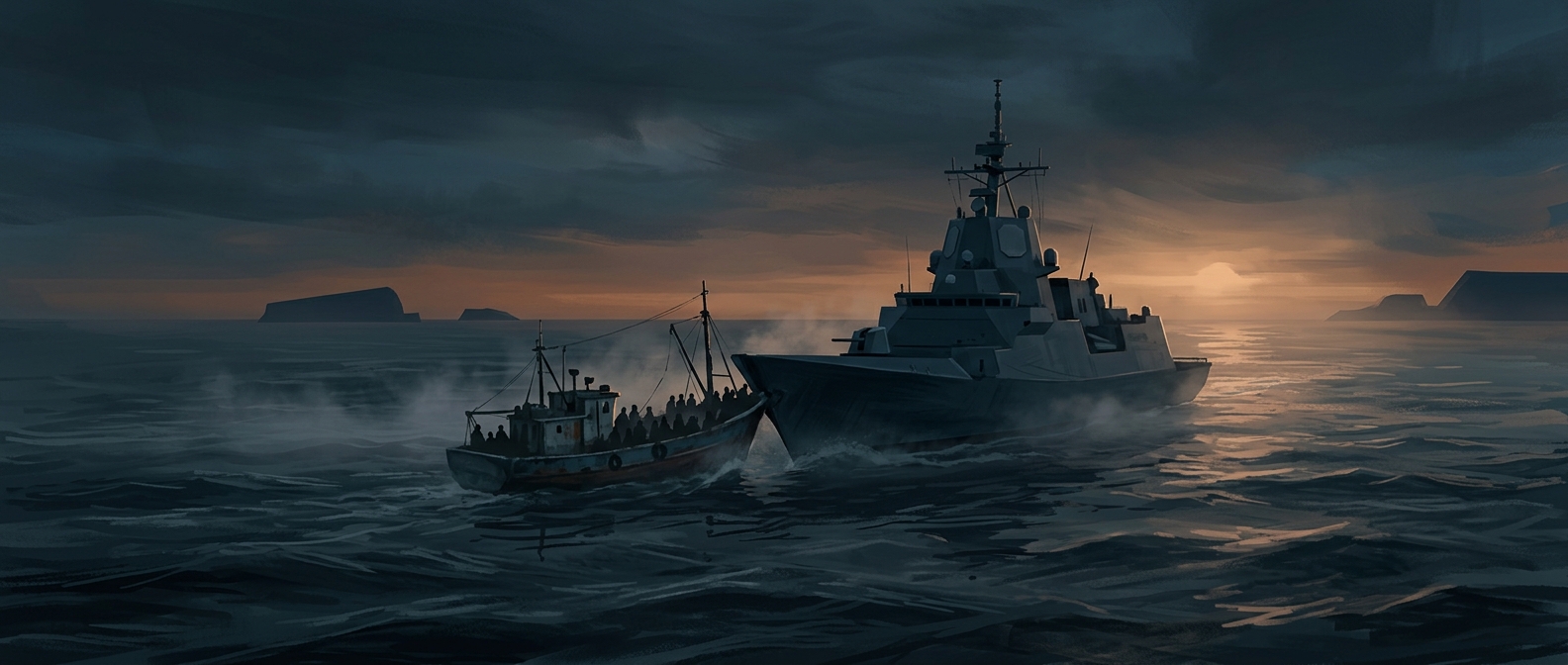
British forces intercepted the ship before it reached its destination. Naval vessels surrounded it, then British personnel boarded while passengers resisted. The boarding turned a maritime policy into a physical confrontation: the people aboard were not simply refused entry at a port; they were taken under armed control at sea.
The route mattered as much as the interception
Britain first took the passengers to France. French authorities were willing to let them disembark, but many refused, declining to accept a destination they had not chosen. The British then carried them to the British-occupied zone of Germany and forced them ashore at Hamburg.
That decision made the episode especially stark. Survivors who had tried to leave Europe for Palestine were returned to Europe by the power that had stopped them. The journey’s final leg was not a rescue or voluntary transfer: British troops removed passengers from the ships and sent them to displaced-persons camps.
A transport decision with political consequences
The Exodus episode exposed the human cost of enforcing immigration limits through naval interception. Images and accounts of the passengers’ return drew international attention, while the passengers’ refusal to leave the ship in France made clear that a safe harbor was not necessarily an acceptable destination. The vessel’s route became a visible measure of the gap between controlling a border and finding a place where displaced people could begin again.