A translation method built for speed
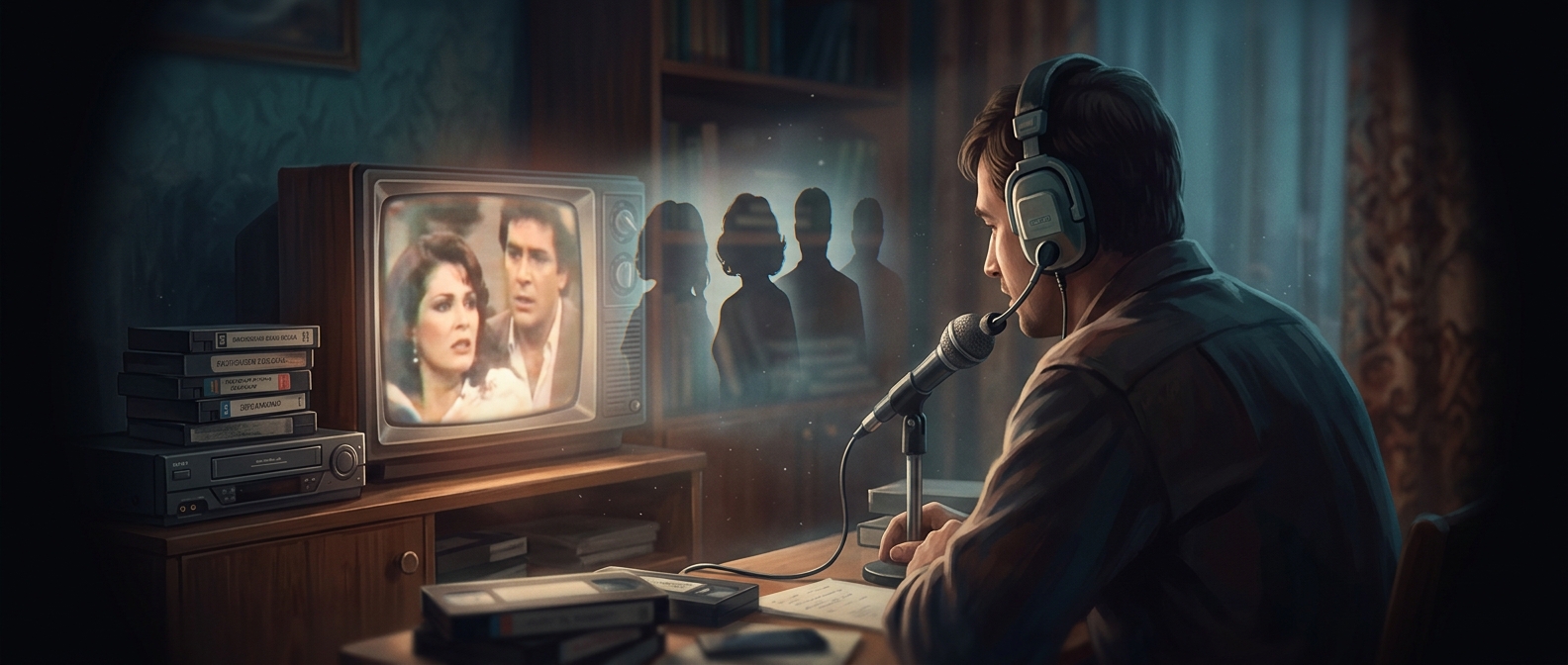
When imported movies spread through the post-Soviet VHS market, distributors needed Russian-language versions that could be made quickly and at relatively low cost. A full dub meant recording separate performances for many characters, matching their timing and often replacing the original dialogue track. A voice-over—one narrator reading the translated lines over the film’s existing soundtrack—required much less production work.
The narrator did not have to imitate each actor or synchronize every syllable to a moving mouth. The translation could be recorded as a continuous layer, while the original dialogue was turned down enough for the Russian speech to be understood. That made the approach practical for films arriving in a fast-moving, unevenly organized home-video market.
What the single voice changed
Because one person read every part, viewers had to follow changes in wording and context rather than rely on distinct vocal performances. A narrator might convey a question, threat, or joke without reproducing the character’s accent, age, or emotion in the same way a cast of voice actors could. The original performances remained faintly audible beneath the translation, so listeners could still hear their rhythm and intensity—even when they could not understand the words.
The result was not simply a cheaper imitation of a theatrical dub. It was a different viewing experience: the translated speech delivered the plot, while the quieter soundtrack preserved traces of the actors’ performances. That overlap is why the format can sound both direct and oddly layered, as if the film is speaking in two languages at once.