How a joke makes praise feel safer
Saying “I’m clearly a genius” as a joke is different from making the same claim in earnest. The comic framing gives you an exit: if someone objects, you can say you were kidding. That escape hatch lowers the social risk of seeming conceited, so a flattering thought can be voiced with less exposure.
But the joke still puts the flattering words into circulation. You hear yourself say them, and other people may respond as if there is at least a grain of truth in them. The compliment is not automatically believable just because it was spoken; rather, humor lets you test the idea without making a firm claim.
From a line to a self-image
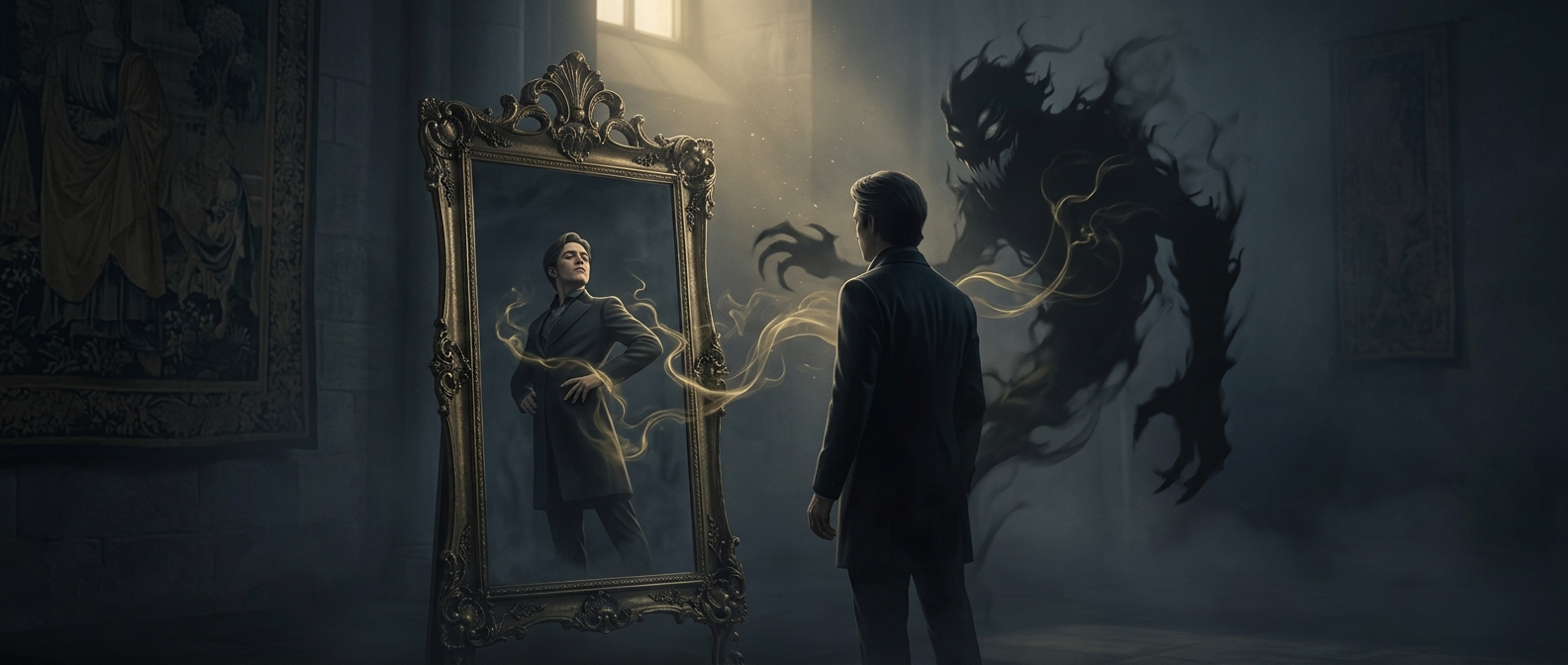
Self-concept—the way you think about your own qualities—is shaped partly by the stories and descriptions you repeatedly encounter. A playful boast can make a positive description easier to entertain, especially when it fits something you already hope or suspect about yourself. The joke supplies a low-stakes rehearsal: you get to inhabit the compliment for a moment and see how it feels.
That effect has limits. A one-off quip is unlikely to transform someone’s self-image, and listeners may read the same line as confidence, insecurity, or simple silliness. The boost comes from the combination of a positive claim and enough irony to make saying it feel socially safe. In that sense, the fake mustache does more than disguise vanity: it gives praise a way into the conversation—and, sometimes, into your own mind.