A crossing powered by a cable and a crew
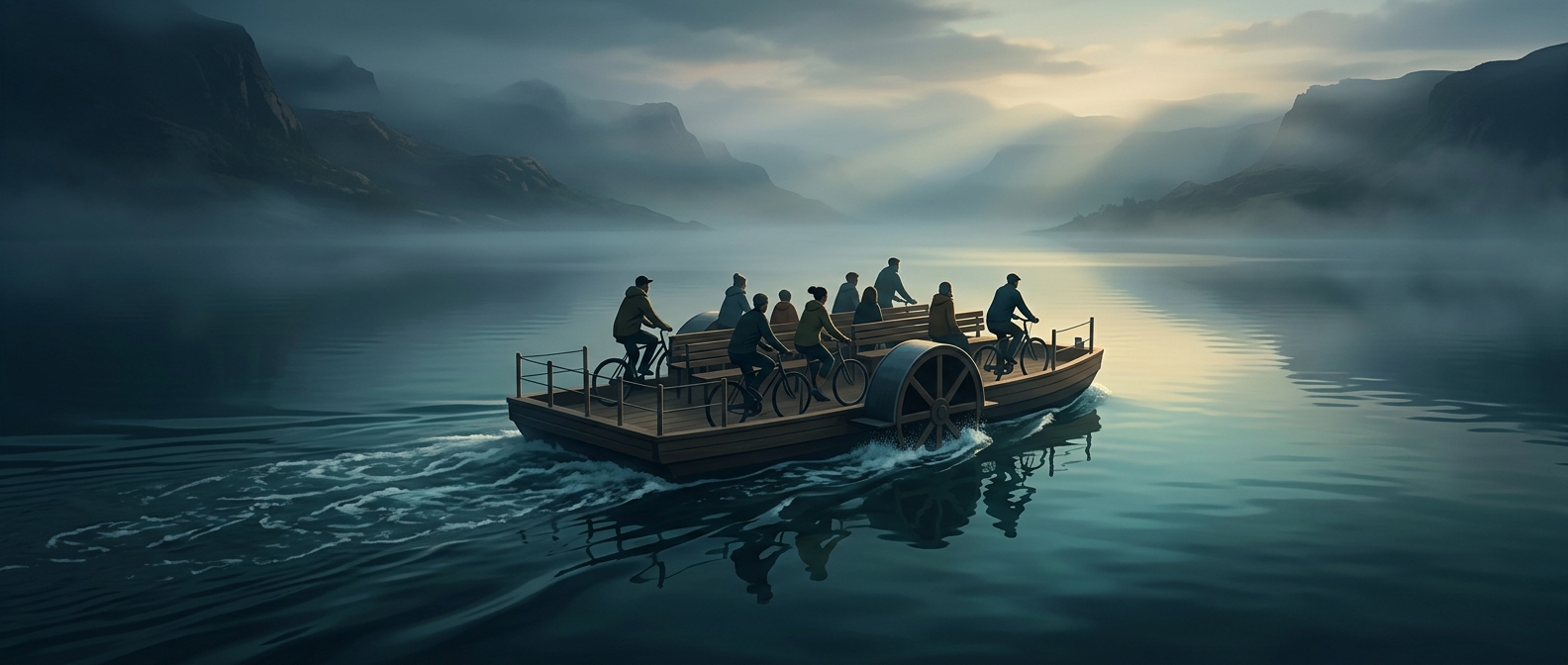
A hand-powered cable ferry turns its passengers into a temporary crew. The cable runs across the water between the banks, and the boat is attached to it. Pulling the cable moves the ferry forward; unlike an ordinary rowboat, it does not need passengers to steer with oars or push against open water.
Why the cable matters
Water offers little resistance for a person to push against directly. The anchored cable provides a fixed point: as passengers haul it toward the boat, the ferry is drawn along the line. The cable also keeps the crossing on a set route, helping the vessel reach the opposite landing rather than drift with wind or current.
This arrangement is especially practical where a short crossing is needed but a powered bridge or motorized ferry would be more infrastructure than the route requires. The tradeoff is time and effort. The boat moves only as quickly as its pullers can work, and the crossing depends on people being willing and able to take a turn.
The fare includes a little labor
On this ferry, payment buys passage—and a brief rowing shift. That small exchange makes the trip part transportation, part shared task: each passenger’s pull helps move everyone aboard. A routine crossing can therefore leave the next traveler with a simple choice: wait for the ferry to arrive, or help bring it there.