The audience turned a screening into a second show
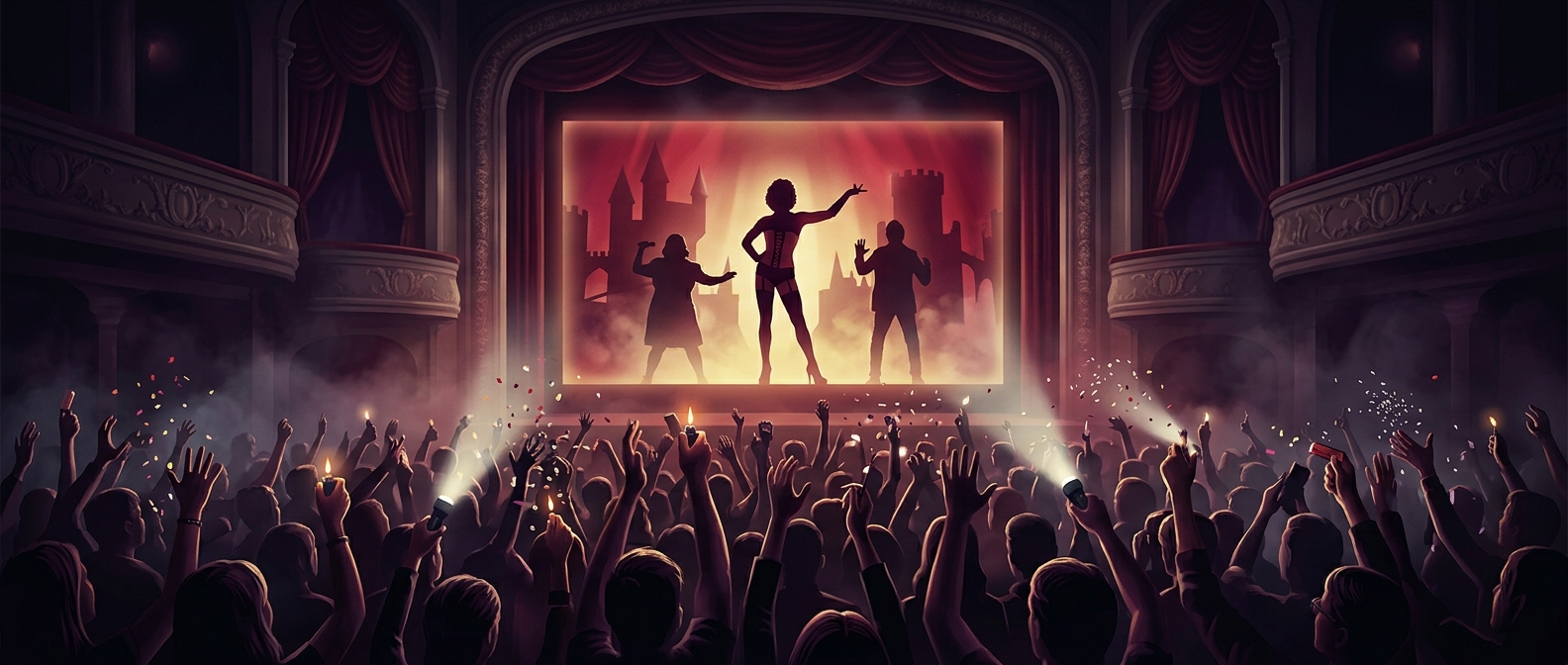
When The Rocky Horror Picture Show found a home at midnight screenings, its commercial disappointment became an unlikely advantage. With no expectation that audiences would sit quietly and treat it as a conventional hit, the film could gather a different kind of following: people who came not just to watch, but to perform alongside it.
The story’s theatrical style helped invite that response. Its outsized characters, familiar horror and science-fiction imagery, and memorable musical cues gave repeat viewers clear moments to anticipate. At screenings, fans developed shouted replies to lines on screen and timed gestures or props to particular scenes. These routines became known as callbacks: audience responses woven into the movie’s pauses and beats.
Repetition made the ritual portable
The customs were not part of the film’s original soundtrack or plot. They grew among viewers and varied from theater to theater, but recurring cues made it easy for newcomers to learn by watching the people around them. A screening could feel less like a private encounter with a movie and more like joining a cast with an established script.
That change also gave the film a reason to return to theaters. A regular movie may lose its appeal once the story is familiar; here, familiarity was the point. Fans could rehearse the performance, introduce friends, and enjoy the difference between the polished action on screen and the unruly response in the room. The audience did not replace the movie—it supplied a live, local layer that made each showing an event.
A flop found a form that could last
The midnight format turned weak initial reception into a long afterlife. Instead of depending only on first-run ticket sales, the film could draw audiences back through repeat participation, costume, and community. Its durability rests on a striking reversal: the screen stays the same, but the crowd keeps bringing the show to life.