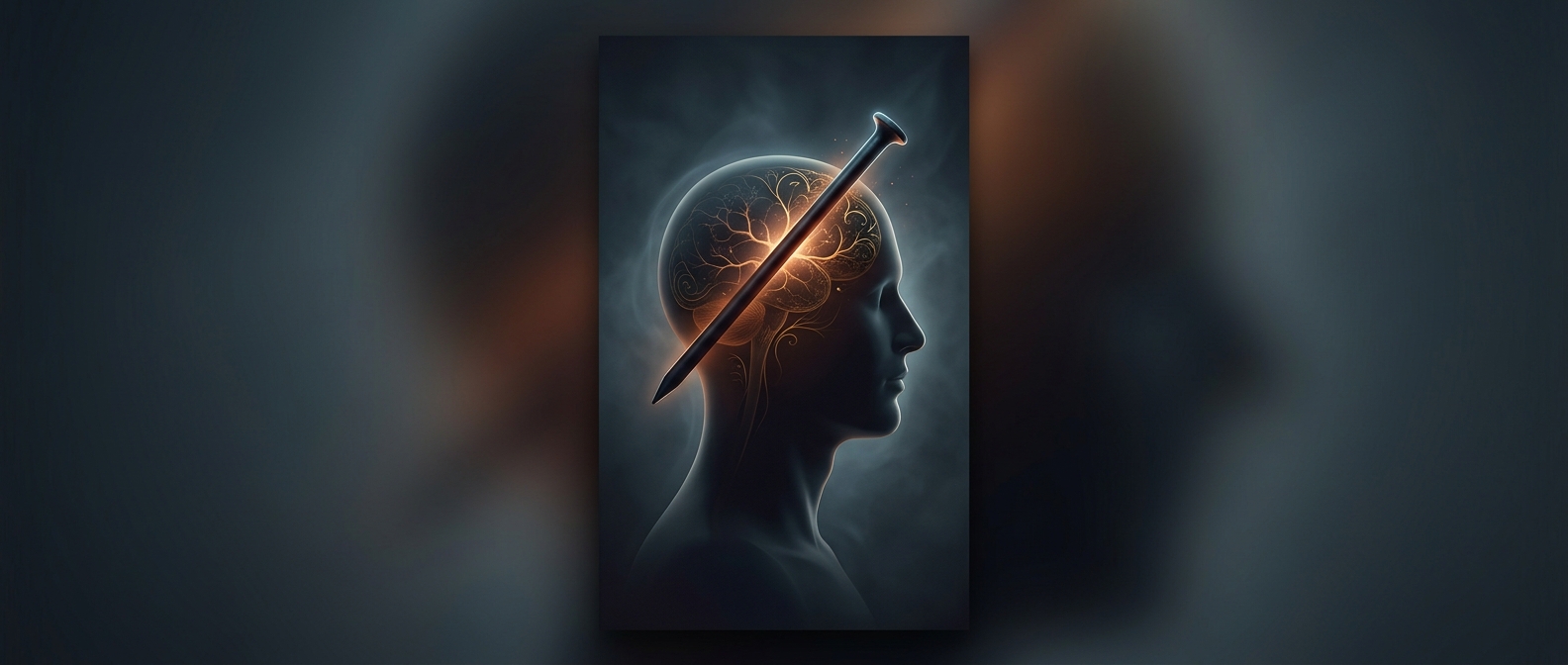
How a skull injury could spare life but change behavior
A railway foreman could survive a rod passing through his skull because survival depended on more than the path of the object: whether it struck vital structures, how much bleeding and swelling followed, and whether infection took hold all mattered. But surviving the injury did not mean the brain was undamaged. In the famous case of Phineas Gage, the rod severely injured the front of his brain.
The frontal lobes help people weigh consequences, hold plans in mind, and adjust their behavior to social situations. They do not act as a single “personality center.” Instead, they work with other brain regions in networks that link emotion, memory, and decision-making. Damage can therefore leave basic abilities such as movement or speech relatively intact while making judgment and self-control harder.
The lasting significance of the case
Accounts of Gage described a marked change in temperament after the injury. The case made a vivid point: a physical change to the brain can alter how a person behaves, even when that person survives and can still interact with others. It helped clinicians and researchers take seriously the idea that different brain regions contribute to different kinds of mental function.
A single injury cannot map the brain neatly, and descriptions from the period do not capture every detail of Gage’s life. The deeper lesson is about the connections involved: planning and social restraint depend on brain tissue that can be injured without erasing every other ability. A person may look physically recovered while facing a very different challenge—managing choices and behavior in everyday life.