Why a Drain Bends Before It Reaches the Sewer
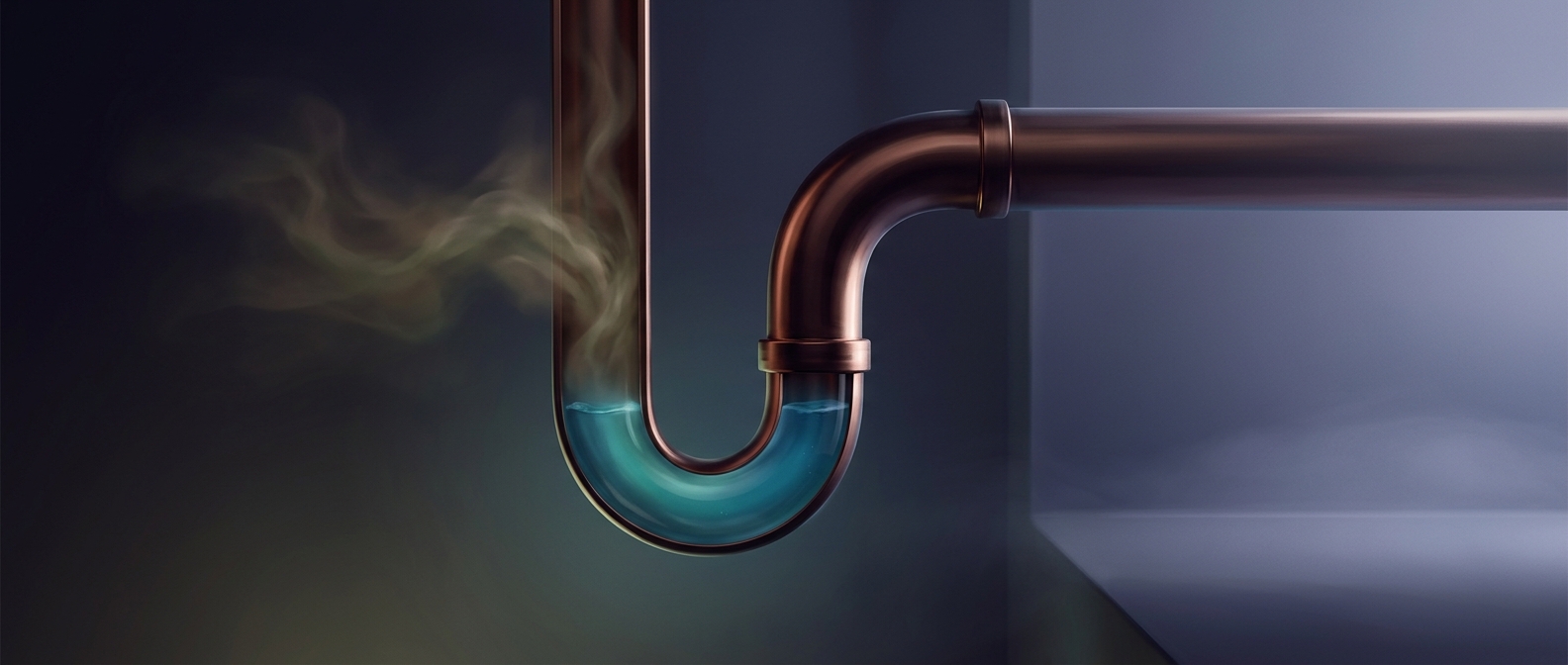
A bathroom drain does not usually run straight from the sink or shower to the waste pipe. Near the fixture, it curves into a trap—often shaped like a U or a sideways P. After water flows down the drain, some remains in the bend. That standing water forms a seal between the room and the pipe beyond it.
The seal matters because a drain is connected to a larger plumbing system that carries wastewater away. Without the water-filled bend, air from that system could travel back through the open pipe, bringing unpleasant odors with it. The trap blocks that route while still allowing new wastewater to push through and replace the water in the bend.
How the Water Seal Can Fail
The barrier depends on water staying in place. In a little-used drain, the water can gradually evaporate, leaving a path for drain odors. Running water into the fixture refills the trap. A plumbing problem can also pull water out of the bend: when wastewater rushes through a pipe, pressure changes may siphon some of the trapped water away.
Plumbing vents help manage those pressure changes. They admit air into the drainage system so water moving through the pipes is less likely to suck the seal out of nearby traps. That is why a drain that repeatedly loses its seal may point to more than a dry fixture.
The protection is modest in size but continuous in effect: a small amount of water, held in a precisely placed curve, keeps the sewer side of the plumbing from becoming an open passage into the bathroom.