Heat opens one sprinkler head at a time
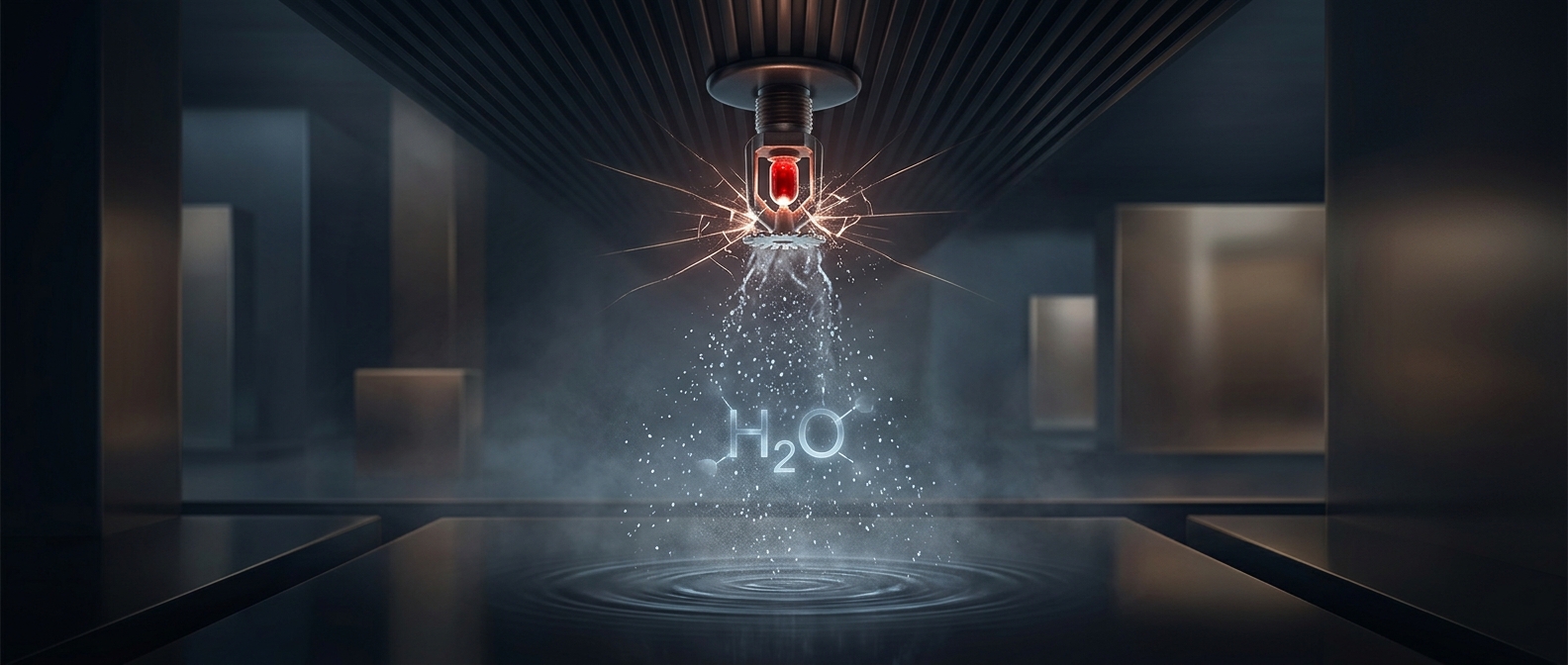
A sprinkler head is held shut by a small glass bulb that acts as a heat-sensitive latch. As hot air from a fire rises to the ceiling, it warms the bulb. The liquid inside expands; once the bulb breaks, it can no longer hold the head’s plug in place. Water pressure pushes the plug away and sends water through the opening.
The head shapes the spray
The water does not simply pour straight down. It strikes a metal deflector on the sprinkler head, which spreads it across a pattern designed to wet the area below. Only heads exposed to enough heat open, so a fire usually activates nearby sprinklers rather than every head in the building. That makes the system’s response local: the same heat that breaks the latch starts water flowing where it is needed.