Why a guard’s memory has a timer
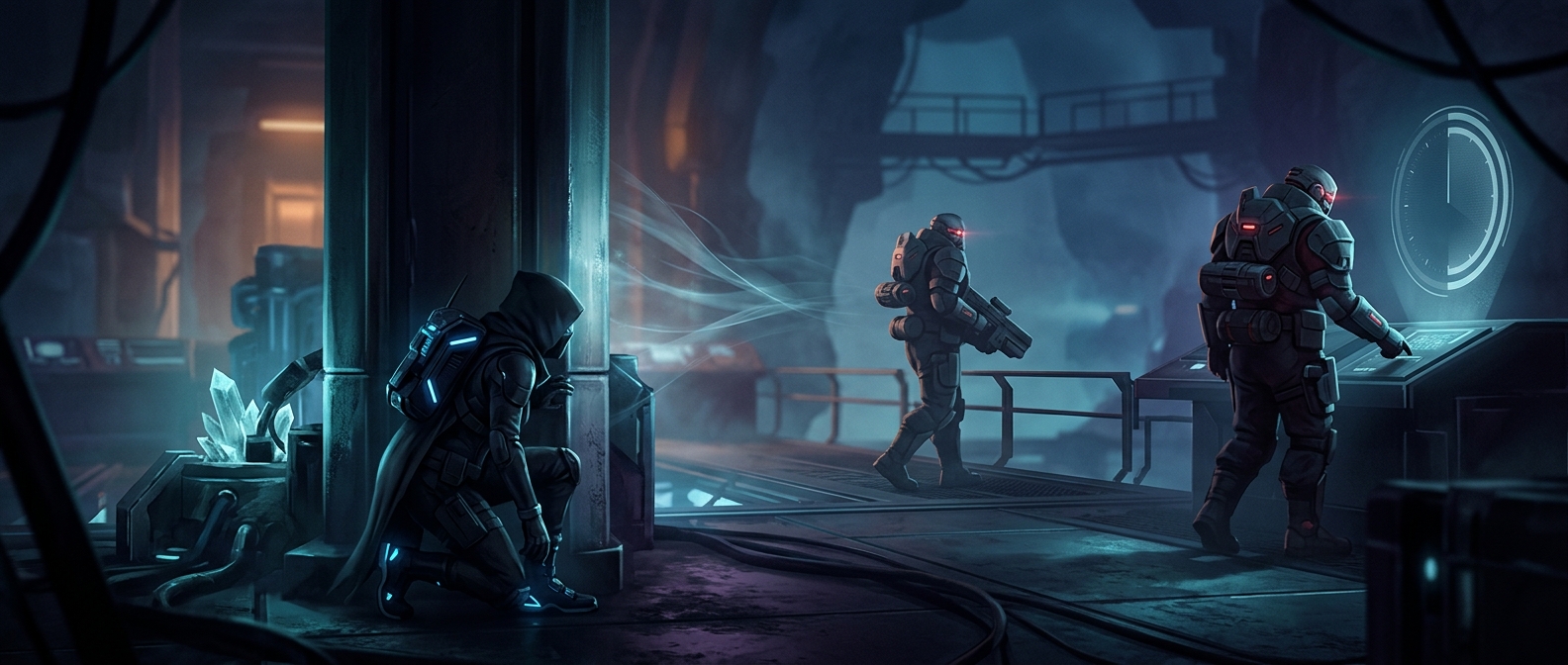
A game guard often follows a small set of behavior states: patrolling, investigating a disturbance, searching for a player, and returning to routine. Each state has rules for what the guard can notice and what happens next. If the search turns into a permanent hunt, one mistake can keep disrupting the level long after the player has escaped.
So designers commonly give the search a limit. The guard may check the last place the player was seen, look around nearby hiding spots, or move toward the sound that triggered the alert. If no new clue appears before the timer runs out, the guard’s alert fades and the routine resumes. This is a designed transition, not necessarily a simulation of how a person would remember an intruder.
A timer makes stealth playable
The limit gives the player a readable chance to recover: break line of sight, get out of the search area, and wait. Without a clear end to the search, players might not know whether they are safe or simply haven’t been found yet. A short search also keeps one alarm from making the rest of a level frustrating or impossible.
The tradeoff is that guards can seem implausibly forgetful, especially if the player hides just out of view. Designers can soften that effect with longer searches, guards who share alerts, or renewed suspicion when they spot another clue. But the basic reset serves a practical purpose: it lets stealth create a tense interruption, then return control of the level to the player.