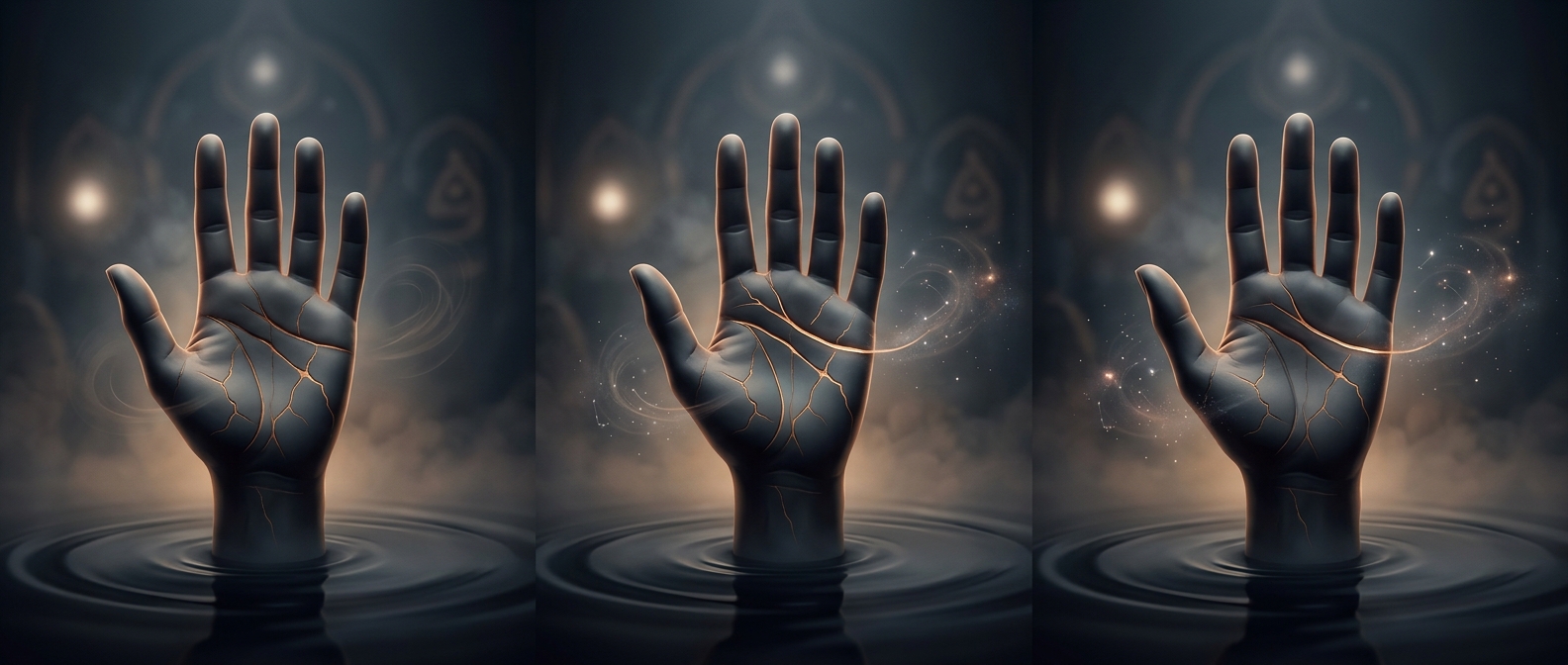
One crease, a different palm pattern
The crease palm readers call a simian line is known in clinical language as a single transverse palmar crease: one crease runs across much of the palm where many hands have two separate transverse creases. The difference is in the arrangement of the skin folds, not in a special line that reveals a person’s character.
Palmar creases develop before birth as the hand grows and bends. They help the skin fold rather than bunch awkwardly when the hand moves. Their patterns vary naturally, just as hands vary in other small details.
How palmistry gives it meaning
Palmistry treats the pattern as a symbolic reading. In that system, the single crease is taken to merge the lines associated with emotion and intellect, producing the interpretation of a person who is intensely focused or all-in. That meaning belongs to the tradition of reading palms; the crease itself does not establish how someone thinks or feels.
The striking part is how much meaning a reader can build from a small physical difference: a fold formed as the hand developed becomes, in palmistry, a story about temperament.