A grid has to balance in two directions
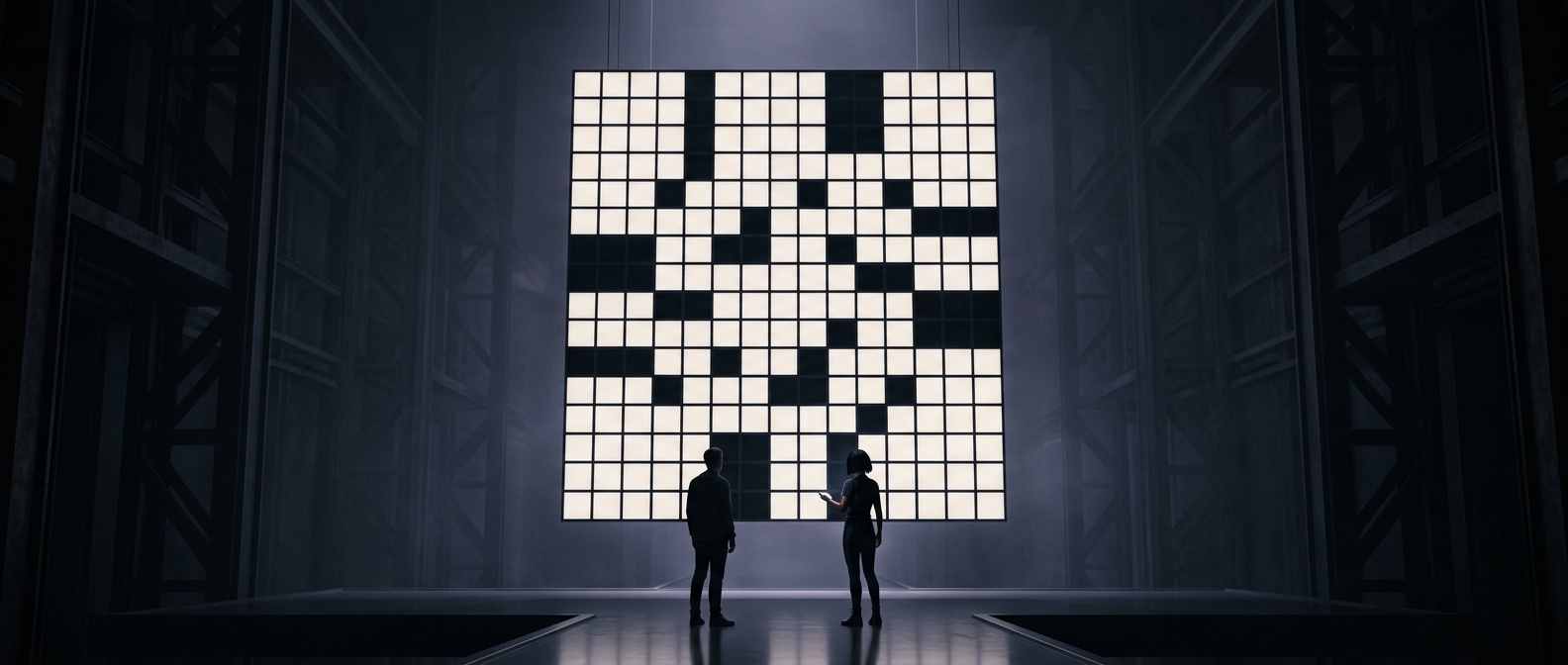
In a rotationally symmetrical crossword, each square has a partner directly opposite it across the grid’s center. A black square in one position therefore requires a black square in the opposite position; the same goes for open squares. This is a 180-degree turn, not a mirror image from left to right.
The rule gives a puzzle a deliberate visual balance, but its larger effect is structural. Black squares divide the white cells into answer slots. Move one block and you may change the length of an across answer, a down answer, or both. Symmetry means that change often has to be repeated in the opposite half of the grid.
The pattern shapes the word choices
Constructors usually settle on a block pattern before filling the grid with answers. They must make the pattern satisfy the symmetry rule while leaving slots that can be filled with familiar, fair words crossing one another. A promising long answer may fit in one area but fail to work with the mirrored slot pattern—or force awkward short entries where the answers cross.
That is the central tradeoff: symmetry makes the grid feel composed, while limiting where a constructor can put the blocks needed to create workable answer lengths. The constraint is especially noticeable in themed puzzles, where long featured answers need carefully chosen slots. A single structural adjustment can ripple through the fill, so the clean-looking pattern a solver sees is also a map of the constructor’s decisions.