The Locked Door Is Part of the Story, Not the Safety Plan
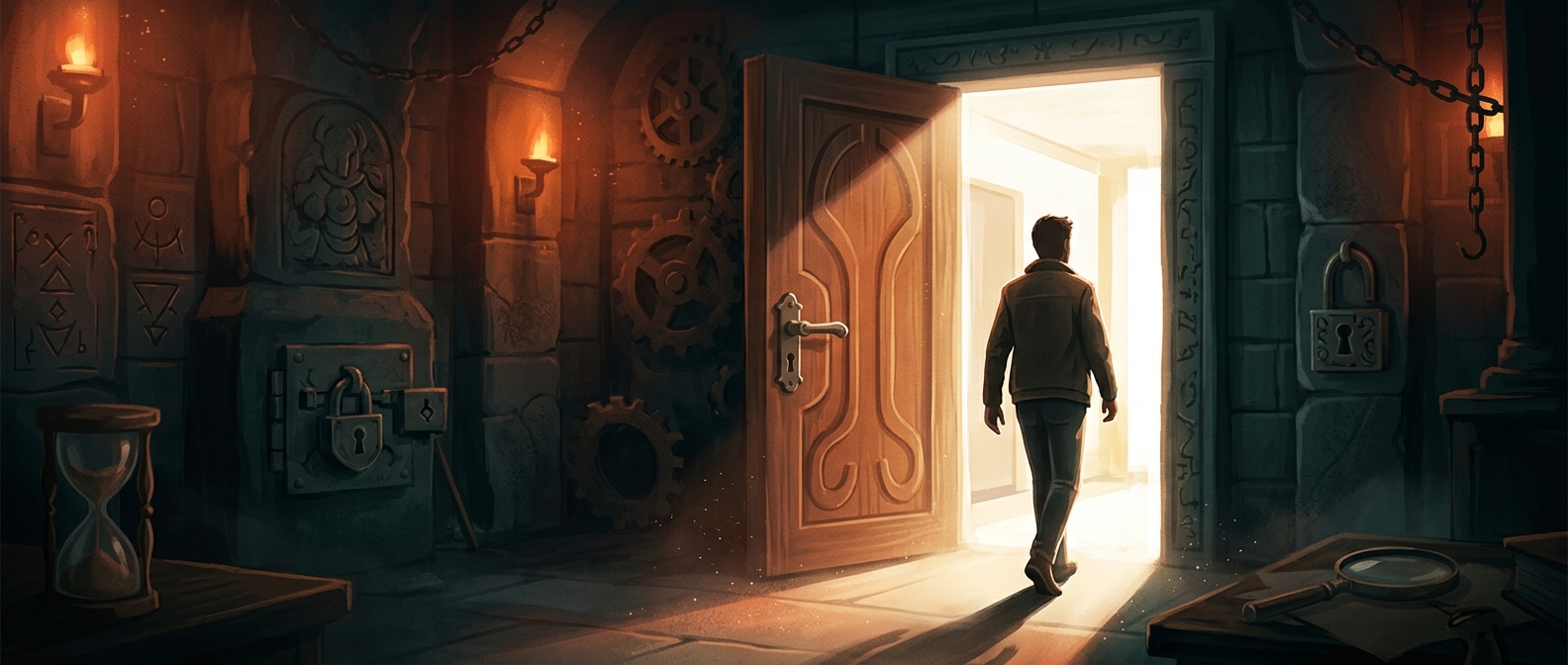
An escape room creates the feeling of confinement without making confinement the real condition of play. The apparent lock gives the room a clear dramatic premise: there is a problem to solve before the group can “get out.” In practice, the exit must remain available to players who need to leave, reflecting fire-safety requirements that generally call for an unlocked way out.
That distinction lets designers borrow the tension of a prison, bunker, or sealed laboratory without making the experience depend on physically trapping anyone. The challenge is psychological: players accept a temporary goal and agree to treat the puzzles as barriers, even though they can stop participating.
Voluntary Limits Make the Puzzles Work
The room’s rules create a kind of make-believe contract. Players choose to search, test clues, and work together because the group has agreed that solving the puzzle is more satisfying than simply walking out. The exit can therefore be both a real safety route and, within the story, the finish line they are trying to reach.
That arrangement also shapes the design. A convincing set can suggest that a door is sealed, while the actual route out remains usable. The effect depends on players choosing to stay in character—not on the room having the power to keep them there. The game’s most important lock is the one everyone agrees to respect.