Why a syndicated crossword can pay once, then travel widely
A crossword’s reach and its creator’s pay are often disconnected. In a common arrangement, a syndicate pays a constructor a flat fee for a puzzle and distributes it to many newspapers. The constructor is paid for the work, not a new fee each time another paper runs it. That makes the puzzle resemble a commissioned piece more than a product that earns its maker a continuing royalty.
The syndicate’s role is to package and sell material to multiple outlets, making one puzzle useful to many publications. Wider circulation can therefore benefit the distributor and the papers without automatically increasing the constructor’s payment. The arrangement is not universal, but it helps explain how a puzzle can appear in hundreds of places while its maker receives a single payment.
The work happens before the grid is published
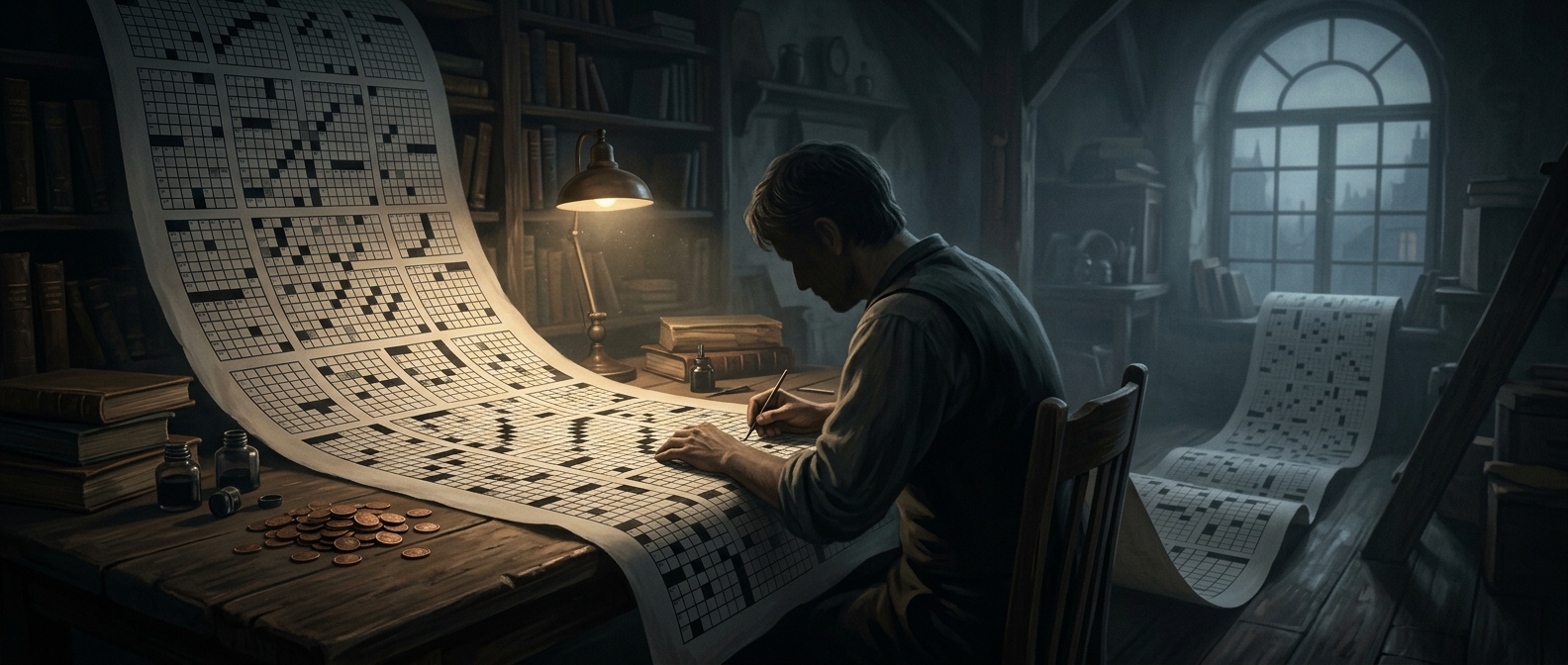
A constructor has to make a grid that fits the puzzle’s rules, fill it with interlocking answers, and write clues that are fair, accurate, and engaging. A change to one answer can affect several crossings, so revisions may ripple through the grid. Editing and adjustments can add more time before the puzzle is ready to run.
That labor matters when the fee is considered by the hour. Divide a one-time payment by the hours spent building and refining a puzzle, and the effective hourly rate can be low—even if the finished work reaches a large audience. The paper count measures distribution; it does not measure how many times the constructor is paid.
For readers, the result is a small daily diversion. For the person who designed it, the visible grid may be the final product of hours of invisible decisions, compensated under terms that may not grow with its circulation.