A puzzle that gave Sunday readers a reason to linger
A crossword cost far less to print than a reported feature: once a grid and its clues were prepared, the page needed no photographs, elaborate artwork, or ongoing coverage of a complicated event. Yet it offered something headlines alone could not—a small challenge readers could work through at their own pace.
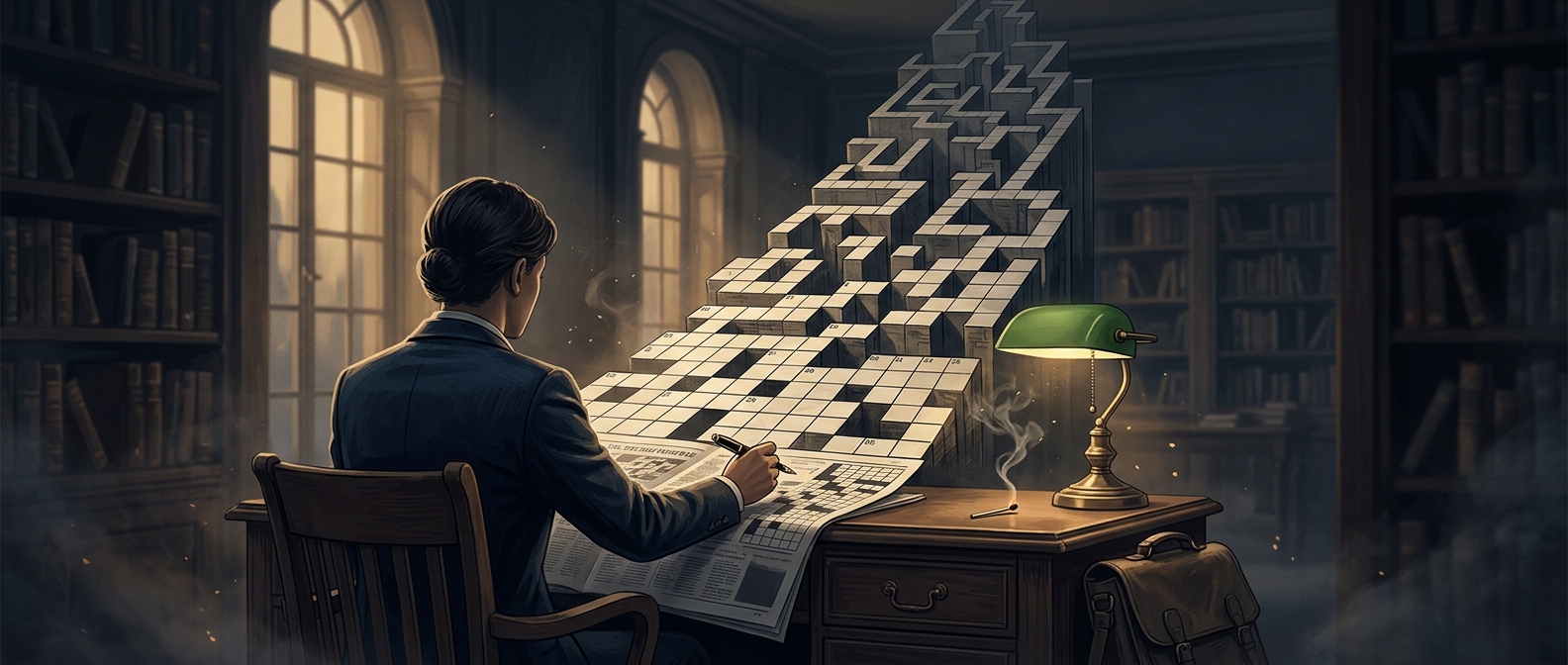
That made the puzzle a useful newspaper feature. A reader might finish the news and still spend time with the paper, return to a half-completed grid later, or compare answers with someone nearby. The crossword turned a brief purchase into a longer, more participatory experience.
A low-cost feature with a commercial purpose
The idea took hold as newspapers competed for readers’ attention. In 1913, the New York World published a crossword by journalist Arthur Wynne. As the format caught on, puzzles became especially suited to Sunday editions, when readers often had more leisure time and papers had room for features beyond daily news.
The commercial logic was straightforward: a puzzle could make a Sunday paper feel more enjoyable and distinctive without requiring the expense of creating a major new section. It also gave readers a reason to choose that paper again the following week. The grid was inexpensive to reproduce, but valuable as a habit-forming feature.
That bargain helped make crosswords a familiar part of newspaper culture. Their staying power came not just from filling space, but from turning a page into an activity—and giving readers one more reason to buy the paper.