How a Small Break Becomes a Cinematic Event
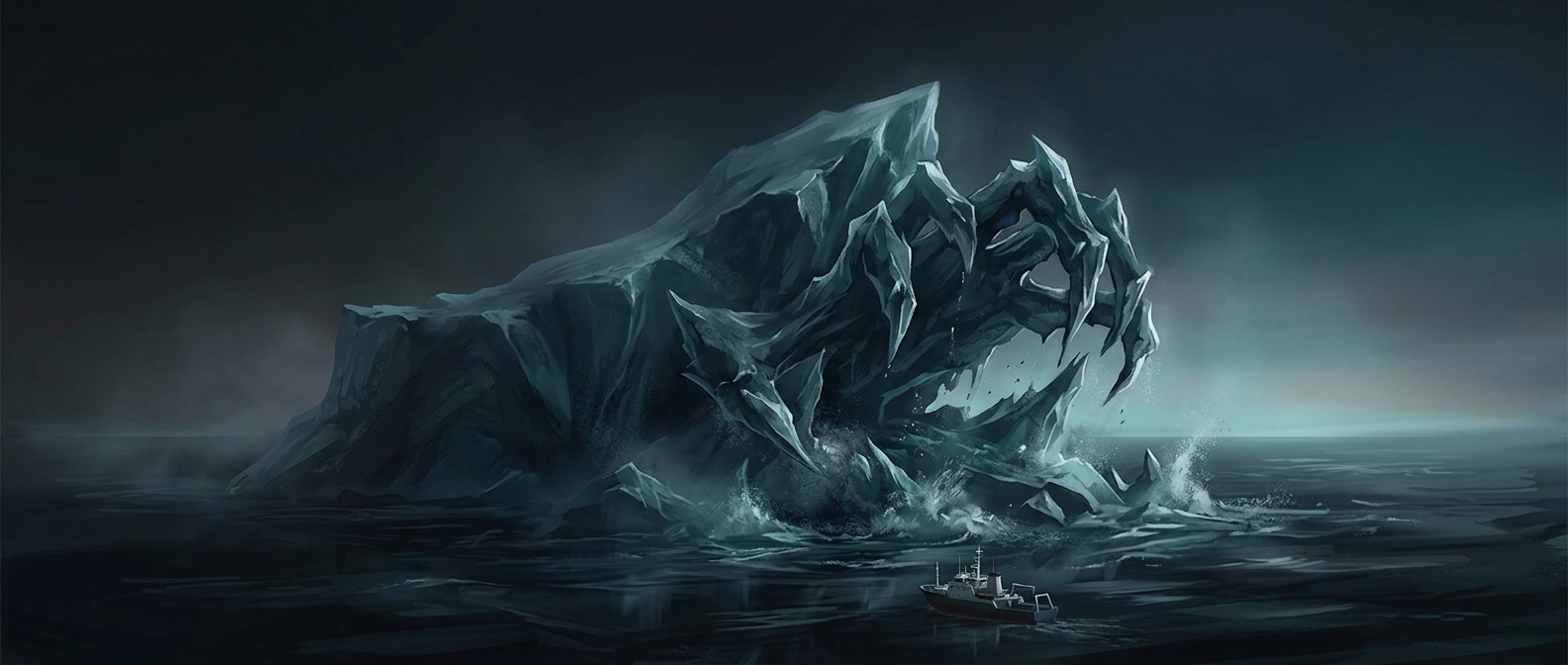
A real piece of ice breaking off an iceberg may be distant, muffled, or lost beneath wind and water. A film or game mix does not have to reproduce that experience literally. It has to make the event legible: the audience should notice the break, feel its scale, and understand that the ice is changing.
Sound designers can build that impression from several layers. A sharp crack marks the instant of fracture; a deeper rumble suggests mass shifting; splashes and smaller clatters carry the sound into the surrounding space. The layers need not come from one recording. What matters is how they fit together and what each contributes to the listener’s sense of the event.
Why the Impact Feels Aggressive
Timing shapes the effect as much as volume. A brief pause, a sudden crack, and then a heavy low-frequency rumble create a clear sequence: tension, rupture, consequence. Low sounds are felt as weight and scale, while a bright, abrupt transient—the quick, sharp onset of a sound—makes the break feel immediate. Push those contrasts far enough and a gradual natural process can seem like an attack.
That transformation also helps the story. The audience may not see every fracture beneath the water, but a forceful sound can make an unseen shift feel consequential. The iceberg becomes more than scenery: its changing shape registers as an event with momentum and threat.