How Atari made sound visible
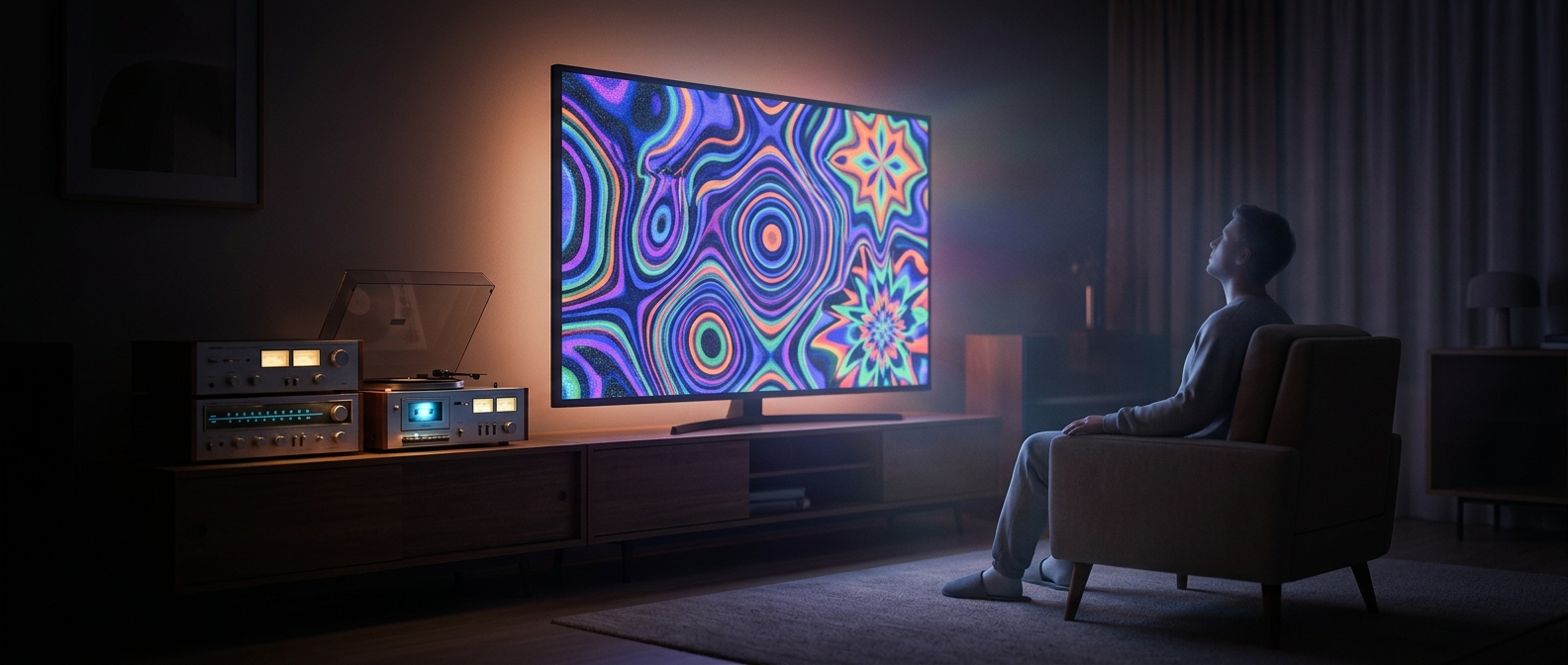
The Video Music’s trick was to treat sound not as a soundtrack to accompany pictures, but as a signal that could drive them. The unit sat between a stereo system and a television: music went in, and the TV displayed patterns that shifted as the sound changed.
Inside, electronic circuits responded to the audio signal’s changing strength and frequency. Those changes controlled the shapes and their movement on screen. A stronger beat could make a pattern flare or expand; shifting tones could make it flicker or rearrange. The television did not need to understand music. It simply drew the changing visual signal it received.
A visualizer, not a video game
That distinction shaped the product. There were no characters to steer or levels to complete; the viewer adjusted the device and watched the music generate an abstract display. Its appeal depended on having a stereo and a TV available together, and on wanting to watch sound rather than play a game—an unusual use for a home console at the time.
The idea anticipated the music visualizers later built into software, but the Video Music made the effect a separate piece of living-room hardware. Its patterns were created live from whatever audio was playing, so the same device could turn different records into different moving images. What looked like a tiny electronic light show was, in effect, the music itself controlling the picture.