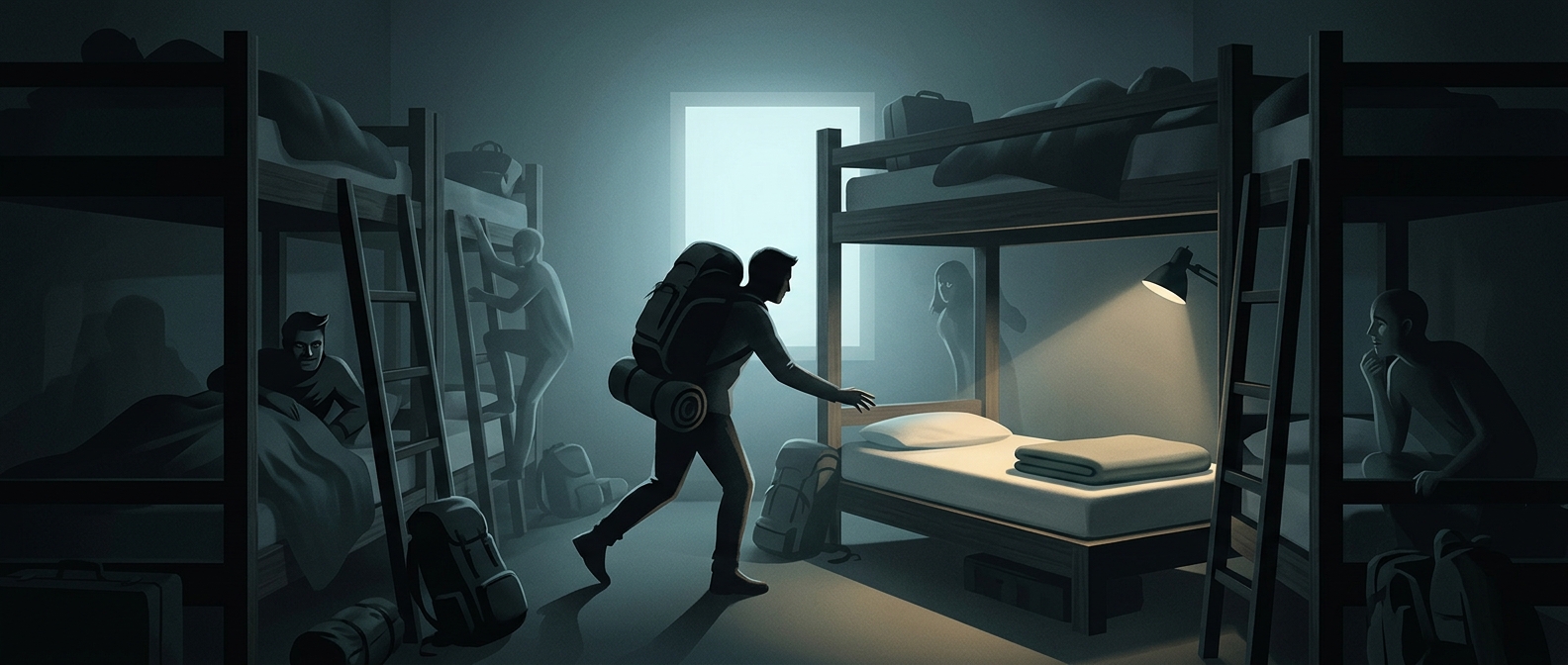
A bunk choice shapes the whole bedtime routine
In a shared room, the lower bunk is valuable not simply because it is closer to the floor. It removes a small obstacle from every trip in and out of bed: no ladder to find, climb, or descend when the room is dark and other travelers are moving around. That convenience matters most at the moments a traveler is least prepared for a careful climb—after a long day, or during a nighttime bathroom visit.
The space above changes the calculation
Bunks divide a room’s vertical space, and the upper sleeper often gets less freedom to move naturally. Depending on the bed’s design, sitting up may mean ducking, while turning over or reaching for belongings can require extra care. The lower bed avoids those particular constraints, so its appeal comes from how easily it fits into ordinary routines, not just from comfort once someone is lying down.
The tradeoff is that the lower bunk is not automatically quieter or more private; room layout and fellow travelers matter. But when two beds otherwise offer similar conditions, avoiding a climb can feel like a meaningful upgrade. A bunk assignment can determine whether bedtime is a simple step into bed—or a small piece of nighttime navigation.