Why Shuffleboard Calls Them Pucks
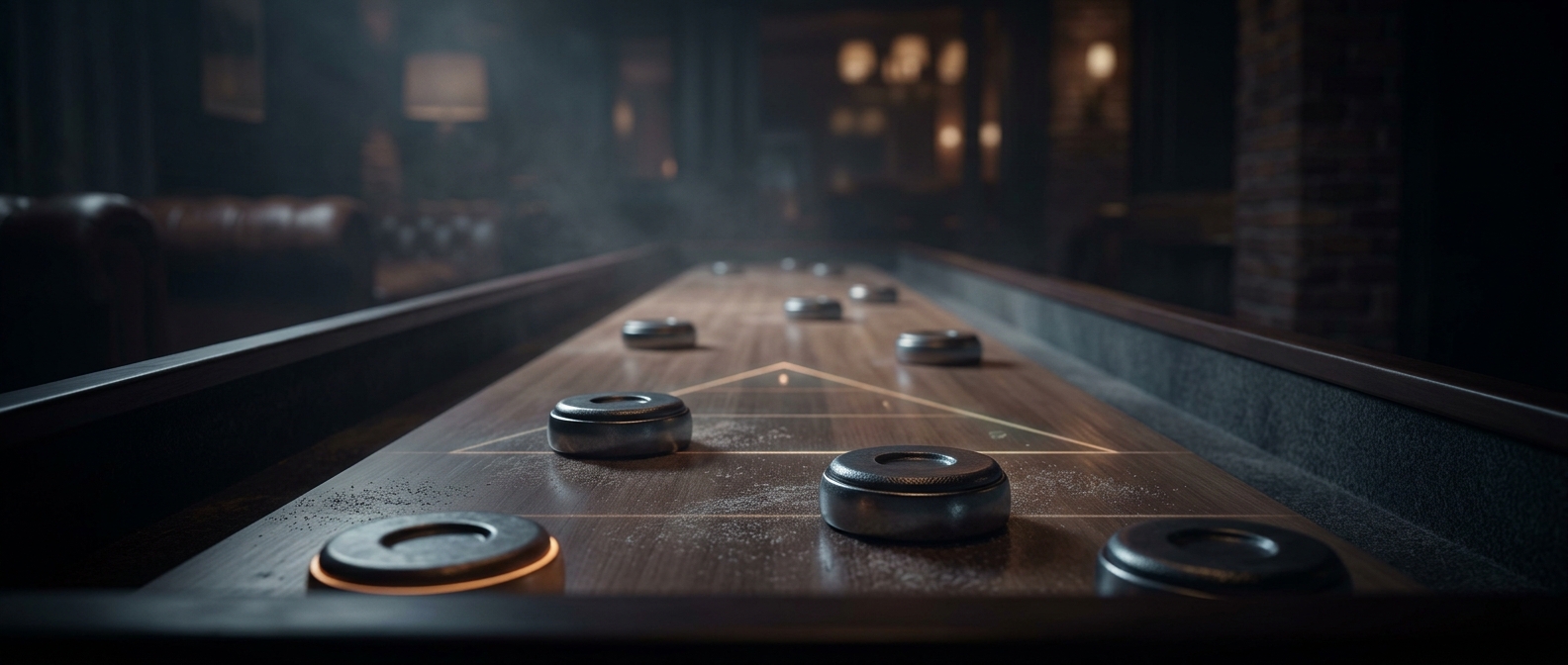
The name describes the object’s job better than its appearance. A shuffleboard puck is a compact sliding piece: players send it down the board toward scoring areas, aiming for a useful position rather than throwing it like a ball. Its flat, cylindrical form keeps it close to the playing surface, where small changes in push and direction can shape the shot.
“Weight” is also a common shuffleboard term for the playing piece. “Puck” is especially familiar in casual descriptions, perhaps because the object resembles other flat disks used in games—but the label does not mean it is the same equipment as an ice-hockey puck.
How the Surface Changes the Shot
On a slick board, the puck can travel a long way from a controlled push. That makes touch more important than brute force: a player must judge how hard to send it, where to aim, and how it may interact with pucks already in play. A shot can score by stopping in a favorable zone, or by nudging an opponent’s piece out of position.
The smooth metal and low-friction playing surface work together to make that sliding predictable enough for skill to matter. The puck’s weight gives it momentum, while the polished contact area helps it keep moving. What looks like a simple metal cylinder is therefore both the target and the tool: players score with it, and use it to rearrange the board.